
Winter Camelina highlighted as a crop for use in sustainable aviation fuel
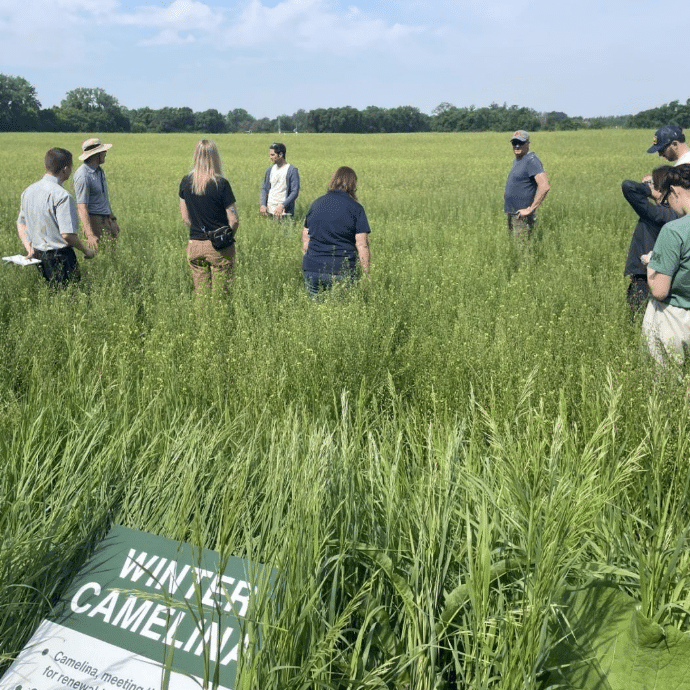
As a follow up to their inaugural forum on May 29th, Forever Green Initiative hosted a Winter Camelina field day on June 5th. The event was a great way to get a close look at the crop growing in fields at the Rosemount Research and Outreach Center. Attendees heard from Matt Leavitt of Forever Green, Anne Teeter of Cargill, and farmer Ben Penner about the nuances of growing Winter Camelina and current opportunities to receive financial incentives for growing it.
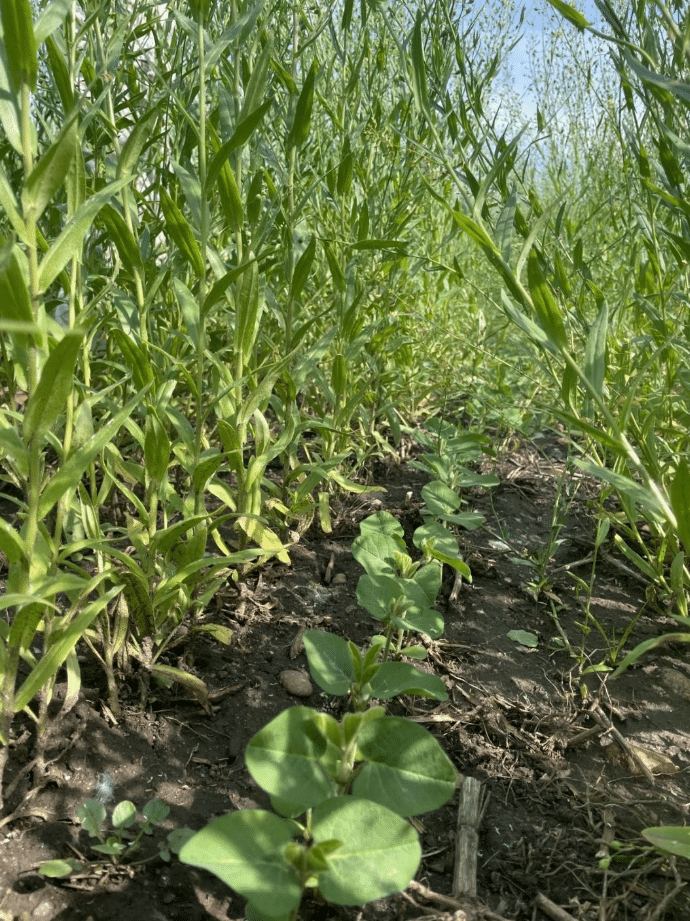
Winter Camelina is a fast-maturing and winter-hardy oilseed crop, making it an ideal cover crop for the short Minnesota growing seasons. It is planted in mid to late September, growing best following short season crops like corn silage or small grains. Because it matures quickly, it doesn’t have to replace cash crops, but instead can add value to the rotation. At the Rosemount Research and Outreach center for example, Winter Camelina was growing in a relay system with soybeans. The crop was seeded in the fall with a skip row and allowed to overwinter. In the spring, the skip row was seeded with soybeans and the two crops grew side by side. With this relay system, Winter Camelina is harvested in late June when it will be much taller than the young soybeans, and the soybeans will be harvested later in the season as they usually are. When accounting for both Winter Camelina and soybeans, the field will produce up to 50% more oil than a typical soybean field left fallow in the winter. This system therefore boosts economic value while also keeping the soil covered year-round, so farmers can build soil health while potentially earning more for their crops.
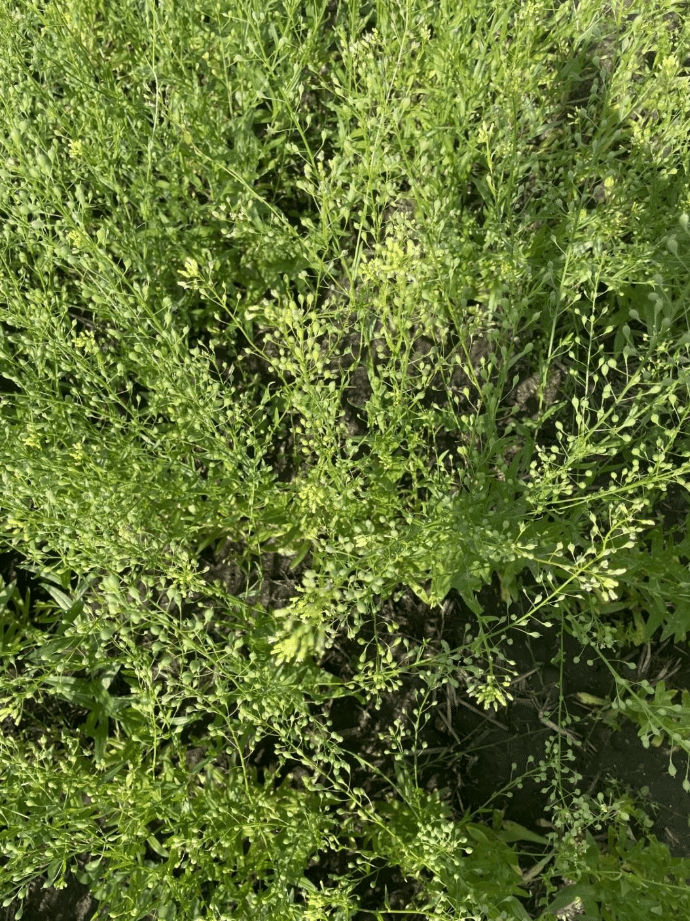
The low carbon intensity oil produced by Winter Camelina can be used for biodiesel, but sustainable aviation fuel (SAF) is the most promising opportunity currently for the crop, as airlines such as Delta are drawn towards SAF for the opportunity to lower their carbon footprint. The fuel requires no equipment adjustments for usage by airplanes, and in fact just last year Delta flew its first flight powered partially by SAF from Minneapolis-St. Paul to Laguardia airport. Anna Teeter shared that Cargill is excited to help scale up Winter Camelina to create more feedstock for SAF, and in the past two years they’ve paid $13.50 and $11.50 per bushel of Winter Camelina, including pick up. Cargill currently offers a guaranteed minimum revenue payment of $125 per acre for early adopters to cover the input costs, which is stackable with NRCS programs under their practice code 328 for diversification, and Forever Green’s Environmental and Economic Clusters of Opportunities Implementation Program (EECO). The EECO program offers both market failure insurance and incentive payments between $20-40 per acre for farmers to grow Winter Camelina.
For those interested in growing Winter Camelina, there’s a handful of considerations to take. Forever Green recommends applying 50-60lb/acre of nitrogen fertilizer ahead of seeding. Seed to soil contact is important for Winter Camelina, and seeding can be done with a no-till or air drill, by broadcasting, or by rolling. Certain conditions, like insufficient precipitation or wind barriers, can cause the crop to fail over the winter. Conditions should be dry at harvest and can be done with any header and conventional combine, as the seeds are similar in size to flax and other small grains. Storage conditions are particularly important for Winter Camelina; the seeds should be well aerated and in some cases regularly turned while in storage before they are picked up. In the years following harvest, Winter Camelina isn’t particularly competitive and won’t leave a large seed bank, but any volunteers can be terminated with light tillage or herbicides.
Overall, the field day on June 5th was a great way to view Winter Camelina in the field and hear about promising opportunities to minimize the financial risk of growing it. Ag professionals are excited about expanding Winter Camelina adoption in Minnesota to build soil health, provide economic opportunities for farmers, and create low carbon intensity fuel.