
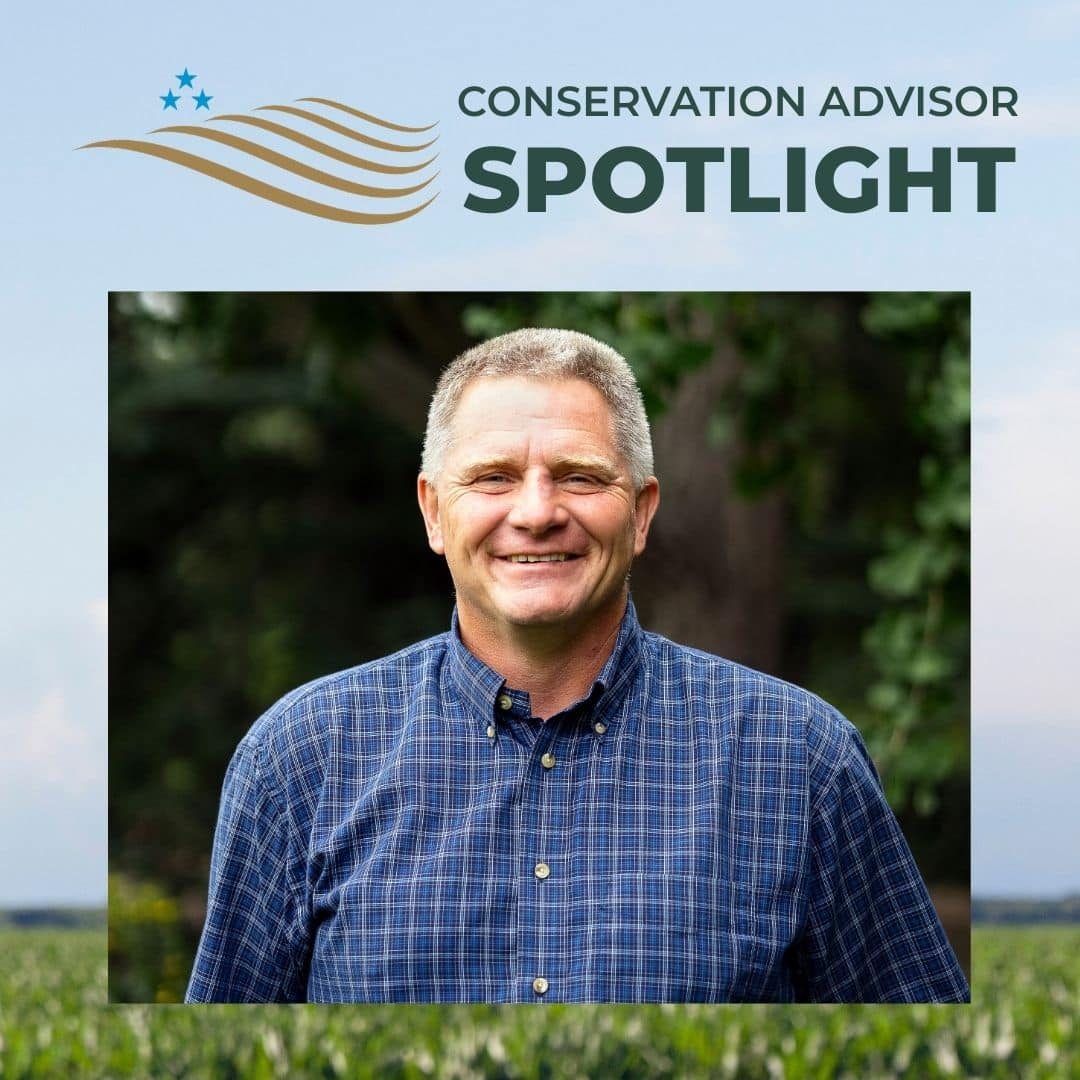
Troy Salzer: Ag Production Systems Educator at UMN Extension
I’m really lucky to have a great group of colleagues in Extension and a great group of partners in my region. I truly believe those partnerships are what helps our farmers be more successful because those folks are working together to facilitate a positive outcome for farmers.
Troy Salzer
Troy Salzer is an Ag Production Systems Educator for University of Minnesota Extension. He is located in St. Louis County. This interview has been edited for length and clarity.
What counties are you working in?
Troy: I am located in St. Louis County in northeastern Minnesota, and that’s where I primarily work with farmers one-on-one. I help out in other counties, and I also end up working across the state, primarily via phone and periodically doing presentations to help out partners like NRCS (Natural Resources Conservation Service), SFA (Sustainable Farming Association), MNSHC (Minnesota Soil Health Coalition), MNGLCA (Minnesota Grazing Lands Conservation Association), and MPCA (Minnesota Pollution Control Agency).
What is your background?
Troy: My degree is in animal science, and my master’s degree was on swine nutrition. While I was working on my master’s degree, I was also doing a lot with ruminant nutrition. My wife is a horticulturalist, and together we love growing fruits and vegetables. We’ve grown five acres worth of vegetables for direct marketing. We raise quite a few beef cattle as well.
I was also blessed to have a neighbor who raised a lot of sheep and goats, so I know a lot about raising them. So things like disease issues, conflicts with wildlife, and all of that is something I’ve experienced firsthand, which really helps me when I’m connecting with farms. I’m very grateful to have all these experiences, and I really feel as if I’ve been blessed and want to share that with people.
What are your areas of expertise?
Troy: I do lots of presentations on pasture and grazing related topics, and I tend to be very practical and hands-on with things related to sheep and goats, cattle, and grazing for dairy operations. I deal a lot with economics and looking at the return on investment for things like fertilizer.
I also do presentations on horticulture topics. Lately I’ve been dealing with aster yellow in carrots and garlic, and spotted ring drosophila in fruits. I work with CSA farms as well, and in the spring I spend time doing presentations on topics like composting, growing blueberries, apple tree pruning, and really a wide range of topics.
My title is ag production systems, but it falls under the umbrella of agriculture, food and natural resources. I’d say my position is a lot different than a lot of my colleagues, and I identify with the term “jack of all trades and master of none.” You’re probably familiar with the strengths’ finder tests, and when I have done those tests my top strength is that I’m a learner. I constantly look to learn new information.
What does a visit with you look like for a farmer?
Troy: I try to meet them where they are at. I have the opportunity to work with some very large commercial operations, and they’re at a much different place compared to my brand new aspiring farmers. So the conversation starts in a different place in regards to their values.
I always tell aspiring farmers that part of my job is like when you start to learn how to drive, I want to help you stay out of the ditches. Then as they learn their land and management style, it’s my job to help refine their driving within the lane. I also think that as Extension staff, my role is to use research-based information to help farmers address resource concerns or future planning for their operation.
How would you describe your advising style when you are working with a farmer?
Troy: I tend to provide lots of different scenarios so farmers are ultimately making the decisions. I think that’s critical so they realize there’s much more to it than a yes or no, right or wrong answer.
However, if there is clarity in something like “what can I spray on my tansy?”, I can talk about what products work or using a head weevil as an alternative, for example. Those are the sorts of things I like to offer up to people.
How can a farmer plan ahead to get the most out of your visit to their farm?
Troy: I don’t necessarily have a specific set of questions I need farmers to answer before we meet, because every person I work with tends to learn a little bit differently. Some immediately want to go see their livestock or look at the plants they are having issues with. Others are really about the financial nuts and bolts. Part of my skill is to allow them to go those directions and hopefully bring it back to a place where they can identify the specific characteristics that cause the issues, and then come up with a plan to address it.
Sometimes I’m in the know about things, and other times I’m not and I have to do research, submit a sample to the plant pathology lab at the University, or get soil tests. I think by going through those processes together with the farmers it helps them understand that it’s a process and not just a simple question and answer. We identify what the issues are together and move forward from there.
What are the benefits for a producer working with Extension staff?
Troy: One thing I will say is that I’m really lucky to have a great group of colleagues in Extension and a great group of partners in my region. I truly believe those partnerships are what helps our farmers be more successful because those folks are working together to facilitate a positive outcome for farmers. By working with Extension, it helps farmers realize who their resource people are and how we all work together to help them. For example, I helped one farmer put together a grazing plan for their operation and it gave them a really great place to start with another partner that could be more specific about
their grazing plan and forage.
What programs or conservation opportunities have been most successful in your
area?
Troy: I spend a fair amount of time working on pasture related items and I really do believe that pastures are almost always the most underutilized and unappreciated resources for most producers. I’ve seen this with dairy, beef, sheep, goats, horses, and all of the above. With fairly inexpensive investments, farmers can see huge long-term benefits and substantial cost savings by utilizing their pastures. Some of the work I’ve done has increased pasture productivity to the tune of 5 percent to 700 percent compared to the first
year of grazing on a property. With returns that big, it doesn’t take long for profitability to occur.
What advice do you have for farmers who are just getting started on their soil health journey?
Troy: One thing I encourage people to do is to start small. Think about it as a long-term process, this is something that takes many years to perfect. When creating pasture seed mixes I think about feeding soil biology, water infiltration and looking at the root system, including a species for pollinators, and vegetation for livestock grazing and harvesting. If someone just wants to improve soil health, then we’ll talk about how much vegetation is there and think about the ratio of stable to soluble carbon being put back into the system and how it impacts long term organic matter.
Interested in working with Troy? Connect with him at: salze003@umn.edu or 218-591-047
Conservation advisors work one-on-one with farmers to assess resource concerns and find opportunities for stewardship improvements. These advisors can be found at organizations across the state, from Extension offices to Soil and Water Conservation Districts to wildlife-focused non-profits. MFU regularly features conservation advisors to share how their assistance can support your farm goals. Read more in this series here.