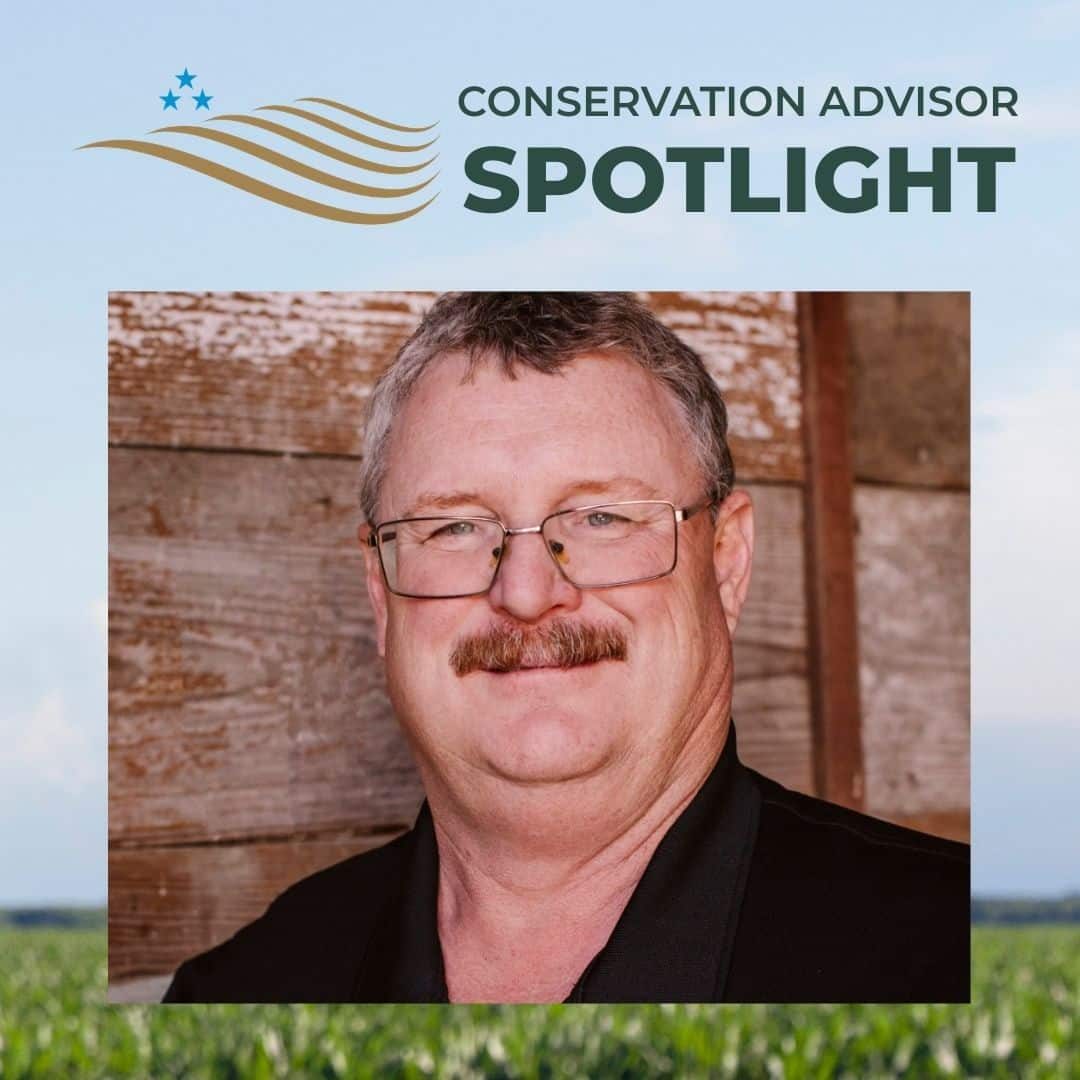
TJ Kartes: Regional Sales Manager at Saddle Butte Ag
Don’t hide your cover crop fields, put it out front and learn from it.
TJ Kartes
TJ Kartes is a Regional Sales Manager at Saddle Butte Ag. He is based in Blooming Prairie, MN, and covers all of Minnesota, Iowa, Wisconsin, North Dakota, South Dakota and eastern Nebraska. This interview has been edited for length and clarity.
What location are you working in?
TJ: I work in Minnesota, Iowa, Wisconsin, the Dakotas, and little bit in Eastern Nebraska. I work for Saddle Butte Ag which is based in Oregon as a regional sales manager selling cover crop seed.
What is your background?
TJ: I grew up on my mom’s home farm, working with my uncle and watching him farm. He was an early conservation adopter. I graduated from high school in ‘86 with the plan to go home and farm, but with the farm crisis everyone was talking about getting out of farming,
so instead I went to ag school and took finance and business with agronomy and feed classes. After school I worked at the canning company in Owatonna for five years, and then I ended up at a feed mill for 19 years. Since ‘92 I’ve been selling seed corn and beans as a side business, so I’ve always been in the ag world selling something. In 2007 I started working with companies selling cover crops, and since 2011 I’ve been working to promote cover and forage and that kind of stuff. I’ve always been conservation minded and my uncle was always doing reduced tillage, so I realized that there were better ways to do things. 2014 is when I started working with Saddle Butte Ag.
What are your areas of expertise?
TJ: Cover crops are my expertise, and I focus on how to implement cover crops and reduced tillage in whatever your farming system is. I think about advancing the farming system so that the cover can make the farmer as much money as possible and make sure each farmer gets a good return on investment.
What does a visit with you look like for a farmer?
TJ: When I meet with a farmer I usually ask a series of questions about what they’ve been doing and where they want to go. We talk about if they want to strip-till or no-till or plant covers, how they want to do it, and what their knowledge is. Every time I’m out with a producer, I talk about what troubles they have so they don’t have to reinvent the wheel. Then I make a plan, because I believe building soil health requires systematic change and you have to change multiple things on your operation to make a difference. I teach farmers how to implement new systems, like applying and terminating covers, and we can talk about equipment changes. I always do more education than sales in the beginning because the education piece is what needs to happen more than sales.
Some farmers call the head office to get in touch, or I do a lot of trade shows and county meetings where I pass out my card and some people get in touch that way. Sometimes I get started with a farmer and turn them over to the dealer.
How can a farmer plan ahead to get the most out of a visit with you?
TJ: Think about what you are trying to accomplish and what your focus is. The tough part about walking into a meeting with a farmer is that there will be some people in the room who may be interested in changing practices, but somebody in the room could be completely against it and they’ll be vocal about it. It’s good to know if that’s the case so I can prepare comments and talk about how these practices work.
What are the benefits for a producer working with you at Saddle Butte Ag?
TJ: Our price point is excellent and so is our education. I live in the north, I’m not coming from states away or from a major seed company, so I know how things will work up here. We’ve had a lot of experience, so working with us is great because we’ve learned from our failures.
What programs or conservation opportunities have been most successful for producers in your experience?
TJ: We’ve had some good success stories with farmers starting with a rye cover crop and moving into multi-species covers. They’ve been happy with what they’re doing and they aren’t quitting. Some farmers we’ve been working with for eight or nine years are going up to 1,000 acres of cover crops and they’re giving us great reviews and are seeing the benefits financially, with some ROI. That’s the whole reason to make changes. The environmental side is huge, but the ROI really matters.
We worked with a landowner who had a young guy farming his land. There were some winds one day, and the landowner called us up and said, “I’m glad you’re doing this because the soil isn’t blowing away.” That was a big deal because he had been farming all his life, but he saw why the young guy farming on his land made some changes.
What advice do you have for farmers who are just getting started on their soil health journey?
TJ: For corn and bean growers, start adding cover crops to your rotation after corn and before beans. When we talk about fertility, that’s important after a corn crop, and an easy starting point is cereal rye as base for your cover. There are a lot of different ways to apply it, like flying it on or spreading it, and if you fly it on you can add a few more species to the mix. And don’t hide your cover crop fields, put it out front and learn from it. Strip-till corn is an easy starting point too. Just don’t jump into early interseeding corn, and adding cover crops into your rotation after beans and before corn creates a few more
challenges.
Interested in working with TJ to plant cover crops on your farm? Connect with him at: tjkartes@saddlebutte.com or 507-339-1742
Conservation advisors work one-on-one with farmers to assess resource concerns and find opportunities for stewardship improvements. These advisors can be found at organizations across the state, from Extension offices to Soil and Water Conservation Districts to wildlife-focused non-profits. MFU regularly features conservation advisors to share how their assistance can support your farm goals. Read more in this series here.