Tina LeBrun: Executive Director of Minnesota State Southern Agriculture Center of Excellence
The simple way to put it is that Farm Business Management is an unbiased viewpoint at a farmer’s management table every day of the year, and that’s very valuable because the [Farm Business Management] instructors aren’t trying to sell anything, but instead are focused on keeping farms more profitable.
Tina LeBrun
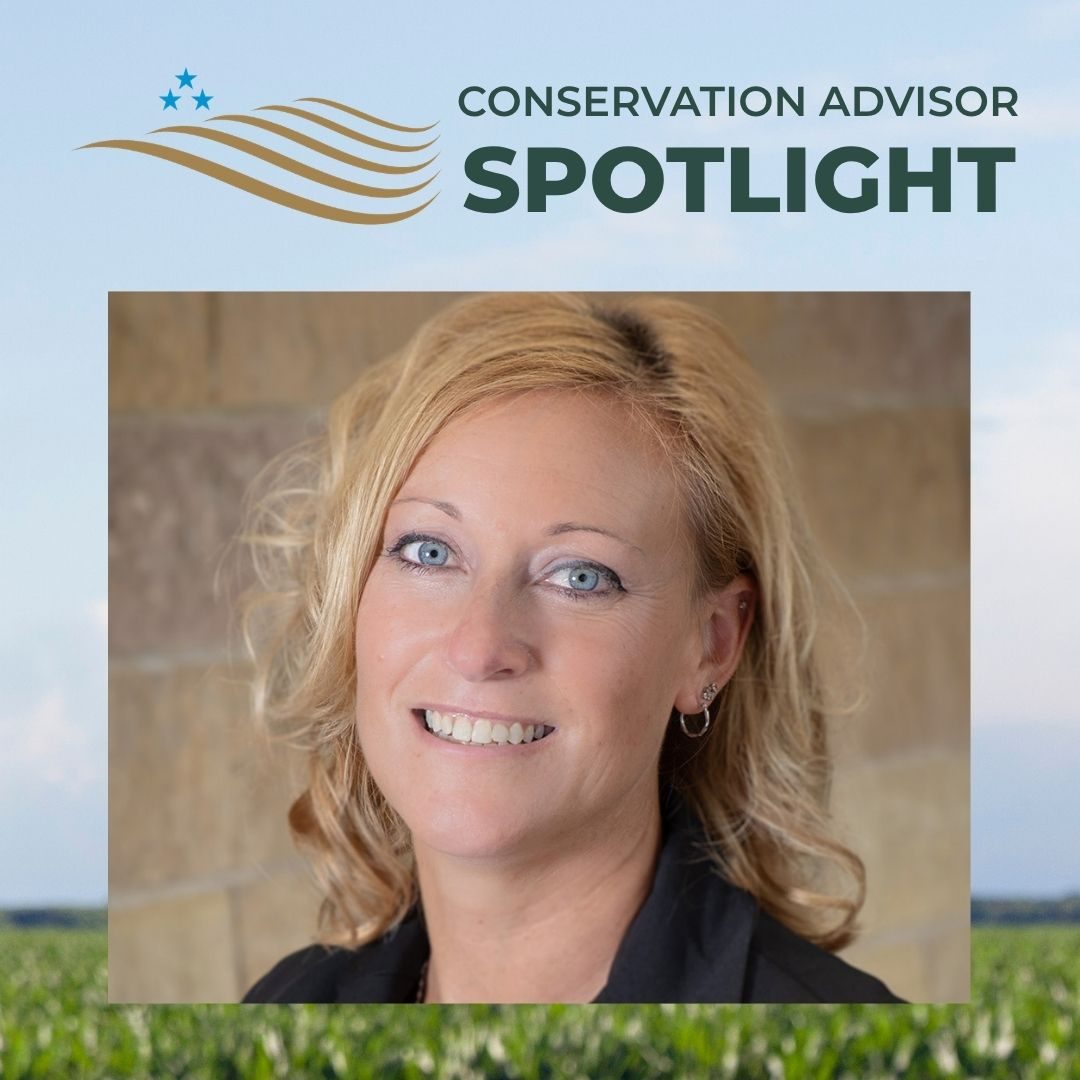
Tina LeBrun is the Executive Director of Minnesota State Southern Agriculture Center of Excellence. She spent 16 years as a Farm Business Management (FBM) instructor, and currently codirects the Minnesota FBM program in her role as Executive Director. She is based in North Mankato. This interview has been edited for length and clarity.
What is your background?
Tina: I spent 16 years as a Farm Business Management educator myself, which stemmed from being a farmer’s daughter and married to a farm producer, and being thrown into the thrush of keeping records on the farm. That experience allowed me to grow as a producer and then later as an educator. The Farm Business Management position just fit into what I was already experiencing in my day to day.
Currently, I have been the Executive Director of Minnesota State Southern Agriculture Center of Excellence for about two years. As the director, I codirect with the Minnesota Farm Business Management program and facilitate our instructors to work with producers on their farm financials. Our organization has been helping farmers for over 70 years.
What are the benefits for a farmer working with a Farm Business Management Instructor?
Tina: All the education through Farm Business Management is learner-driven, meaning each farmer drives the curriculum based on what their farm is experiencing, whether they are beginning or transitioning farmers. In that sense, the instructor provides individualized education throughout the year. The simple way to put it is that Farm Business Management is an unbiased viewpoint at a farmer’s management table every day of the year, and that’s very valuable because the instructors aren’t trying to sell anything, but instead are focused on keeping farms more profitable. It’s relationship driven more than anything. I will say it’s funny how you start working with a farm that’s transitioning, and then they remain enrolled for 30 years because it is one-on-one and centered to a farm’s needs.
How should a producer prepare for a first meeting with a Farm Business Management instructor? What should they bring?
Tina: If it’s a brand new farmer, we ask for any type of financial documentation that exists, such as a balance or cash flow sheet at the bank or with FSA. We start there and find a snapshot of their financials. It’s also valuable if they bring a farm accounting or record keeping book that they might use for taxes which can be as simple as any type of Excel document. If that doesn’t exist, we can sit down and create that together, which happens a lot with young farmers. We tell them to bring any assets or liabilities they have for themselves and we build from there. The financial information becomes the basis for the education that instructors are providing.
What is it like for a farmer to get started working with a Farm Business Management instructor?
Tina: The founding point of our work is creating and setting up farm financials through FINPACK. That becomes two-fold because you are using that information to drive everyday decisions on the farm. This time of year for example, we spend time benchmarking that data against other farms of similar size with the same enterprise to get a gauge on the economic performance of our farmers. Once we have those benchmarks, we can drill that down to a metric and look at how we can help each farm improve.
How can a farmer get in touch with a Farm Business Management Instructor?
Tina: Reach out to our office at the Southern Agricultural Center of Excellence. Our website is www.centerofagriculture.org and you can find more information about Farm Business Management. Contact me and we can help you find an instructor that’s a good fit, we are helping farmers statewide.
How do you see Farm Business Management fitting into conservation or soil health? Is there a connection?
Tina: At the moment, we are in our fourth year of producing a cover crop practice economic impact report with our Farm Business Management producers. We have been producing that for three years and are also creating a water quality practice financial report. You can find those reports on the website. They are created to help producers navigate implementing those practices, and it also serves as a means for education for those considering the economic benefits of agricultural conservation practices. We compare both practices together as well, because some producers we work with are doing both. Those producers are spearheading cover crops for all of us as they look to find more profitable means to reaching their goals.
What would you say to a farmer that is concerned about return on investment for conservation practices?
Tina: Through our cover crop and water quality reports, we found a lot of themes. I’ll focus on cover crops because we have three years of data so far. This past year we had 126 cover crop farms in our cohort, compared to 2314 farms that make up our Farm Business Management database. Compared to all the farms in our database, the cover crop cohort had more livestock and overall diversification on average, they were earning on average 2 percent more from their livestock enterprises, and their profitability was showing higher gross revenue and net cash overall. The cover crop cohort showed stronger performance in 2024, but in 2025 had a significantly higher median income than our other farmers, and a better debt to asset ratio and therefore reduced financial risk. This three-year trend on cover crop farms is showing a pattern, and a key takeaway is that our cover crop producers don’t appear to show weakened profitability, but instead show stronger balance sheet health.
These overall findings support that the economics of cover crops are best evaluated as a system, not just a standalone expense. That means when you are considering cover crops, you won’t get the true value by trying it for a year because it’s a system approach, meaning farmers should try at least 3-5 years to find the true economic value.
Do you have any success stories of your time working with a producer?
Tina: The greatest success stories in the Farm Business Management sector are when you are able to help a farm family transition from one generation to the next. That is a significant process and takes a great deal of patience, communication, and time to plan a successful situation. By a successful situation, I mean the family is still intact and communicating openly, and the farm remains profitable for both generations. It is challenging because our farms today are more complicated than they used to be, and there’s entities in place to facilitate the transition process, but that creates complexities and some stress along the way. Anytime a Farm Business Management Instructor can navigate a transition successfully, that is most definitely a home run or success story, because that’s what we hope for when we go to work every day.
How have you seen farmers overcome the challenges that come when managing their business and financials?
Tina: The key for many of us in the education world is emphasizing communication. We recommend farmers communicate early on with your cooperative, seed dealer, and your nutritionist when making decisions. On the lending side of things, most lenders would say that when issues arise you can’t communicate early enough. Nothing is more appealing to your lender than openly communicating. Overall it’s important to keep communication lines open as you share the situation with those involved, whether it’s something troubling or a positive change like growing your operation.
Also, it’s never too early to update your financials. Some producers I know are even updating their balance sheets every month.
What tools or resources do you recommend farmers use to help them withstand environmental, market, and other pressures?
Tina: I would have to recommend enrolling in Farm Business Management, you can’t go wrong with utilizing the program to align your farm to success.
The second thing is to have a team that you trust. That can be your family or whoever works on the farm, and even expand to include all the people who have stakes in the farm, like your bankers, accountant, or an attorney. Set up a sort of advisory committee to have more structure like a business or corporation, and have regular monthly meetings with all the people who have a stake in the farm. That is really critical throughout any stage, as farming deals with complex issues nowadays.
What are you looking forward to in the 2026 growing season?
Tina: Well gosh, we are cattle producers and sitting where I am now with baby calves and tractors moving all around, I can’t help but to be an optimist about the year ahead. We are in love with the agriculture industry, so nothing beats this time of year and being excited about a certain crop or enterprise. We are always thinking about the things we can control instead of what we can’t, like fertilizer prices, because it’s important to enjoy the things we value in the ag industry. It excites me every year to watch how well we can control what we can.
Interested in enrolling in Farm Business Management? Connect with Tina at: tina.lebrun@southcentral.edu or 507-389-7391
Conservation advisors work one-on-one with farmers to assess resource concerns and find opportunities for stewardship improvements. These advisors can be found at organizations across the state, from Extension offices to Soil and Water Conservation Districts to wildlife-focused non-profits. MFU regularly features conservation advisors to share how their assistance can support your farm goals. Read more in this series here.