Lack of infrastructure is challenge for first-generation farmers dealing with impacts of changing climate
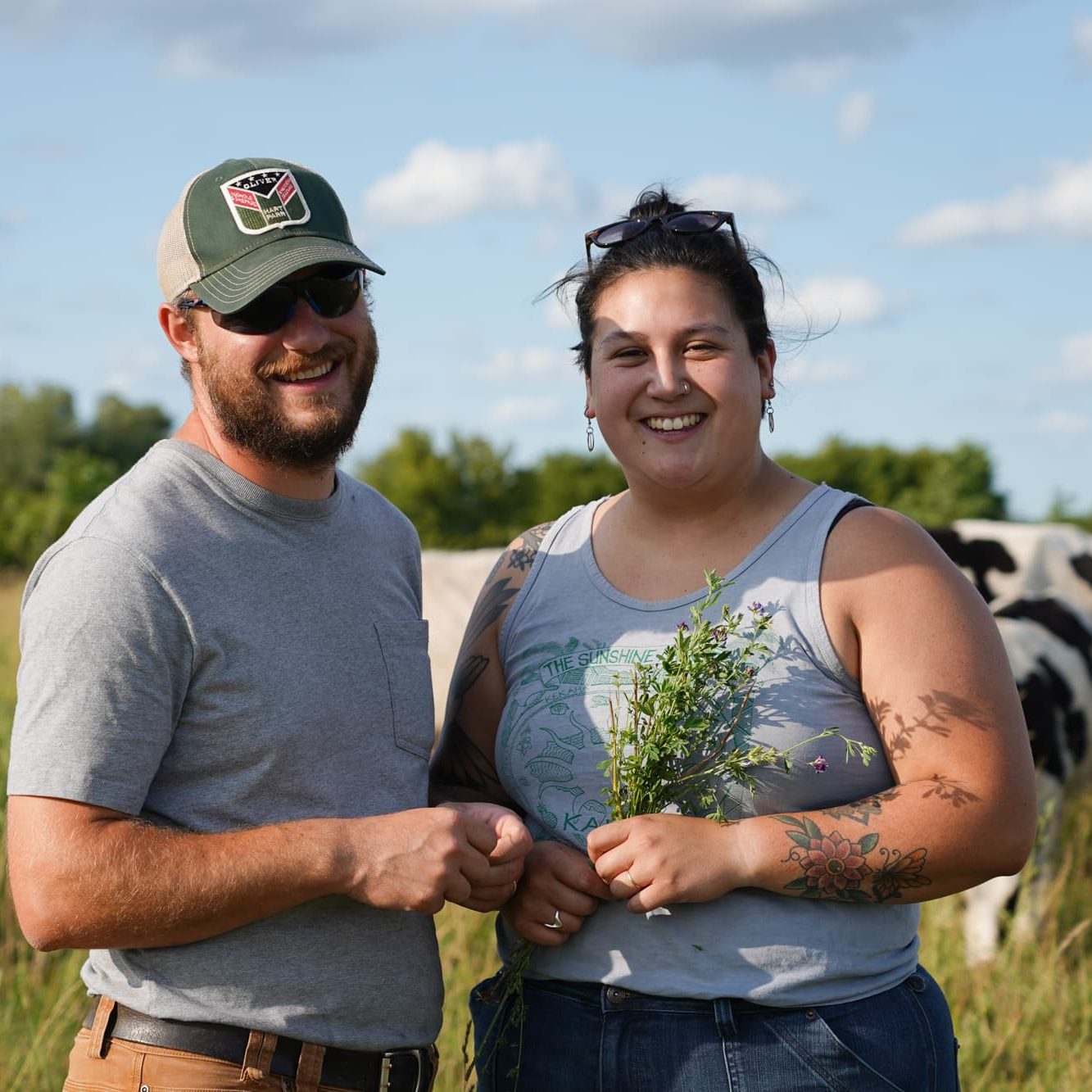
Tessa Parks and her husband, Wyatt, are first-generation farmers raising grass-fed dairy beef and operating a custom hay business in Rice County.
Tessa moved to Minnesota to pursue an education and career in chemistry. She and her husband are both from Washington, but they decided to stay in Minnesota where the quality of life is higher and land access for their farming goals seemed more feasible. Although neither of their parents farmed, both Tessa and Wyatt had dreams of working with the land. In 2021, W.T. Farms was established.
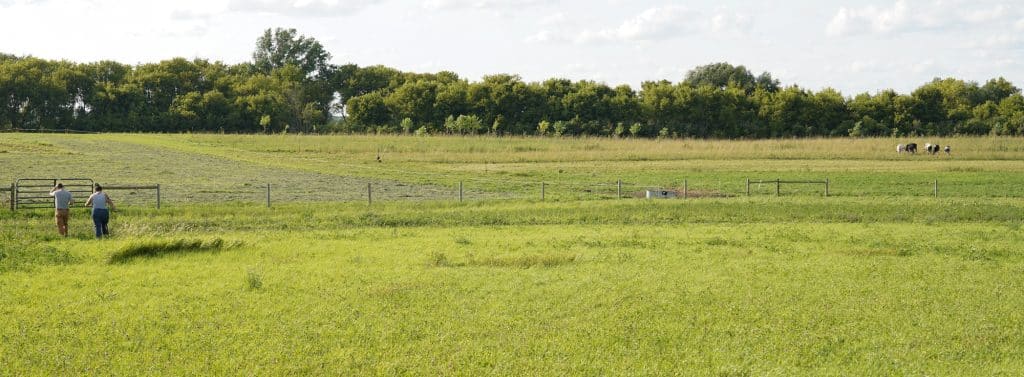
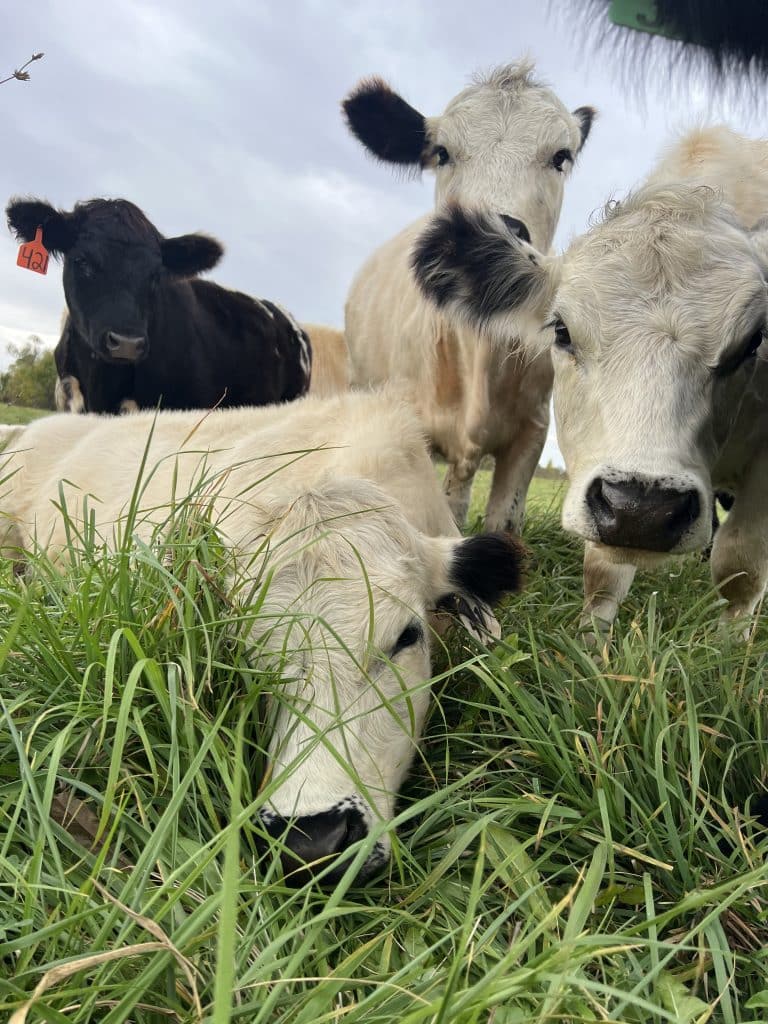
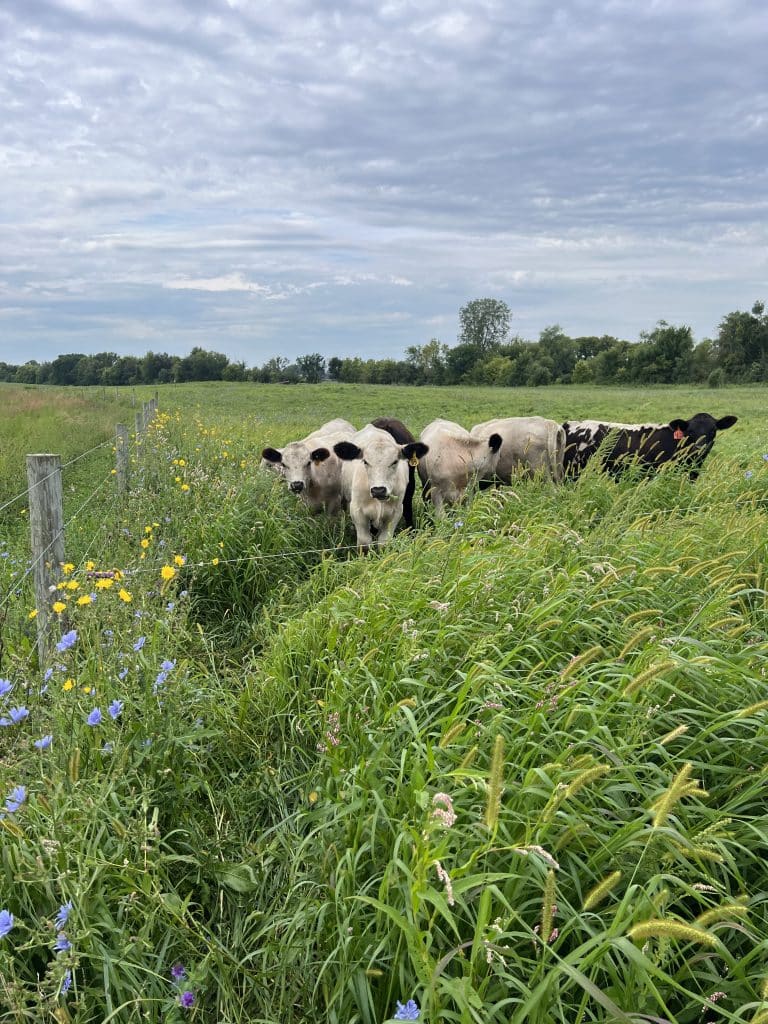
While renting land from Sharing Our Roots Farm, an educational farm and nonprofit, the couple began raising two Holstein bull calves purchased from local dairy farmers. This year, they are raising 15 steers. They make hay for their own herd and sell excess to other small farmers. Their beef is marketed direct-to-consumers at farmers markets and online.
This interview has been edited for length and clarity.
As you have started farming how have you been planning for the future?
Tessa: We are very intentional with how we farm. We have to be incredibly adaptable at Sharing Our Roots Farm when it comes to climate and land access. Sharing Our Roots Farm provides land access as well as technical assistance and resources for marginalized and emerging farmers. We are taking advantage of the opportunity to rent land with the intention of moving out eventually. Therefore, we want every space our animals occupy to be left in a better way than when we found it. We both have off-farm jobs as a backup plan knowing the unpredictability of farming. We started off making hay for ourselves and the local community, however we are now looking state and nationwide knowing the current need for hay due to the drought. We utilize opportunities like mowing Conservation Reserve Program (CRP) land with thistle problems or haying natural lands to control invasive species. We are building our business in a way that we know will work no matter where we are.
Has climate change informed your plans for the future of your farm?
Tessa: Climate change has informed our plan when it comes to haying and grazing in terms of preparedness, how can we be best positioned for resilience? For example, if there is not enough dry matter production in a pasture, we are moving the herd to prevent damage. In our current location, using rotational grazing, the steers presence is restorative. However, there is an urgency in finding more stable land access. In order to utilize the regenerative practices we want, we need the flexibility that comes with being primary tenants. Owning our own land might also allow us to have permanent infrastructure for hard winter temperatures. These factors are causing us to put the pedal to the metal when it comes to finding new spaces to farm as well as a need for a homebase location.
Are you facing challenges in relation to climate change management?
Tessa: Temperature and permanent infrastructure are our biggest challenges of climate change management. As cohort members we need to be able to farm with almost no permanence. Temporary fencing requires lots of labor. In the past we have been worried about getting enough hay cut for winter. It is essential to monitor pasture health, and we would like to use a more intensive rotational grazing practice which would require better fencing and more time. In our current situation we are not nearly as adaptable as we need to be to face climate unpredictability.
What barriers do you see to the adoption of conservation practices?
Tessa: A lot of helpful conservation practices are not the norm in this area. This means there is no support system in place. There aren’t programs prepared to help farmers in a system where farmers have to be prepared for the worst in order to survive. Our steers are on a pasture that was corn-on-corn for 120 years. With no support the transition to conservation practices is very hard. There is no incentive to take the risk of changing your ways. There is no safety net.
How has your farm operation remained resilient?
Tessa: Our unique farm structure, with bottle calves, pasture raised animals, plus the ability to hay, made it so we can always be able to feed our animals, which is huge. We are closely monitoring our pasture spaces and rotationally grazing. This allows us to look farther out into the future based on the health of a particular section. We are always reevaluating, and figuring out if we need to make a change. We also have accommodating animals. They are good at letting us know when they need a move. There is also a wonderful farming and local community that we are a part of.
What do you think people are missing in the conversation around climate?
Tessa: I think especially as a beef grower, people miss the value of locally farmed foods. There are a lot of publications on meat industry emissions, comparing emissions of vegan versus omnivore diets, leading to suggestions of eating less meat. I think this is a gross generalization about factory farms, not family farms. Farms like ours help the ecosystem, help with food security and benefit the planet. People miss the piece of the important role our farm plays in the ecosystem.
Additionally, a single conservation practice is a step in the right direction but not enough. Everything we do as farmers, consumers, producers, is interwoven. Everything needs to be done in concert, to keep the momentum of caring for the earth going. Everyone’s intentions and actions feed back to the ecosystem then to the farm and the food produced. It is not just one group’s responsibility to be stewards of the earth.
What opportunities for advancing climate-smart agriculture through markets and policy have been on your radar?
Tessa: My thoughts have been circling around antitrust policy. As meat producers we felt the effects of the processing monopoly crash and its reverberations and aftershocks. This also ties into the right to repair. This affects our sustain ability as a two-person farming operation. We need to be able to fix equipment ourselves when the dealership can’t. Breaking up monopolies is related to food access and security measures. We should be able to have a larger reach as producers giving more people access to good healthy food. We need to be able to process our meat at the equal-to level in order to sell it by the cut at markets. We need additional UDSA inspected plants locally.
If you could tell Congress to do one (or two) things that would help you continue to farm in the next generation, what would it be?
Tessa: The top two things I would like Congress to address is one, keeping farms and agriculture land in agriculture. We need to be able to keep farmsteads together so emerging and first-generation farmers have a place to call home and grow food at the same time. We need to create additional avenues for land access. Minnesota is just scratching the surface. Land transitions to first-generation farmers should be more appealing to landowners. There should be incentives to keep the land in agriculture and not split it up, selling to the highest bidder. Two, we need an even stronger stand against pesticide drift. One farm’s practices shouldn’t hold the power to destroy another farm. This requires the full system of agriculture to be accountable in protecting one another and being neighborly. If a practice is not in the best interest of someone else’s farm, it probably is not in the best interest of yours.
From heavy rains to extreme drought and damaging winds, farmers are adapting and changing. The ‘Climate Resilience on the Farm’ series features Minnesota farmers who are using practices to make their farms more resilient as the climate changes. Read other articles in this series here.