Soil scientist informs her family’s farm practices to increase organic matter, reduce pollution
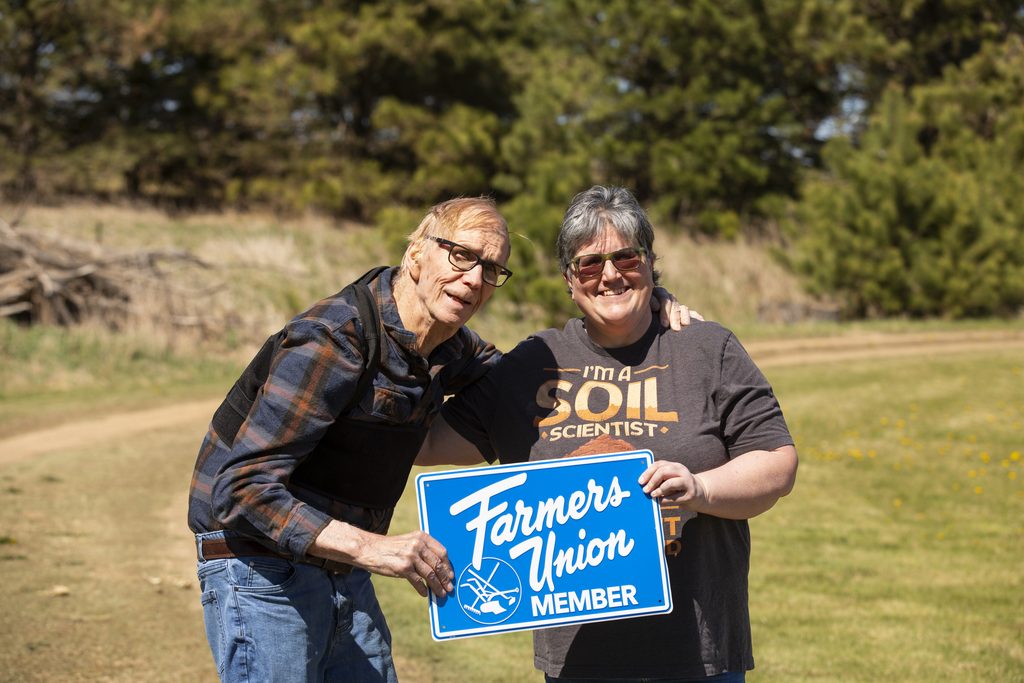
The Nichols Family has a 640-acre farm in Lincoln county, where they grow corn and soybeans, have land in a Reinvest in Minnesota (RIM) Wetlands Reserve Program (WRP), and have a wind turbine to generate renewable energy.
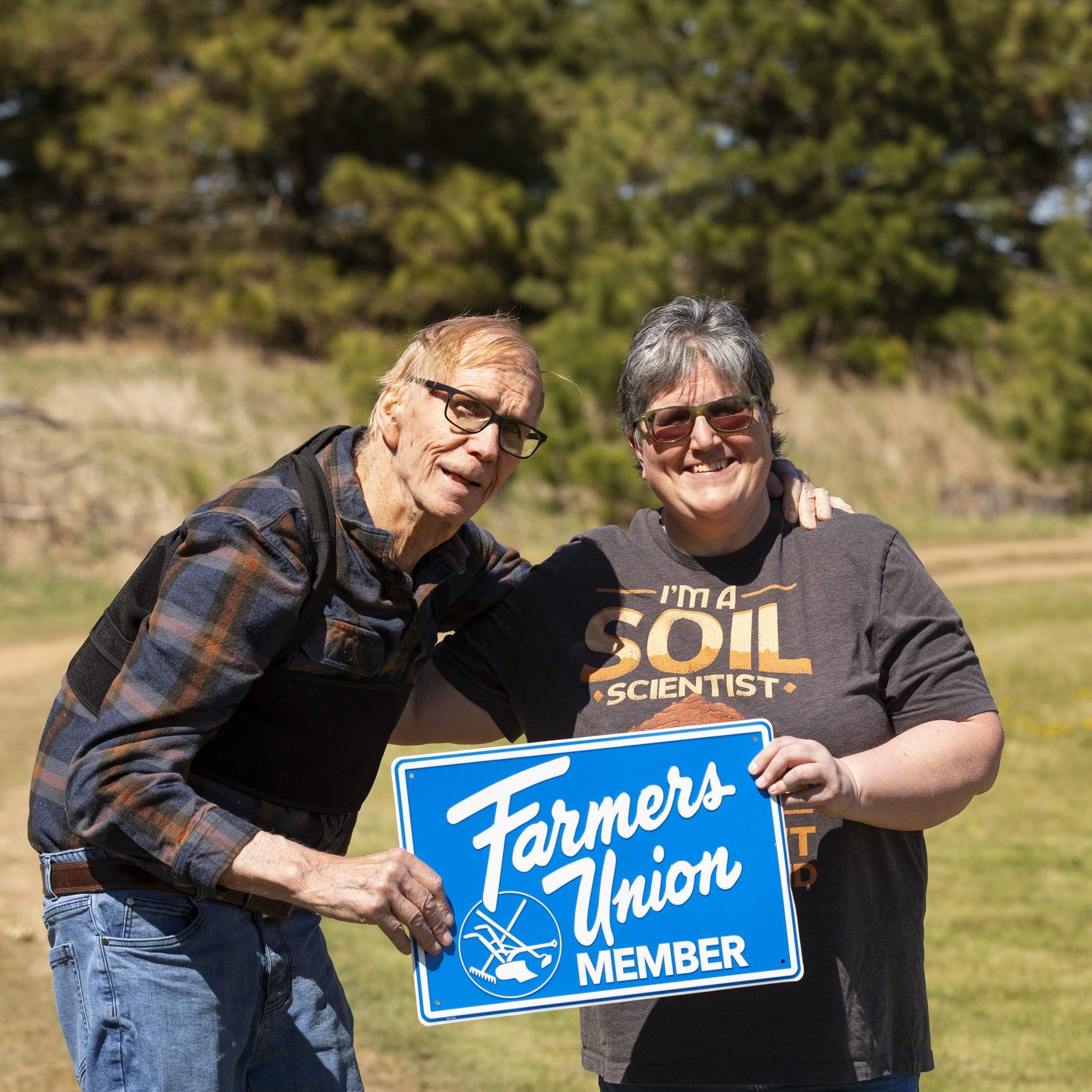
Jim Nichols was the Minnesota Department of Agriculture Commissioner from 1982 to 1990. He has retired from full time farming, but continues to farm alongside his family. His daughter, Dr. Kris Nichols, is a soil microbiologist and has informed the management practices on the farm over the years. Kris, along with her brother-in-law Al Trigg and her nephew-in-law Glenn Hofer, are the next generation farming the land.
This interview has been edited for length and clarity.
What is the background of your farm?
Jim: I bought my farm 50 years ago at a very low price in Lincoln County. Because I bought it so cheap, I’ve made a very good living out here. When I started farming I was moldboard plowing and I had four row planters and a two row combine, that’s how it was back then. I was always hoping to get 100 bushels of corn an acre but never got there.
Since I bought my farm I’ve added two more pieces of land totaling 640 acres, or one square mile. I’m 80 years old and retired from full-time farming two years ago, but I have the machinery so I keep going. Over the years I’ve grown a lot of things, but right now I’m only growing corn and soybeans.
Kris: My brother-in-law and my nephew-in-law are the next generation on the farm who have been doing the field work for about seven years now. They’re renting half of the farm, and then on the other half they’re doing custom labor for my dad, so they make their decisions on their half and dad makes his decisions on his half.
After 25 years I’ve moved back to the area, and I’ve been using some of my dad’s land to conduct experiments. I also manage an approved cattle grazing plan on a section of the farm that we have in a Reinvest in Minnesota (RIM) Wetlands Reserve Program (WRP) to permanently protect and restore wetlands and associated native grassland habitats.
Have you seen weather patterns changing over the years? If so, how has that impacted your farm?
Jim: Of course the weather has changed because it’s hotter and drier now. When I first started farming I didn’t expect the land to get dried out, but I kind of expect that all the time now. Like every farmer, I keep track of the weather all the time. They’re predicting that some places in Minnesota this summer will have four days in a row of temperatures over 100 degrees, and that really hurts the crop because it takes so much water out of the ground and plant. Luckily, by farming with changes I’ve made with Kris’s help, I’ve been able to get through drought and still get a successful crop.
Kris: We’re able to harvest a little bit earlier than I remember us harvesting in the past. With it being so hot during the summers now, the crops, especially corn, seem to be growing really fast.
It’s also been warmer over the winter in particular. In the winter we’ve seen a lot less snowfall and snow not sticking around if we do get it, which impacts spring conditions. Recently we’ve had very dry springs during the time we’re normally planting, so we have some difficulty being able to get the seeds to germinate because we’re waiting for rain.
What management changes have you made on the farm over the years?
Kris: I think the biggest change we’ve made was building our organic matter. My dad has been able to increase his organic matter levels by eliminating fall tillage and instead only doing very minimal till in the spring to incorporate fertilizer and make a seed bed, so there’s no in-season tillage and there’s no fall tillage.
Additionally, for a very long time my dad has looked at how we’re managing nitrogen fertilizer. Fall fertilizer applications on farms oftentimes end up contaminating our groundwater and our lakes because of wind and rain erosion, so very little of it is taken up by the plants. Here in southwestern Minnesota that pollution has had a major impact on our groundwater.
Jim: Fertilizer applied in the fall can easily get washed away from rainfall before corn has time to absorb it, which hurts your yield in addition to polluting our groundwater. So instead of fall fertilizer applications, I apply dry nitrogen fertilizer in the spring during seeding, which is closer to when corn will actually absorb and use it. Corn uses almost all of its nitrate in about 28 days during the time it starts growing consistently, around June and July. Timing is everything with fertilizer applications.
Have you seen positive outcomes since you’ve reduced tillage passes and managed fertilizer more efficiently?
Kris: At this point my dad doesn’t have the erosion on his fields that has happened in the past, and he doesn’t get the gullies that his neighbors get either.
This spring was really dry, but as I was driving around and looking at his neighbors and his fields, I noticed he got better and faster germination of his crops because he was able to hold on to water through higher levels of organic matter. Germination rates can really affect your yield in the end, and being able to make those changes has improved things dramatically.
Jim: I have very good yields now. I generally forward contract 200 bushels of corn an acre, so that’s what I shoot for, and I pretty much get there every year which is important. But what matters more is the environment and the things we do on our farm to help it.
Besides changes to the row crop operation, what other conservation practices does your family implement on the farm?
Kris: With rolling hills on the land, we’ve had a small area that’s always been in pasture. About ten years ago, my dad put about 55-acres of that land in a long-term easement with Reinvest in Minnesota (RIM) Wetlands Reserve Program (WRP). The land is fairly wet and has a creek that runs into the Missouri River, and we want to make sure that we’re filtering the water by having ample organic matter on the land. I manage those acres and we have a grazing plan on it, so we have some neighbors that bring their cattle to feed on the forages.
Additionally, my dad has done a lot over the years to add trees, windbreaks, and living snow fences throughout the farm to mitigate erosion from wind.
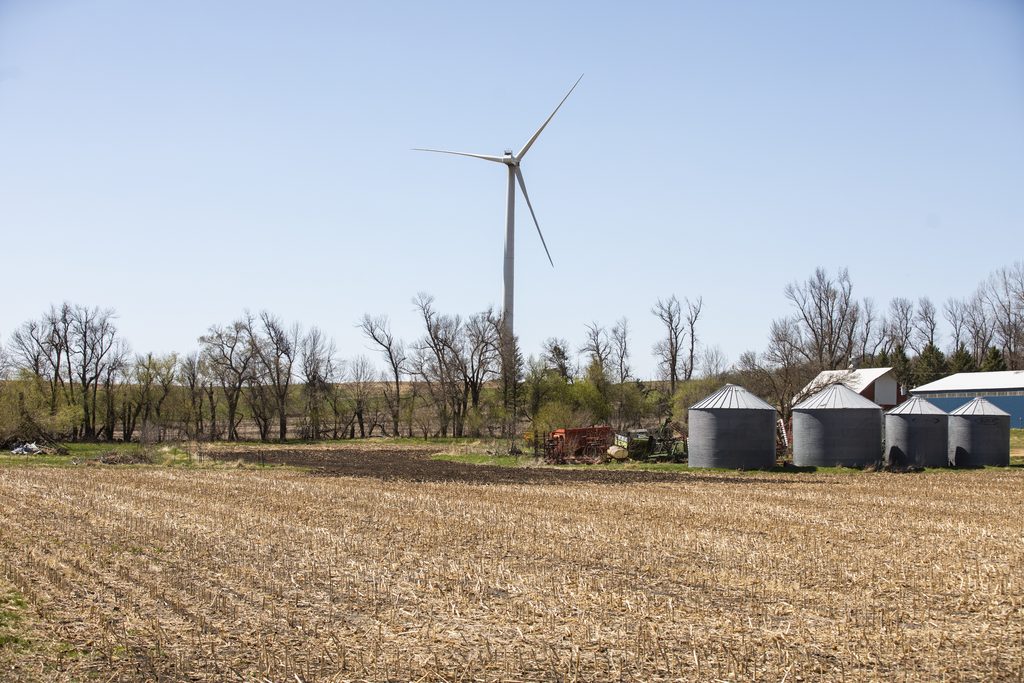
Jim: Speaking of wind, about 20 years ago I put up a big wind turbine on my farm and it generates enough power for about 400 homes. I’m glad I got that wind turbine because it’s cheap energy that reduces pollution, and I think as a nation we got to do a lot more of that. Wind turbines are great because they take nothing out of production.
Kris: It’s worth mentioning that while my dad was the Commissioner of Agriculture for Minnesota in the 80s, he was able to get legislation passed on ethanol and wind production, which helped farmers earn an income that allows them to stay on the land. Lincoln County was one of the poorest counties in the United States at the time. Now, with the wind production we have and the associated tax benefits, it has really changed the amount of income that the county has.
Are there more changes you still hope to make on the land to improve the farm or protect natural resources?
Kris: We’ve worked a couple of times on cover crops, and that’s something that we’d like to expand a little bit more into. When we tried cover crops in the past, we saw some positive things that were going on but it was hard to make some of the economics work. Unfortunately there’s a lot of infrastructure issues that exist in our area from a marketing standpoint that lock you into corn and soybeans. A lot of the local elevators have closed, so you have very few places to take your crop and they only take corn and soybeans.
My dad has also tried to grow oats on occasion, and after his oat crop he had the highest yield he’s ever had at a 316-bushel yield in corn, which was very impressive. But the oat crop was difficult too. We don’t have all of the equipment anymore to be managing a small grain, and it was difficult to find markets in our area that were close enough to be able to sell that crop to.
Your family is clearly passionate about conservation. What has been the motivation for you to implement and advocate for these conservation strategies?
Jim: Reducing pollution was a motivating factor for us to change, because we have a severe problem with carbon dioxide and nitrates. As farmers, those are the two main things we need to think about. Carbon dioxide is causing raising temperatures, and nitrates are polluting our groundwater, which can be really dangerous for drinking water. I don’t do any fall tillage because using fossil fuels for excess tillage causes more carbon dioxide emissions, and I don’t do any fall fertilizer applications because it can get washed away and contribute to nitrate pollution in our groundwater. We had to change the way we take care of our land to reduce those pollutants.
Kris: We are always thinking about what we can do to reduce our greenhouse gas emissions and pollutants, and in farming there’s a lot of opportunities to have a positive impact on that. That’s really what my dad’s been trying to do all of my life, and what I’ve been working with him in my adult life trying to do.
Reducing erosion was another motivating factor for us to change our practices. Since Lincoln County is very windy, we’ve had many dust storms during the fall which cause erosion. When our farm loses soil from wind erosion, the nutrients are also being lost and that has a huge impact on soil fertility and long-term economics. It was important for us to think about why we were farming the way we were, because tilling can be a self-defeating practice. As a soil scientist, I saw a reduction in tillage as an important and easy step to mitigate erosion by increasing our organic matter.
What is something that you are looking forward to?
Kris: Since I’ve just moved back to the area I’ve been able to use some of my dad’s land as an experimental test plot, and right now we’ve got an experiment set up to look at moisture loss on the bare spots between crops. Being able to make observations like that will be really important for us to understand how to best manage the land moving forward. I’m looking forward to continuing to learn from experiments on the land.
From heavy rains to extreme drought and damaging winds, farmers are adapting and changing. The ‘Climate Resilience on the Farm’ series features Minnesota farmers who are using practices to make their farms more resilient as the climate changes. Read other articles in this series here.