For owners of Radicle Heart Farm, changing climate means planning for many possibilities
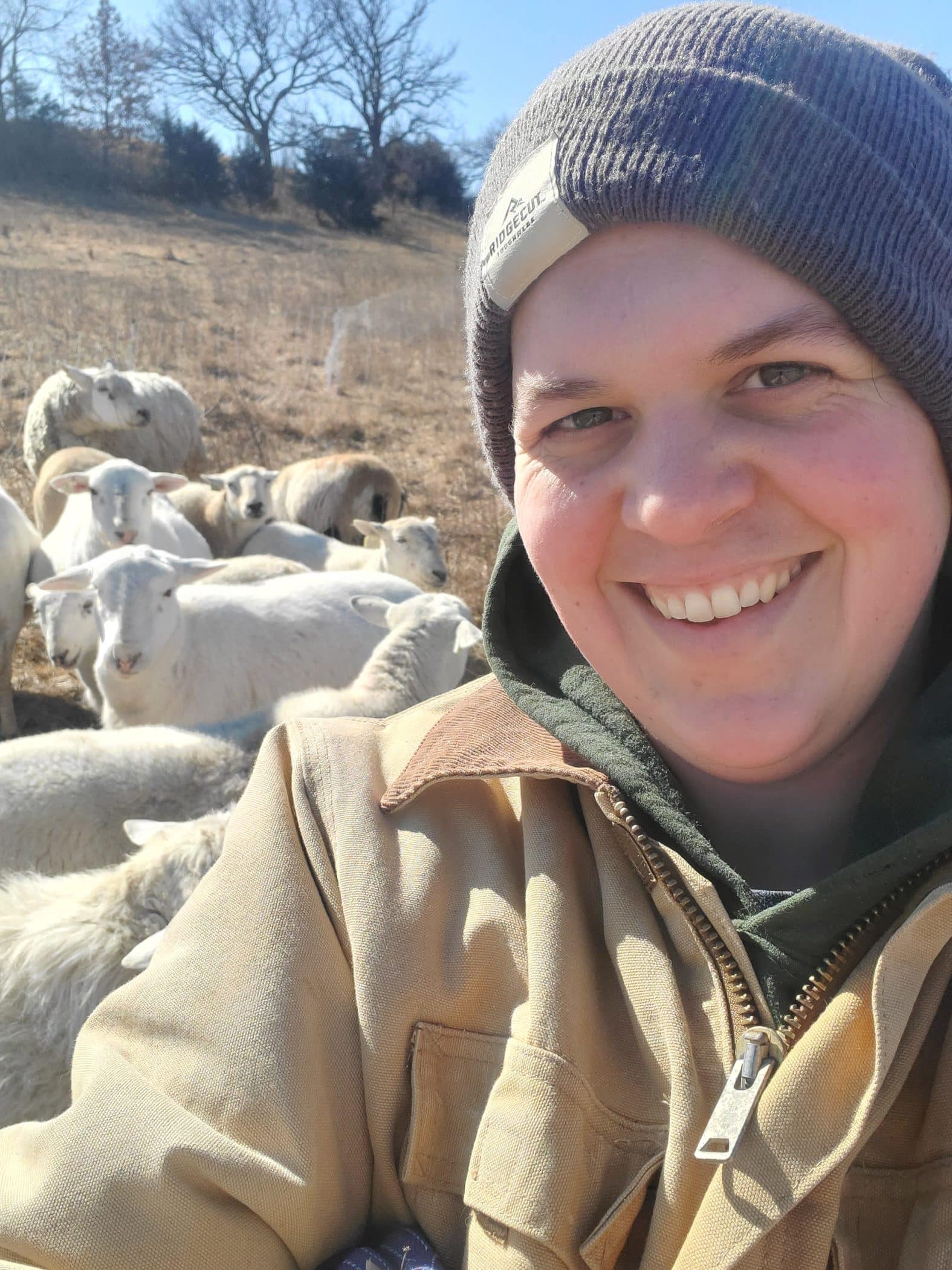
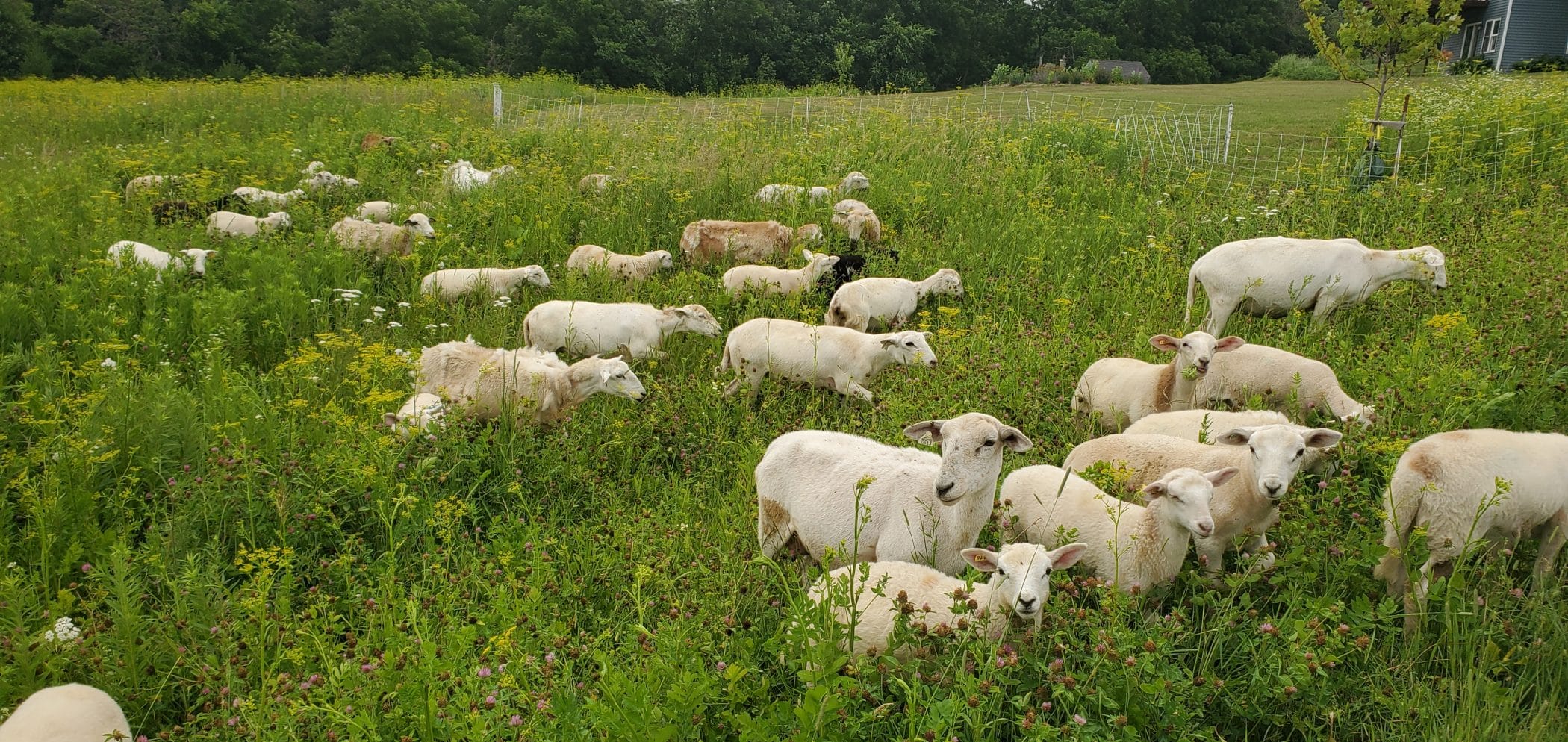
Andrea Eger and her sister, Heidi, have been farming in some capacity for over a decade. They started farming on diversified vegetable farms in college and then worked on farms in the Midwest and internationally before working on an incubator farm running their own business. Currently, Heidi grazes sheep on rented land and sells the meat direct-to-consumer in southeast Minnesota. She lives in Fillmore County. Andrea has a full-time job off the farm and is the Houston County President. Their joint operation is named Radicle Heart Farm.
This conversation has been edited for length and clarity.
Have you experienced any extreme weather events since you started grazing sheep on your rented land?
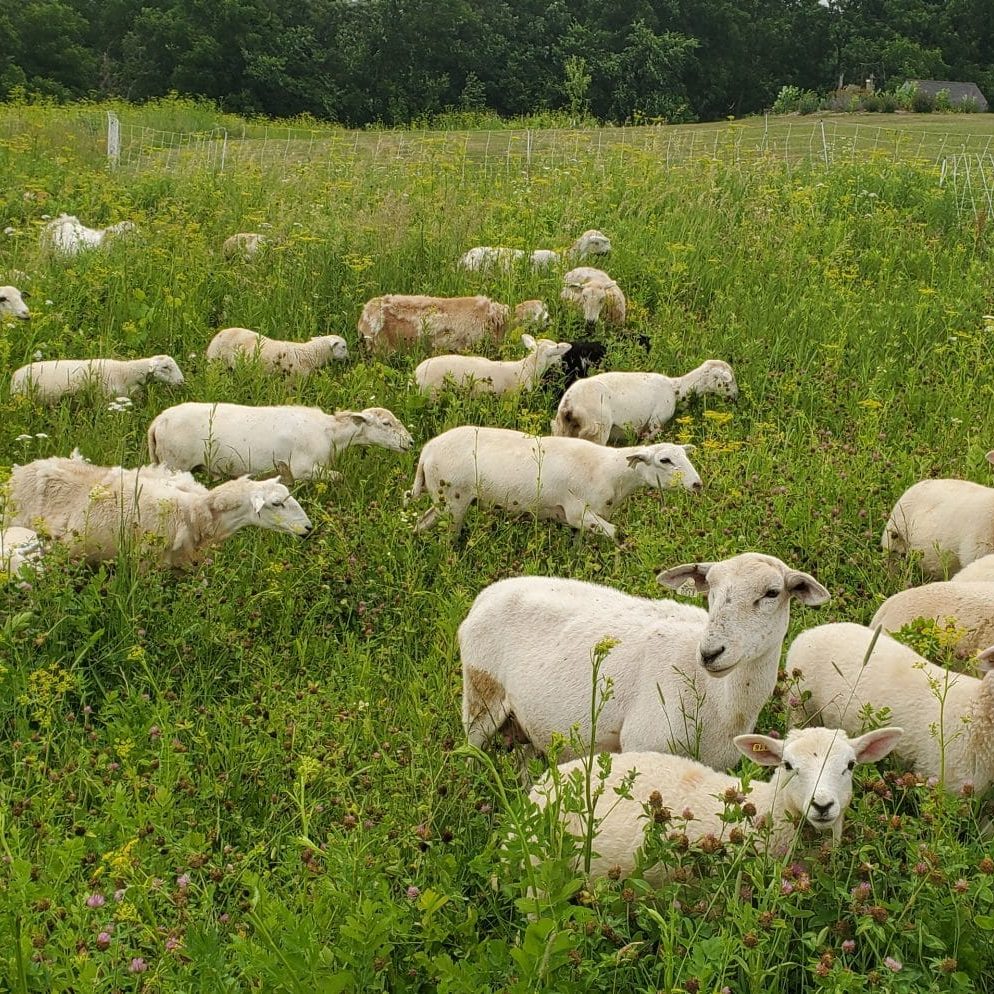
Heidi: Yes, I’ve been renting the land here for three years and two of the years have had a drought during which I ran out of grass to graze and had to shift to hay. The land I’m on now has pasture on a hill, so too much rain is not an issue, but too little is a problem. In the extreme heat I’ve had to move the sheep into pastures where the sheep can also access the woods for shade.
Every year the weather is different, but the extremes mean I have to plan for so many more eventualities. In the past, I made a plan for if it was too warm or snowed too much, but last year there wasn’t any snow which I didn’t have a plan for. I should’ve thought through that scenario too, but it just didn’t occur to me that it wouldn’t snow.
How have shifting weather patterns informed your farming plans?
Heidi: Climate change was the reason I was interested in livestock in the beginning, and why I fell in love with sheep. You can buy feed if you need to and move them around, but with vegetables if you get hail you’re screwed. We’re making plans with the ability to pivot with the weather conditions. We’re also looking at other enterprises and having a fall back plan to be able to shift things if we need to.
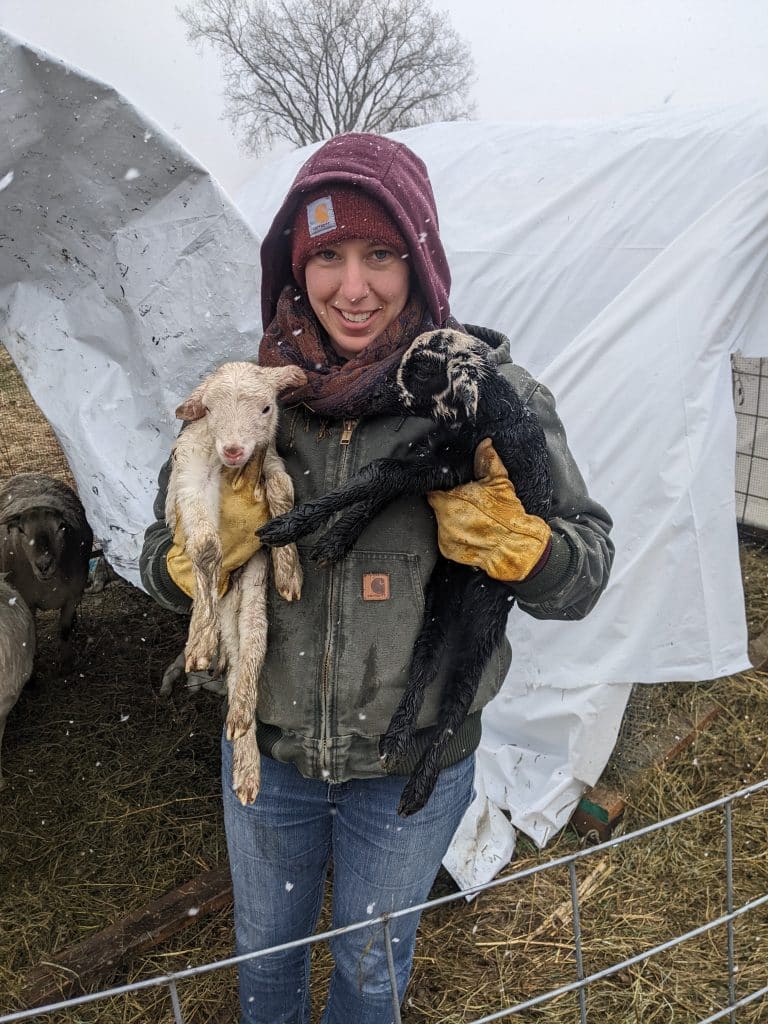
Andrea: Heidi has also done things like build shade structures to give the sheep shade when it’s really hot. Eventually the plan is to have a silvopasture system for shade.
I plan to plant native elderberries and there’s multiple different varieties that are marketable. Having that resiliency and genetic diversity in the system is important.
Heidi: Our shade structure works until it’s 90, but then there’s not enough space. We were going to have permanent fencing, but I need to be able to move the sheep in and out of the woods for shade. The Natural Resource Conservation Service (NRCS) advises not to have trees by your fence because it’s too much maintenance. I applied for the Environmental Quality Incentives Program (EQIP) with NRCS for a fence and waterline system, so we’ll see if I get awarded. It’s an evolving conversation about what is necessary as the weather gets weirder.
How has your farm remained resilient?
Heidi: We’re growing at a rate that is sustainable from a labor and pasture perspective. Switching from vegetables to animals and from an annual to perennial based system was part of the adjustments that we made to deal with labor and resiliency concerns.
We also have some luck and privilege in having really lovely neighbors who are always here to help with equipment or connections or moral support. I think that the community and people piece of farming can’t be overstated. I’ve had people suggest moving where the land is more affordable, but I can’t clearly put into words how important community is to farming. Being self-sufficient isn’t really a thing, we are nowhere without our neighbors.
We have lots of interest in comarketing with neighbors. For example, we have a neighbor who sells laying hens nearby and we’ve thought about raising egg layers to supplement their supply. That way we would have another income stream without doing any marketing.
Andrea: Heidi has done a lot to build community in this area. We are involved in groups for training and brainstorming rural development projects and we help other farmers out whenever we can.
What barriers are there for you to adopt conservation practices?
Heidi: For us specifically the first thing would be permanence. It’s hard to justify spending money or time doing projects that we won’t see the benefit from or won’t be maintained when we leave. For example, I got a grant to clear brush from the gully in the woods which will stabilize it, but if we’re not here and the next landowners don’t own animals it won’t matter. The permanence and financial aspect matter. If someone would give us a million dollars we would easily do the projects we are dreaming about right away.
Andrea: Technical assistance can also be a barrier. Heidi has gotten people out to the farm and everyone says something different. When she asks for advice about grazing, many technical service providers have given her advice that applies to cattle but she has sheep so it doesn’t all translate. So having people that really understand a diversified or different farming system is important. It’s taken over a year and a half to get a grazing plan done and technical assistance providers don’t know the special programs for emerging farmers, so many times we’ve had to tell them about programs that we qualify for.
Heidi: I’ve gotten the sense from NRCS that they are incredibly busy. My soil conservationist can work with a row crop farmer to install a grass waterway, or they can work with me on my 14 acres doing non-traditional conservation on a much smaller scale. It’s been hard to work together despite loving a lot of their staff. NRCS seems to be catered to larger farms with typical corn, soy and cattle.
As a small-scale farmer, what opportunities for advancing climate-smart agriculture through markets have been on your radar?
Heidi: I watch for programs pretty carefully to see if there is anything we can take advantage of to financially support the adoption of new practices. To be small-scale you have to be willing to market directly and I love doing that, but it takes a lot of time. It would be nice to have more programs for co-marketing.
Andrea: For smaller scale diversified farmers, I feel like the market opportunities are missing. With many of the federal programs being cut recently, it feels like we’ve taken a couple steps back with developing climate smart markets.
What do you think people are missing in the conversation around climate change and agriculture?
Heidi: I wish that making changes to support soil health didn’t come with stigma. All your neighbors should be congratulating you for trying something new.
Andrea: It’s really tough, I think there’s a big learning curve and cultural barriers to adopting new practices. Farmers don’t know how much financial support there is for certain systems of farming, and I wish people were taking advantage of that faster.
If you could tell congress to do one thing or two things to help you continue to farm into the future, what would it be?
Andrea: Create policies that support perennial agriculture and pasture, and find ways to market grass-fed meat to get a premium. Also, it was amazing to see the Minnesota Department of Agriculture Beginning Farmer Equipment Grant come through. It’s overwhelming how much demand there was, if we could quadruple the budget that would be great. I would love to see policy makers pull out all the stops to develop markets, infrastructure and more technical assistance avenues to help farmers diversify their rotations.
Heidi: I would say create more support for beginning farmers. Buying land is difficult. We have been talking to the owners of our land for at least a year. Everything takes time because I don’t have capital, and a regular bank won’t give me the time of day. I feel privileged to be in Minnesota for the Beginning Farmer Tax Credit and for the policy work that’s already been done here. We are aware of our privilege as middle class white ladies but that’s not available to everyone. There needs to be more financial support for people buying farm land.
From heavy rains to extreme drought and damaging winds, farmers are adapting and changing. The ‘Climate Resilience on the Farm’ series features Minnesota farmers who are using practices to make their farms more resilient as the climate changes. Read other articles in this series here.