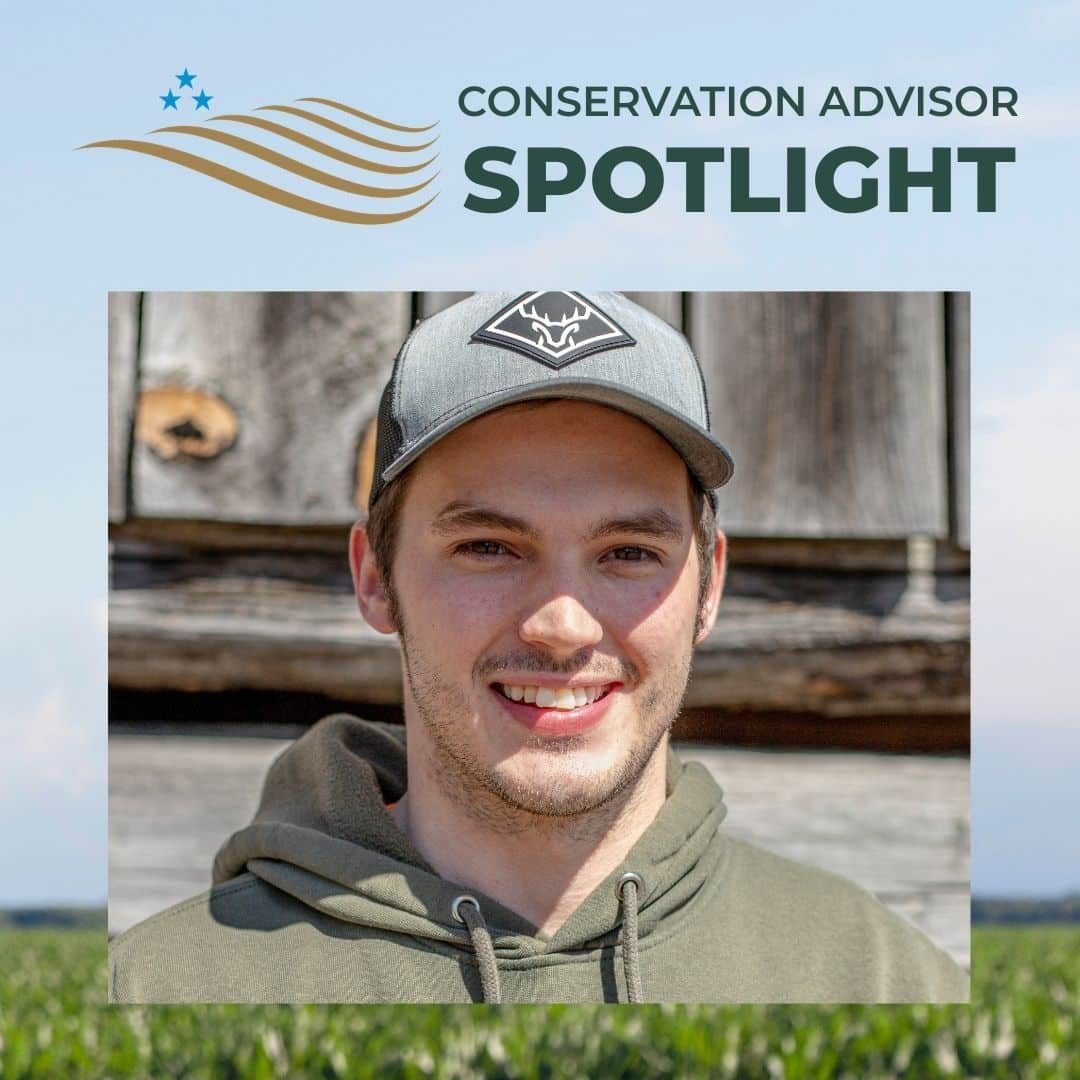
Mitchell Janson: CCA and Irrigation and Agronomy Specialist at Wadena and East Otter Tail SWCD
I get to cover a lot of ground and work with farmers in a 5-county area, so I can observe a lot of methods for implementing these practices which helps me when I’m working with a specific farmer or situation.
Mitchell janson
Mitchell Janson is a Certified Crop Advisor and a specialist in irrigation and agronomy. He works at Wadena SWCD and East Otter Tail SWCD. This interview has been edited for length and clarity.
Which SWCD are you working with?
Mitchell: I’m primarily with East Otter Tail SWCD but I also work with Wadena SWCD. We have a unique dynamic where East Otter Tail and Wadena have shared staff and management, so I work for both. They provide the same services, so you could use East Otter Tail and Wadena SWCD’s programs.
What funding is available at East Otter Tail and Wadena SWCDs?
Mitchell: We have funding opportunities for cover crops, no-till and strip-till at our offices, as well as irrigation water management and sprinkler package upgrades for irrigation systems. East Otter Tail and Wadena also provide the irrigation scheduling service in West Otter Tail, Becker, and Todd Counties.
What are your areas of expertise?
Mitchell: I coordinate our Irrigation Scheduler Program where we monitor crop water use, soil moisture, and crop growth stage to help farmers determine the best time to irrigate their crops. Irrigation water management is important because it improves water use efficiency by not over or underwatering the crop, and it improves nutrient absorption by the crop. Irrigation plays a large role in crop production in East Otter Tail, Wadena and the surrounding counties. I also coordinate our Soil Health Program by working with farmers to advise them implementing cover crops, no-till, and strip till.
What are the benefits for a producer participating in your programs?
Mitchell: Technical assistance at a local level is a huge benefit. I get to cover a lot of ground and work with farmers in a 5-county area, so I can observe a lot of methods for implementing these practices which helps me when I’m working with a specific farmer or situation.
What does a visit with you look like for a farmer?
Mitchell: Farmers come through the door for various reasons whether it be funding opportunities, referrals, outreach efforts, or technical assistance. A visit varies depending on what the farmer is interested in doing. Most times it starts with a phone call and from there it either works best to go out to the farm or sometimes we meet at the office. Typically, we take some time to visit with the farmer and outline their goals, and then we develop a plan. How can a farmer plan ahead to get the most out of your visit to their farm? Having an idea of what they want to accomplish is helpful, but if we’re starting from scratch, being ready to ask questions is important, and be ready to answer my questions too.
Can you share a success story from working with a farmer?
Mitchell: The soil types in East Otter Tail and Wadena counties are mostly sandy and very susceptible to wind and water erosion, and over the recent years a lot of farmers have recognized that soil erosion is a problem in this area and have chosen to adopt cover crops and no-till or strip-till. By making those changes, we are not seeing as much erosion. Many farmers have come to me and mentioned that there has been a big improvement in the area compared to 10, 20, 30 plus years ago. It’s the farmers who deserve the credit for that.
What advice do you have for producers who are just beginning their conservation/soil
health journey?
Mitchell: Soil health practices aren’t one size fits all. What works for one farm might not work for the next. There are many great resources and professionals to use, so keep learning.
Interested in working with Mitchell? Connect with him at: mitchell.janson@wadena.mnswcd.org or 218-228-2376.
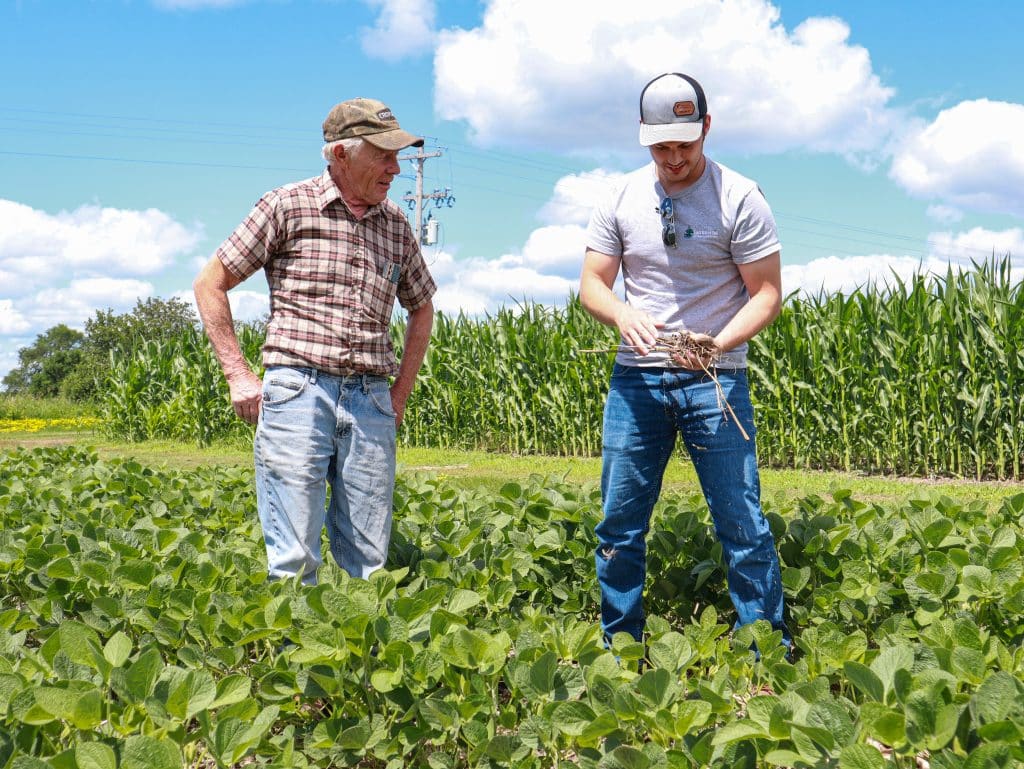
Conservation advisors work one-on-one with farmers to assess resource concerns and find opportunities for stewardship improvements. These advisors can be found at organizations across the state, from Extension offices to Soil and Water Conservation Districts to wildlife-focused non-profits. MFU regularly features conservation advisors to share how their assistance can support your farm goals. Read more in this series here.