
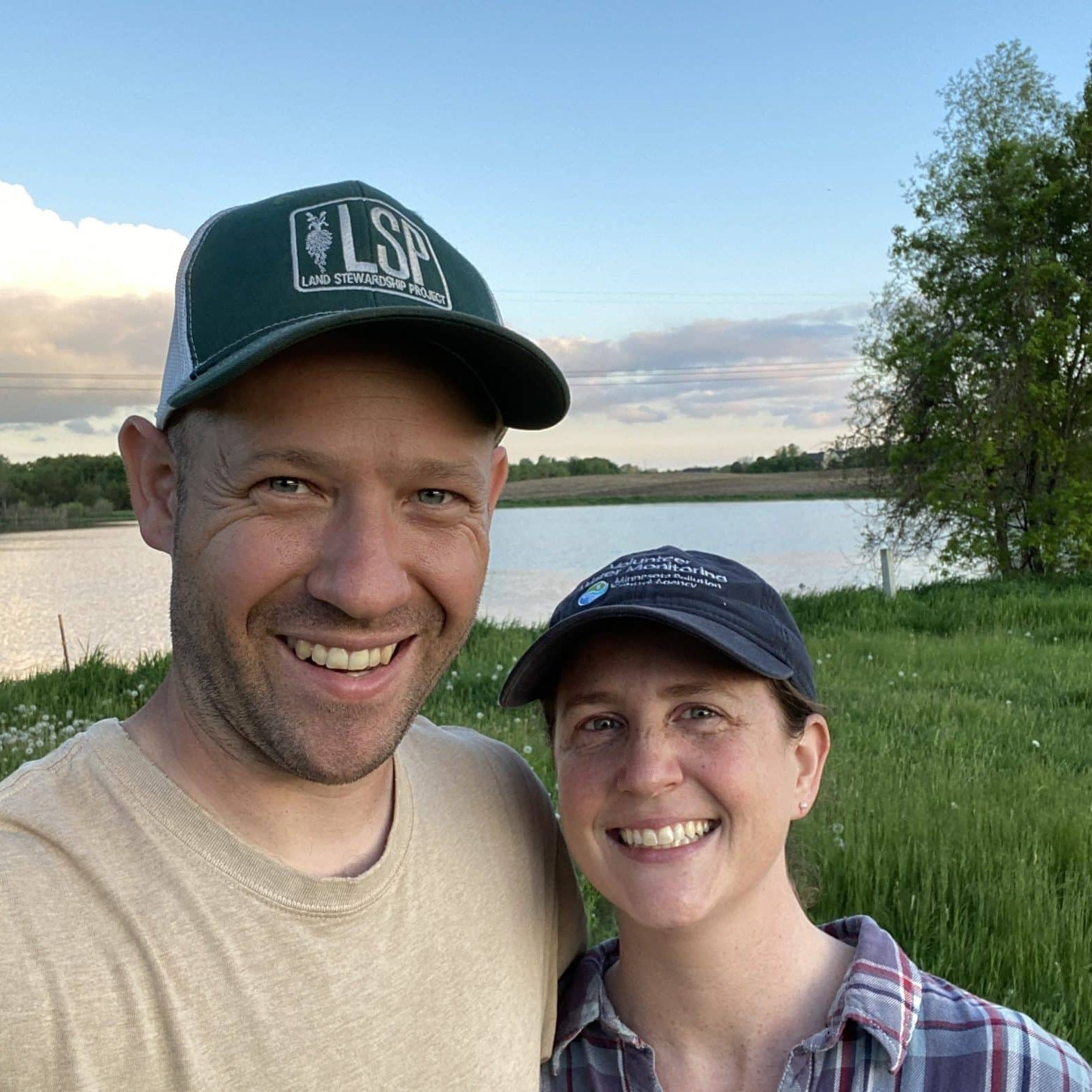
Scott County farmer Mike Seifert implements regenerative practices on his farm
Mike and Dana Seifert are the 4th generation to live and work on Mike’s family farm in Jordan. Ravenview Farm is a 100-acre farm, with 65 acres of cropland.
Mike’s parents were full-time dairy farmers through the 1980s and sold off their herd in 1993. After selling the cows, Mike’s father continued to raise corn, soybeans, and alfalfa while starting a construction business. In 2017, Mike and Dana became more involved in the farm operation. Inspired by the food movement, they brought their interest and knowledge of soil health practices to implement on the farm.
This conversation has been edited for length and clarity
After coming back to the farm full-time in 2017, how have you managed the farm and what changes have you made?
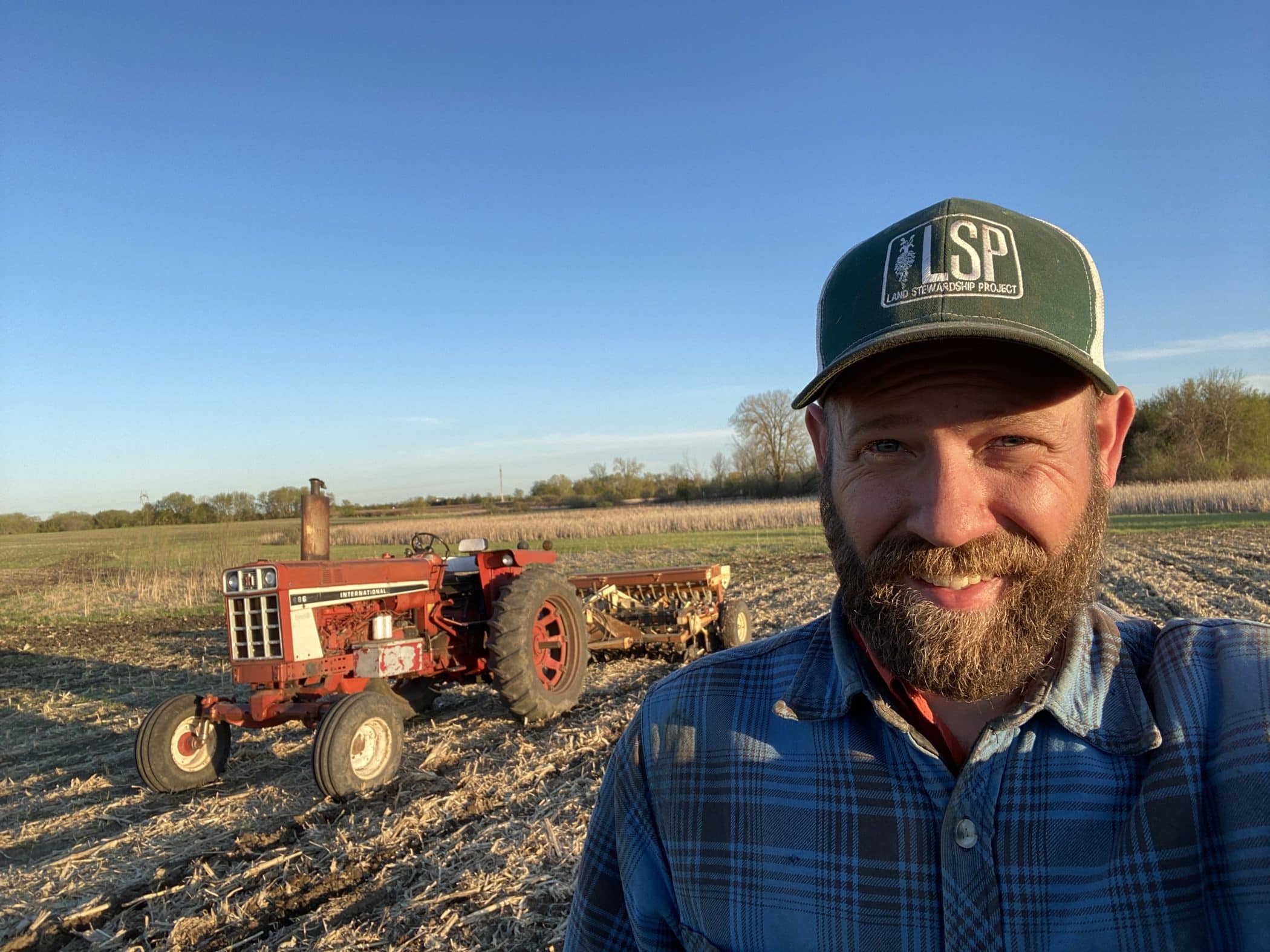
Mike: We have changed the farm a lot in the last five years. We still grow corn and soybeans but we’re also growing small grains, we usually grow at least one field of oats or winter rye, we grow more perennial hay crops than we used to, we’re raising broiler chickens on pasture, we’re making maple syrup and doing a lot more direct marketing.
We have to branch out and offer something that is value added and direct to consumer in order to make enough money to make the operation viable.
We also have nine acres of pasture that has been disused. I am trying to remediate that and make it productive again by clearing out invasive buckthorn and to have more grazing land. We have been working with a neighbor and borrowed 4 Kiko goats from him last summer which has been a great start.
Has climate change informed your plans for the future of your farm?
Mike: It has been a major part of our decision making, but it is not the only variable we look at. Our reasoning behind adopting some of these regenerative practices and diversifying our crop rotation was to make the farm more resilient. We know that climate patterns are changing and they aren’t changing in a way that is more stable and friendly for us.
We have been working to reduce our fuel use, fertilizer use, and spray passes.
By having continuous living crops in the soil and building up organic matter, we are hopefully making our soils resilient to more extreme rain and drought episodes.
What are barriers that you see to the adoption of conservation practices?
Mike: Risk mitigation is huge. Farmers aren’t making a huge profit margin, and neither were we when we decided to make that transition. For us, a huge help was turning to our local SWCD office, because they had a really good cost share program to help us transition to using no till and cover crops. It was a 3-year program and they offered $40 per acre cost share. That was huge for us, because it covered the cost of the cover crop seed, and we were able to convert a lot of our existing equipment without too much cost in order for it to plant in untilled soil.
What is an example of a climate solution or opportunity you have found that has helped you remain resilient?
Mike: We are coming up on our fifth full year of implementing regenerative practices, and I can see that our soil is more resilient than it used to be. We don’t have erosion like we had before, with heavy rain or wind events the soil stays in place better.
An increased profit margin from direct marketing has given us capital to work with to make things better on the farm.
With direct marketing, I receive great feedback about what we’re doing from customers that say not only do we like your products and appreciate the fact that you’re offering them, but we love the way you’re doing it. I look at is as a great antidote to some of the mental health issues that we know are pervasive in agriculture. It can be a very isolating profession. To be able to get that feedback and know you’re being appreciated makes us resilient. It gives us motivation to get out and keep doing what we’re doing.
What challenges are you facing in relation to climate change management?
Mike: Out of the last four years of full-time farming, three of them have been extremes. You can’t help but laugh at it, but we have about a 25 percent rate of things going well. So, I think we have to prepare ourselves to expect this trend. We will have more years of adversity and we are going to have to be able to survive these constant extremes.
We have been able to get through those difficult years and still be profitable. I think that says something for switching to some of these methods. We didn’t always pay ourselves when we wanted to, but every year we have improved our business model and profitability of the farm while being ecologically resilient and weathering these events.
What opportunities for advancing climate-smart agriculture through policy and markets have been on your radar?
Mike: I think what’s on a lot of people’s minds when it comes to [implementing climate-smart practices] is that we better start doing this now before the government mandates it. This is a motivating factor for some farmers that I hear a lot. There is concern that if we don’t get ahead of it and learn how to do some of these regenerative practices, eventually we are going to have restrictions come our way.
In terms of policy, I am a fan of Environmental Quality Incentives Program (EQIP) and Conservation Stewardship Program (CSP) program.
If you could tell Congress to do one thing that would help you continue to farm in the next generation, what would it be?
Mike: If as a society we want to move towards a more regenerative agriculture system, the best thing Congress can do is make sure there is enough funding for programs that are going to help farmers make that transition.
Incentives are a good tool to make sure people are farming in a way that is beneficial for the land and leads to good stewardship. As an example, we are Minnesota Agricultural Water Quality Certified (MAWQCP). This is a great program because you take action to meet the goals to be eligible, and in doing so you become a better steward of your land and you’re also eligible for funding to do projects on your farm. So, it’s pushing people towards better practices, with a reward attached.
Overall, I think policies that have incentives available is the best way to get things moving in the right direction.
I have been inspired by groups like Minnesota Farmers Union, Sustainable Farming Association and Land Stewardship Project. When farmers get together and start sharing with each other, that’s when you start to see people learning from one another. So, if there is a way to facilitate more farmer groups, I see that as an important tool because farmers listen to each other more than any policy that comes along. It’s friends and neighbors who motivate people to make changes that are needed.
From heavy rains to extreme drought and damaging winds, farmers are adapting and changing. The ‘Climate Resilience on the Farm’ series features Minnesota farmers who are using practices to make their farms more resilient as the climate changes. Read other articles in this series here.