Last Wednesday, MFU staff attended an agricultural roundtable event hosted by Great River Greening (GRG) and the University of Minnesota Climate Adaptation Partnership (MCAP) to discuss how the Climate Adaptation Partnership’s MN CliMAT tool can be used by farmers and ag professionals to plan for the future. MN CliMAT is a climate mapping and analysis tool that is available online here: https://climate.umn.edu/MN-CliMAT
The event was part of the organizations’ work to better characterize future floods and droughts in Minnesota and work together with communities on solutions. During the event, GRG staff shared about their current work partnering with farmers and parks to implement conservation practices such as silvopasture and biochar for the best return on investment. Biochar is a unique conservation practice where wood waste is burned in a low oxygen environment to reduce carbon emissions, resulting in a high carbon product that can be used as a soil amendment. GRG’s silvopasture work involves clearing invasive buckthorn through grazing strategies to restore native oak savanna biomes. Farmers partnering with GRG on these practices receive revenue payments in exchange for their work.
Two staff members from the Climate Adaptation Partnership were in attendance at the event to share about the MN CliMAT tool and answer questions. They highlighted that MN CliMAT is unique from other climate modeling platforms because of its ability to project climate scenarios at local levels downscaled to 2.5 miles, and because it’s tailored to Minnesota conditions. The tool provides climate projections for temperature, precipitation, soils, and lakes through the end of the century under three emissions scenarios. MN CliMAT can be used to better understand long term trends in temperature and precipitation, and can be used in conjunction with other tools that farmers often rely on such as the Drought Monitor.
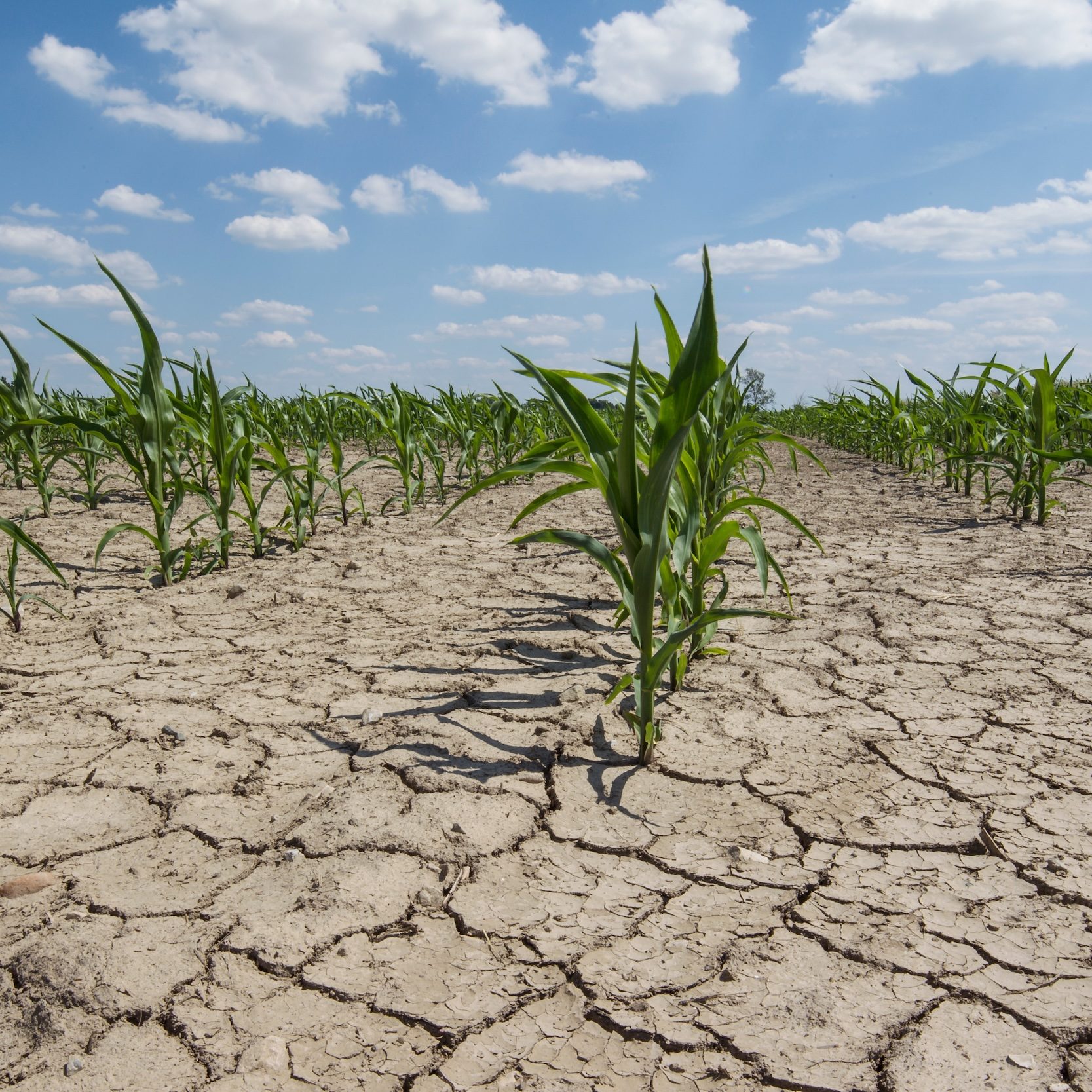
One topic of discussion at Wednesday’s event was the projected increase in flash drought events. Attendees mentioned drain tiles as a tool that farmers in southern Minnesota use to manage their fields amidst floods and drought. They also talked about how flash droughts can affect farmers’ ability to plant and the ability of crops, especially continuous living cover crops like winter rye, to establish. This particular challenge brought into question how climate scenarios may call for adjusting strategies of common conservation practices. For this reason, the ag professionals in attendance noted that the MN CliMAT tool could be particularly valuable for professionals in the ag industry working for seed, drain tile, and ag retailer companies, who can use the trends to better understand farmers’ needs in the future and assist in decision making. They also emphasized that farmers can use the projections to help them make decisions on investments in infrastructure, such as irrigation, to cut their losses over time.
The University of Minnesota Climate Adaptation Partnership and Great River Greening will host another event in late February to further discuss how to manage drought and flooding events. At their February event, they will share their findings from recent hydrological and watershed modeling work, and hope to gather insights from attendees about how to use their findings to improve management decisions as droughts and flooding events become more common. MFU staff will be in attendance and are looking forward to learning more about how to best support farmers amidst changing weather patterns.