
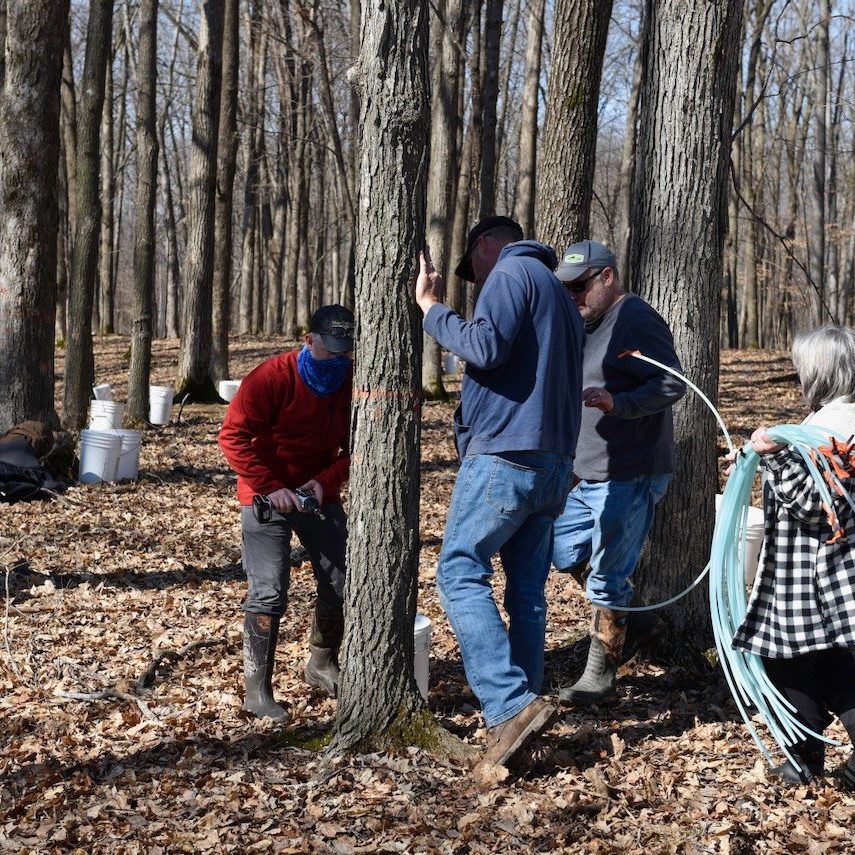
Debbie Morrison of Sapsucker Farms in Kanabec County has been tapping maple trees to make syrup since 2001. Sapsucker Farms’ maple syrup is available at their farm store in Mora, which is open Friday, Saturday and Sunday from March through November. We spoke with Debbie on March 26th, 2026.
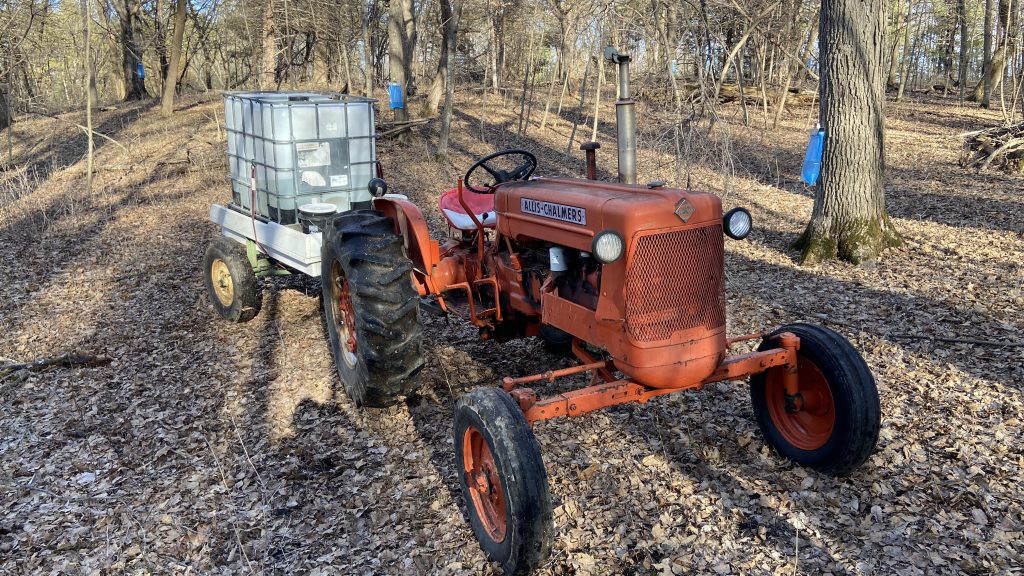
Mike Seifert of Ravenview Farm in Scott County has been tapping maples trees to make syrup since 2014. We spoke with Mike on March 25th, 2026.
These interviews have been combined and edited for length and clarity.
How long have you been making maple syrup?
Debbie: We started making syrup in 2001 when a friend that grew up in Vermont noticed the sugar maples on our land and suggested making syrup. We put out 30 taps and fell in love with it, and eventually we got up to 1000 taps. Every year we put up and take down our taps, tubes and buckets. A typical season for us is putting taps in trees during the second week of March and collecting sap through mid-April or Tax Day, which is about the time that maples start budding.
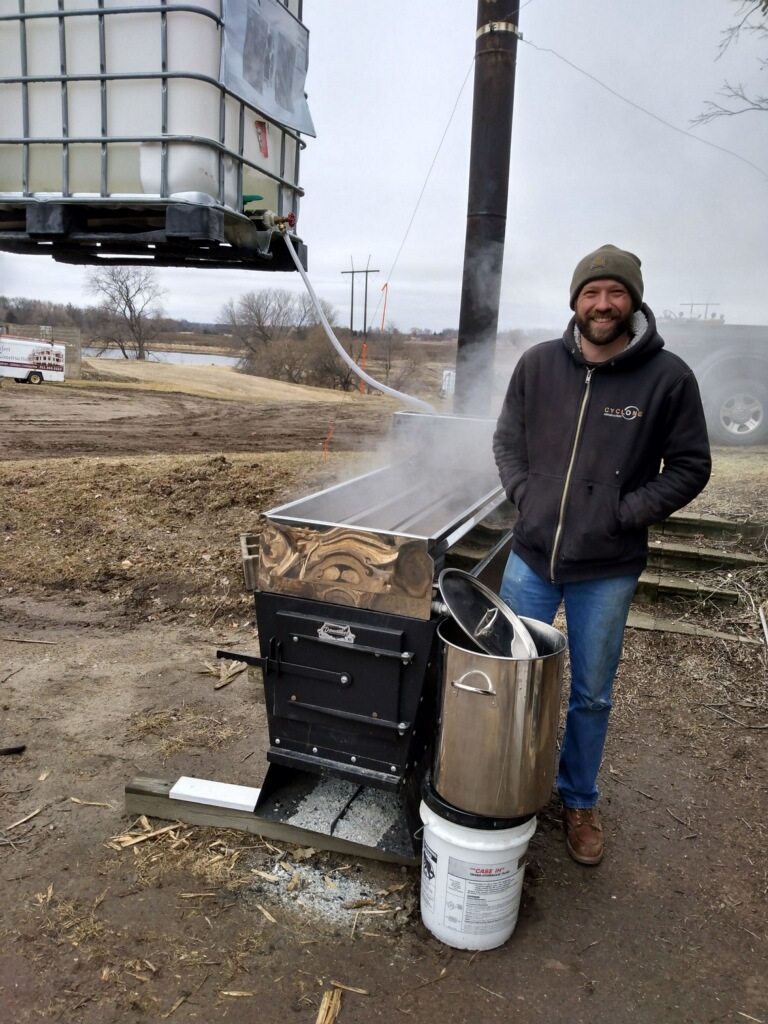
Mike: We started in 2014, the year my daughter was born. She arrived on March 15th, and the sap run started right after we got home from the hospital. March 15th was the start date I went by after that first year, and it was reliable for the first five or six years. I started with one of those home kits that had 5 sap bag holders and taps, and a turkey pan to run over a propane burner. It was just a hobby thing for me at first, and now I tap up to 90 trees a year.
How has your sap collection been this year?
Debbie: This year has been spot on with the way we started our operation 20 years ago. We put the taps out during the second week of March and had a big gush last weekend [March 21st and 22nd] with sap flowing nicely.
Mike: I tapped on March 10th this season, and it started out with two or three normal days of sap flowing. When we had the blizzard [on March 15th] and got a foot of snow, the temperatures dropped below zero so the sap stopped flowing, but within just a few days after the blizzard it was seventy degrees outside.
When that extreme temperature shift happened the sap run was incredible, and I collected 200 gallons in two days from only 50 taps. My little evaporator can only cook 10 gallons an hour, which meant I suddenly had 20 hours of cooking to do, so I spent a couple of long days getting through all of that while also continuing to collect more sap. Right now [on March 25th], I’m getting through the last 75 gallons of sap with my evaporator and there’s still a few days in the forecast that look like it’s going to have a good run. Those types of dramatic weather swings are what we are expecting to keep seeing with climate change.
What did the weather look like during your early sap collecting years?
Debbie: During our earlier years, we got into a routine of setting out taps in the second week of March, and by the third week that’s when we’d have what we call the first big “gusher”, where the sap flows heavily and we collect a lot. With freezing nights and warm days, we’d have pretty predictable sap runs and would go out to collect and cook the sap. For those first ten years, our experience collecting sap and making maple syrup was about as predictable as farming can be.
Mike: During my first seasons I’d set up the evaporator while there was still snow on the ground and since I cook outside, I would notice the temperature gradually changing and the snow melting. By the time I got done in early April, I expected everything to be thawed out. From 50 taps I’d plan to collect 40 or 50 gallons every day and just mosey through the season.
What types of changes in weather have you seen during your years collecting maple sap? How has weather affected maple sap collection for you?
Debbie: We saw the biggest noticeable change in spring weather in 2012. That was a huge year for most American maple syrup makers. Most of us collected no sap because the spring got warm really fast and there wasn’t any sap to collect. You need nights below freezing and days above freezing to be able to collect sap, and that just didn’t happen that year. That year we had 1000 dirty buckets to clean and no maple syrup!
Another year that stood out was around 2010 when it was super cold and we had hardly any snow cover , so the frost went really deep into the ground and the sap didn’t run because of that. A lot of local syrup makers we know decided to dismantle their equipment and quit for the year, but we got lazy so we kept ours up. Then suddenly around the end of April, the temperature reached 80 degrees and the trees gushed with sap. For four days it just ran and ran, and we ended up having a full season of maple syrup and were cooking for 24 hours straight so the sap wouldn’t go bad. That was a memorable year.
In more recent years we’ve had drought during the summer and that really affected our sap run the following spring. The trees were not hydrated well enough during those summers, so we had very poor sap runs for four or five years in a row.
Mike: I can say with confidence that during the most recent five years, the sap has been ready to collect earlier in the year. Instead of March 15th, now I look at March 1st as the day to be ready to go with my equipment. A couple years ago people were tapping around February 20th because the temperatures were right.
This year, in terms of extreme weather, I’ve experienced high winds that knocked down and damaged my sap bags and blew branches that knocked down my neighbor’s sap lines too. Because of that storm I had to replace about a dozen bags that had holes in them from being scraped against trees from high winds.
Have you made any changes in the way you collect sap to prepare for more weather extremes?
Debbie: Even with seasonal variations, we’ve been sticking to our schedule of tapping trees in mid-March because we have so much going on around the farm. A couple years ago there was a warm January and we were asked by others if it was a good idea tap then, but the advice we heard is to keep with the same mid-March schedule. That warm spring was an anomaly and those that tapped in January did make syrup, but the challenge is that there was still plenty of winter yet to come, at least according to Punxsutawney Phil. Once you tap the trees the holes fill up, so when the true spring comes you have to either re-tap your trees or wait until next year.
In the last couple years the weather has seemed more normal, but we’ve scaled back to about 300 taps. That decision was made because we had so many years of not getting much sap and still had to clean all the equipment.
Mike: Because of the ups and down in the weather that cause big sap runs and then nothing for a few days, I’ve started thinking about having a bigger evaporator or reverse osmosis system to process the sap in case it all comes at once. My philosophy is to have replacement equipment on hand, and to make sure my equipment is properly sized to prepare for sudden heavy flowing sap days. I’m also ready with all of my equipment earlier than I used to be, by about March 1st.
As a commercial maple syrup maker, do you feel there’s a sense of community for fellow Minnesota maple tappers?
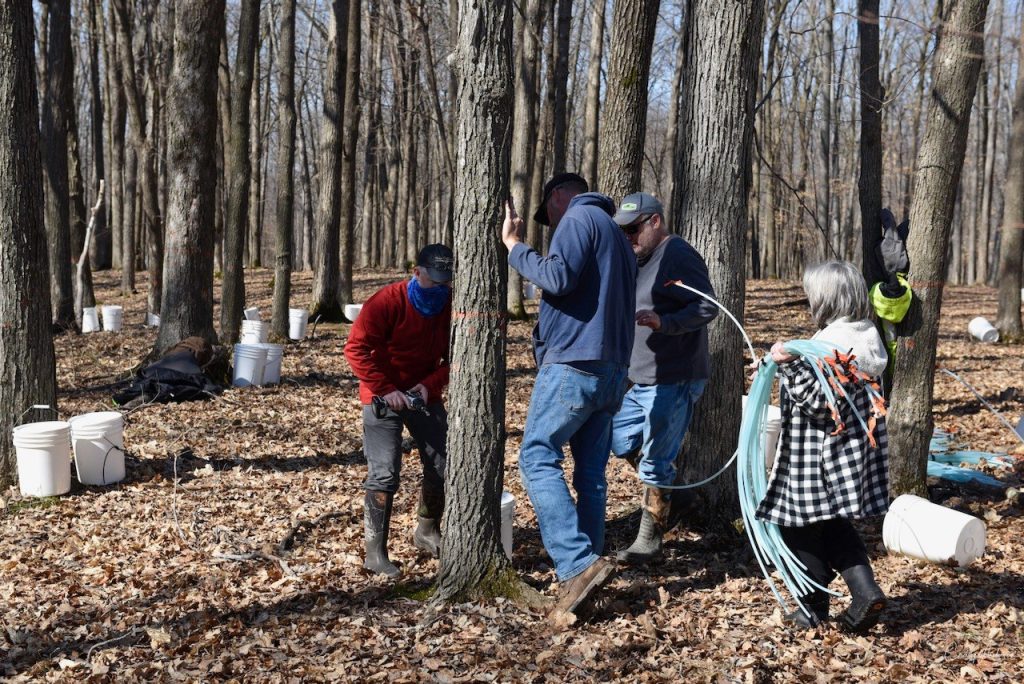
Debbie: There’s solidarity absolutely. There’s a number of us checking in with each other, and we have family in the Grand Rapids area that taps their maples later than us by a couple weeks so we always compare notes. Community is very important to us, and we involve them in so many things we do. We have a tapping event on our farm every year during the second week of March for volunteers to come out to tap maples and learn with us, and we feed them lunch.
As a maple syrup maker, what keeps you motivated to tap maples every year?
Mike: I really enjoy making maple syrup. It’s the first thing I get to do in the spring and it’s nice to be active and go out into the woods to tap trees and cut wood to boil sap, even with the unpredictable weather. It’s also a way to augment our income.
For a beginning farmer, I also think maple syrup is a great introduction to agriculture because there’s a relatively low equipment cost compared to what you need for row crops. It doesn’t take much to make syrup on a small scale, and maple syrup is a high-value perennial product that people love. The weather poses challenges, but it always does no matter what type of farming you do. Climate change does not make it easier, but that doesn’t mean it’s impossible either.
Sapsucker Farms’ maple syrup is available at their farm store in Mora, which is open Friday, Saturday and Sunday from March through November.