Changing climate impacts livestock production on Burning Daylight Draft Farm
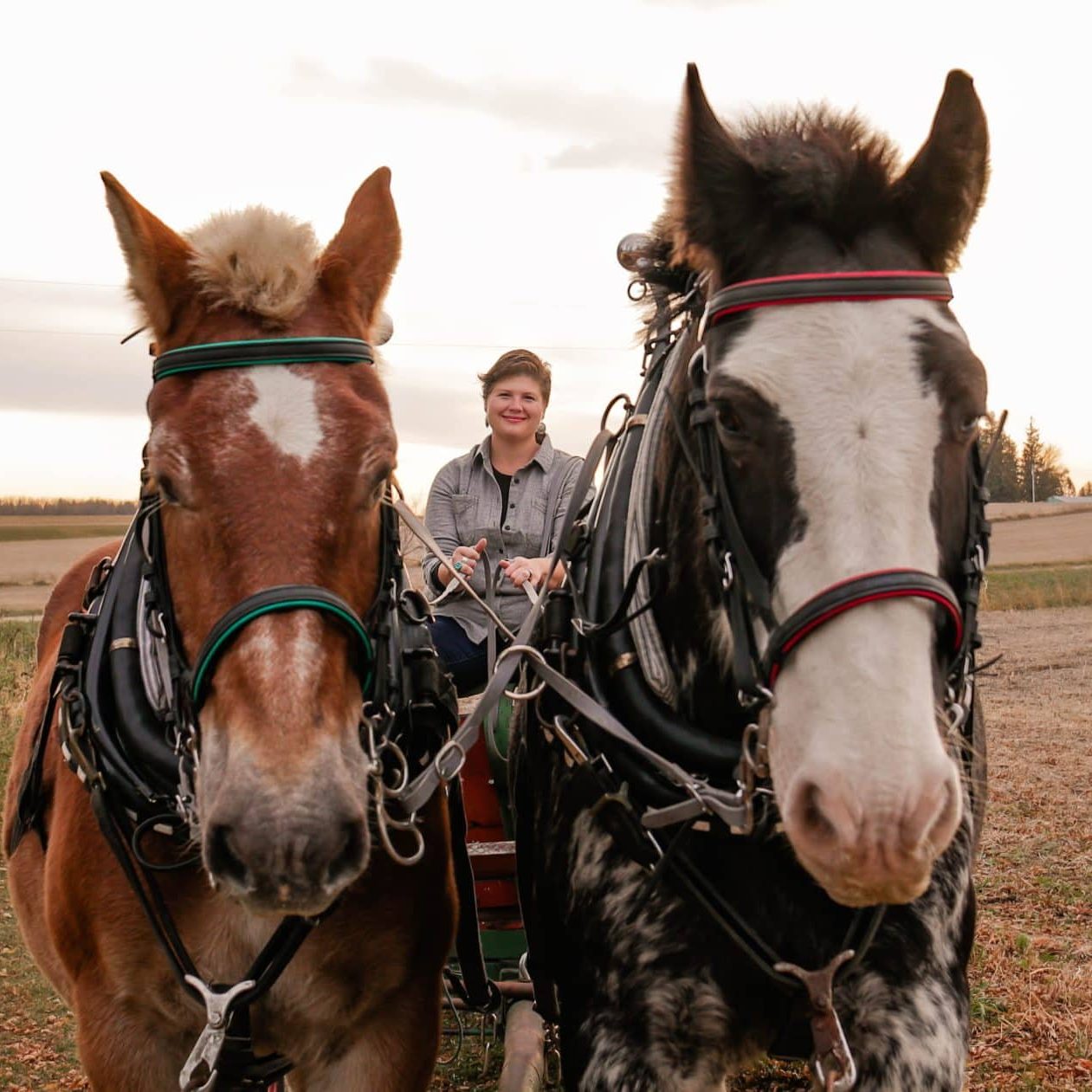
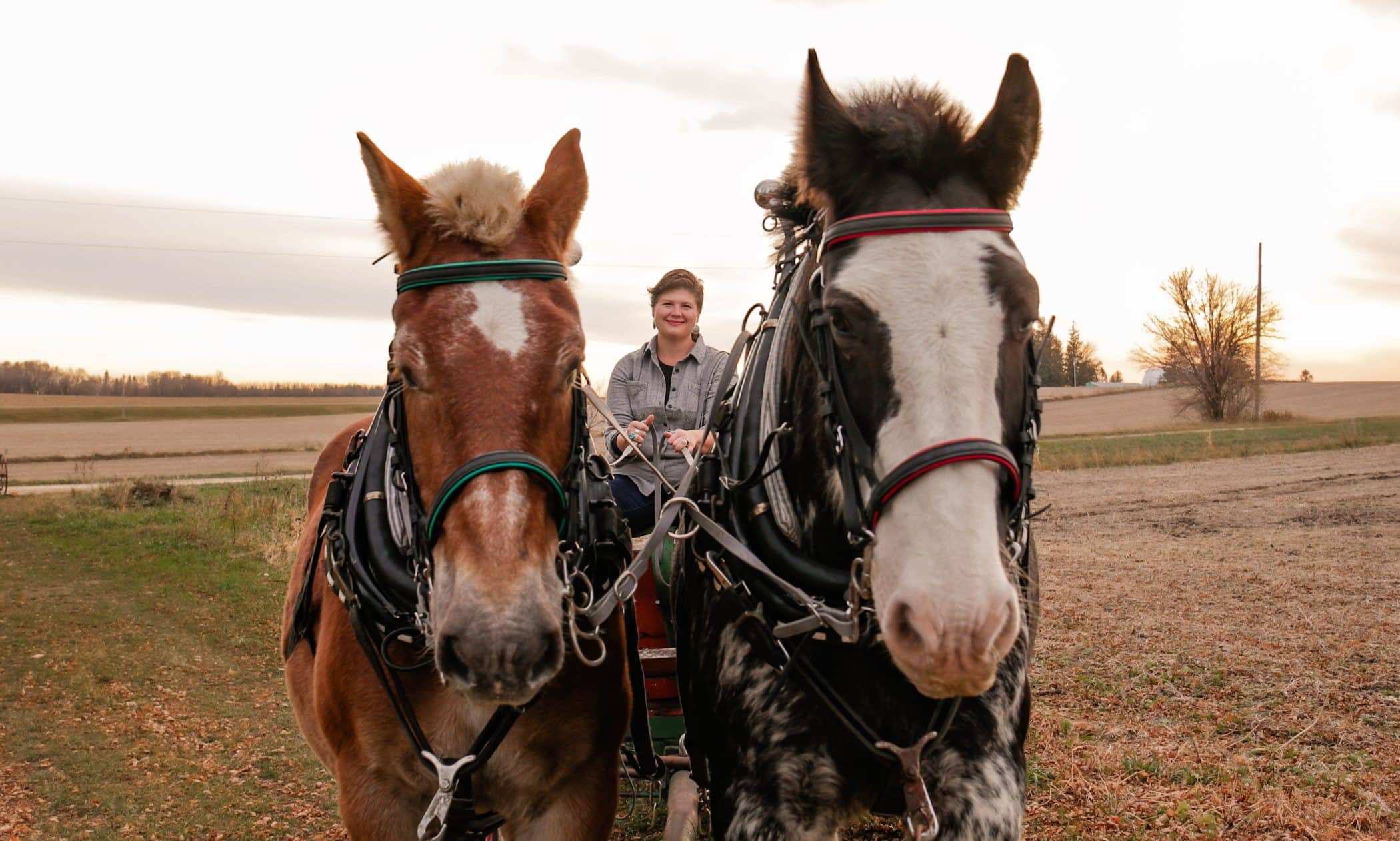
Lindsey Zemanek owns and operates Burning Daylight Draft Farm in Dennison with her husband, Bill Coughlan, and their son Allaster, 5. About three years ago, they transitioned from homesteading on 2.5 acres to farming for profit and selling direct-to-consumer. They raise pastured lamb, poultry and meat rabbits on 20 acres, using their draft horses instead of tractors. In addition to farming, Lindsey is also a licensed mental health therapist.
This interview has been edited for length and clarity.
Could you share some details about your background and why you became a farmer?
Lindsey: I grew up with horses and initially wanted to be a vet, which led me to get a bachelor’s degree in animal science. My love of horses and homesteading ultimately drew me into farming. I grew up in New Mexico helping family members cattle ranch, so I’ve been tied to agriculture in many ways.
My drive for sustainable and local food systems comes from my grandparents who were first-generation Americans. The stories of my family are very tied to the Great Depression and food security. Although my grandparents wouldn’t probably have considered themselves farmers, they grew a market garden that was larger than an acre and produced much of their own food. My grandpa taught me how to blanch and freeze vegetables. The importance of resiliency was a strong message from my family. That’s probably why I farm.
A major aspect of our farm is creating a welcoming environment for people to visit. In addition to farming, I work as a licensed mental health therapist, and I see my clients on the farm. The therapeutic component of people connecting with animals and nature is a key part of what our farm offers.
Has climate change informed your plans for the farm? What challenges are you facing?
Lindsey: Absolutely. The biggest direct impact on my farm has been with my Icelandic sheep. I loved raising them for a variety of reasons, but what I found is that with the changing climate in southeast Minnesota, the breed is struggling. Icelandic sheep don’t do well with the heat or the parasites that have been thriving in this changing environment. As a result, I’m actively cross breeding my sheep. Climate change is impacting the breeds I’m choosing to work with.
In theory, based on the amount of acre age I have in Rice County, I can calculate the approximate stocking rate. However, my actual stocking rate is much lower than is projected. Our land is very hilly with a stream that cuts through our property, and we are a part of the watershed for a creek. The steep grades on our hills cause more runoff compared to the fields around us, so we experience a lot more runoff. As a result, I’ve had to reduce my sheep flock by half, and we’re producing fewer meat birds and significantly fewer lambs.
As a counselor who works with clients on your farm, what do you think people are missing in the conversation not only around climate but also how it relates to mental health?
Lindsey: We are only beginning to understand the immense stress that climate places on people. Beyond the direct challenges, like unpredictable and extreme weather, we are inherently connected to our environment. While people use different approaches and language to explain the changes we are seeing, the reality is that what farmers are dealing with is abnormal. This creates a type of stress we haven’t really been acknowledging or labeling.
For many farmers, climate change has exponentially increased their stress when thinking about what the next year holds. Whether people are farmers or consumers, there are concerns about what will happen if it continues to get hotter and the snowpack continues to decline.
As a farmer, I recognize what it is to be tied to my environment. It can be very stressful to sit in the unknown and the uncertainty about the future of our environment is becoming an increasing burden.
If you could tell Congress to do one (or two) things that would help the next generation of farmers, what would it be?
Lindsey: First off, people need to have access to land. And to build sustainable communities, it’s essential to ensure access to healthcare. A key component of that is investing in rural broadband infrastructure. With reliable broadband, residents in rural areas can connect with health care providers at major medical centers, expanding access to critical services. By enhancing our telehealth network, we can deliver high-quality care to anyone regardless of their location, making healthcare more equitable.
By supporting farmers, you are supporting rural communities which support sustainable food systems. These are interconnected systems, though we often talk about them as pieces. What’s important to remember is that many farmers also serve as volunteer emergency medical service providers. When we lose farmers, we’re not just losing food producers – we’re diminishing the sustainability of rural communities in a very direct and significant way. Many people in these areas serve multiple roles, and the impact of their absence is often more profound than we realize.
How did you become involved with MFU?
Lindsey: I became involved with MFU through the New Leader Academy. I also have many friends that are members. I’ve been part of other organizations that have great missions and are doing good work, but they don’t accomplish as much as MFU and National Farmers Union.
It’s important to me that the policies we create today ensure farming remains a viable option for the next generation. I want to be able to pass my farm to my child if that’s what he wants. I don’t want to be in the position where I have to tell my son that I don’t want him to farm, like other farmers I know that have had to say that to their children.
From heavy rains to extreme drought and damaging winds, farmers are adapting and changing. The ‘Climate Resilience on the Farm’ series features Minnesota farmers who are using practices to make their farms more resilient as the climate changes. Read other articles in this series here.