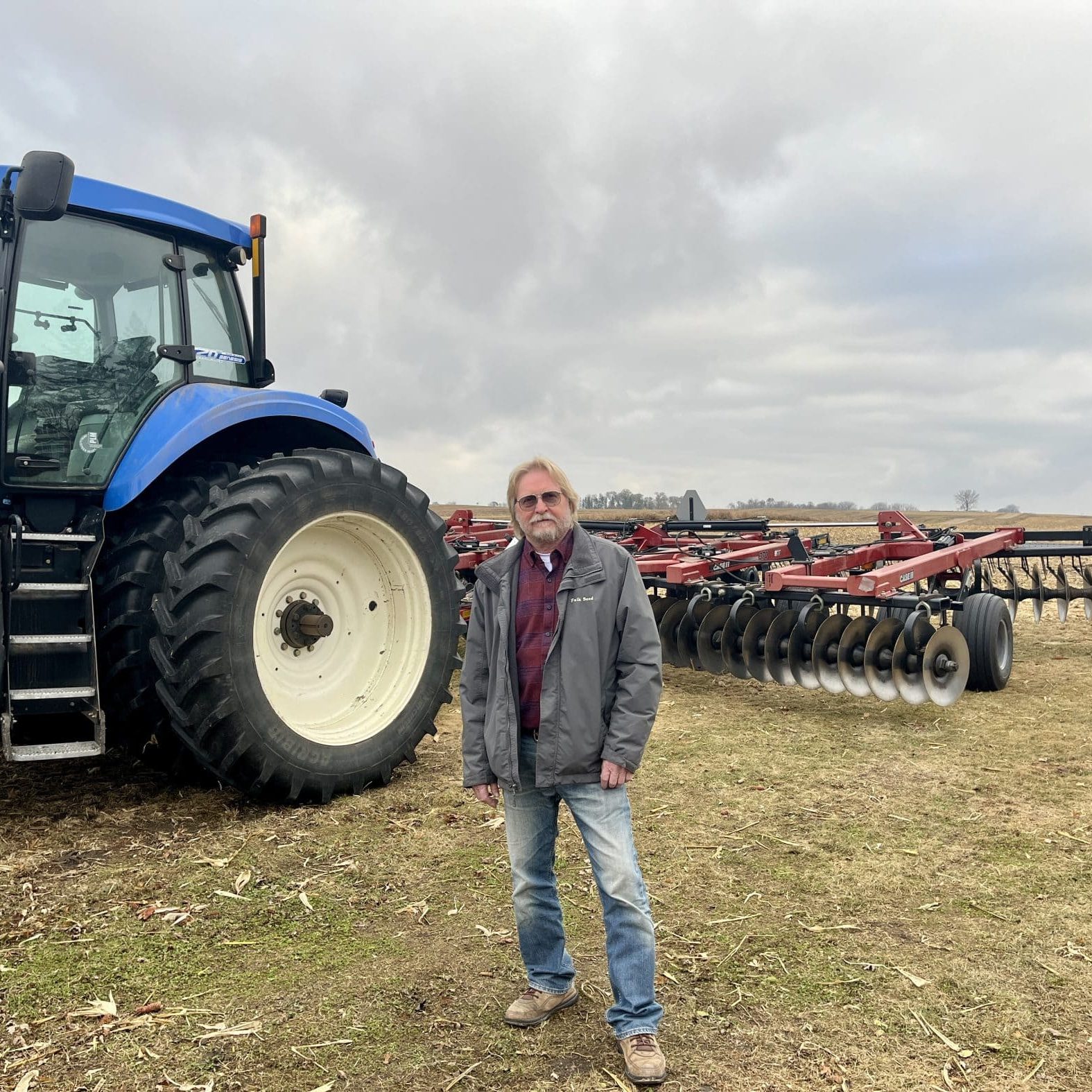
Swift County farmer says there are numerous tools available to help farmers adopt conservation
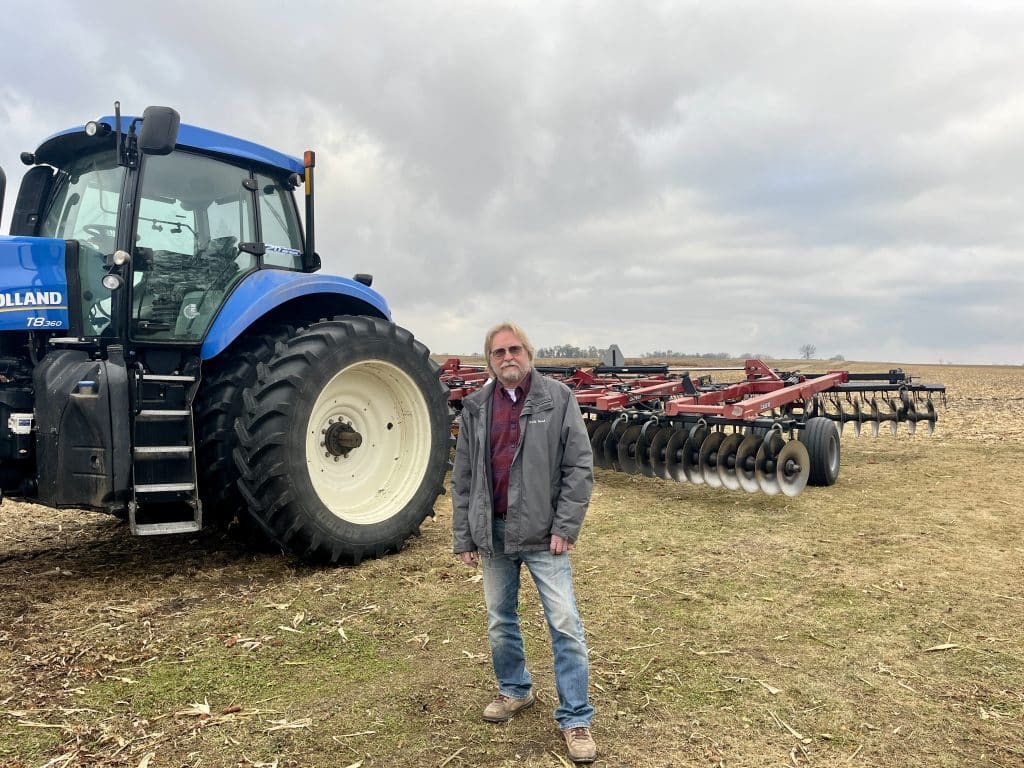
Jim Falk and his wife, Karen manage the family farm and are often joined by son, Andrew, and their two grandchildren. Together, they’re working to increase resiliency, diversify their revenue sources and steward the land that has been in the Falk family for four generations.
The Falk’s farm is a unique operation that has productive farmland, cattle pasture, and a river bottom that is a haven for wildlife and a mix of soil types. The farm is on the edge of Glacial Lake Benson. The Falks grow corn, soybeans and small grains on 600 acres. In 1983, they started raising certified seed and it has remained their primary focus.
Learn more about Falk’s Seed Farm and their business at www.falkseed.com.
This conversation has been edited for length and clarity.
How did you become involved with MFU?
Jim: My dad was always involved with MFU. He was also a member of National Farmers Union back in the day. I became actively involved when there was a large hog facility that was going to be in our county about 20 years ago. It was kind of a shock to people that the facility would be permitted. After raising questions and awareness about the issue, I realized I needed to become more engaged to figure out who would stand with family farmers against such developments. That is what led me to becoming more involved with MFU.
Why did you become a Certified Seed Grower?
Jim: I began farming with my dad in the late ’70s, focusing on the commodities market and growing alfalfa for our beef cattle. The late 70s and 80s were tough in agriculture. There was extreme weather, high interest rates, low market prices – it was really a farm crisis. I looked at certified seed as value-added, and a way to diversify our income source. My dad had been a seed producer for a seed company in Benson called Munson Seed Company. There was a need for seed processers and cleaners at that time because Roundup Ready tech hadn’t been released yet. Many of the farmers were still relying on the new releases and new breeding that came out of the University of Minnesota as certified seed. Certified seed was a big component of agriculture back then and I saw the opportunity.
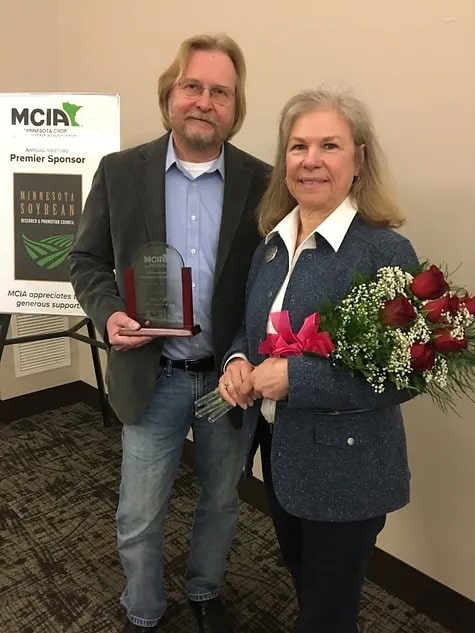
Falk’s Seed Farm is the name of our seed business, and we continue to expand the facilities every year to provide better service for our customers. Much of what we grow are new releases from the Minnesota Crop Improvement Association (MCIA) or newer varieties from private seed companies.
How has your farm structure changed in recent years and how are you planning for the future?
Jim: My son, Andrew, is as involved as he can be because his family splits time between St. Paul and here. It’s a balancing act. We all work together to do the best we can and team up when we are able to. Andrew has his own land across from us and so we share equipment. I’ve been helping him acquire more assets. It seems that the only way you can get a start today is if you have help from family.
In 2023 we were awarded a value-added grant through the Agricultural Growth, Research , and Innovation (AGRI) Program to put in a third cleaning line. This additional cleaning line will be suited for specialty crops, whether it be Kernza or other organic food grade crops. I am looking forward to getting that line up and running soon.
Has climate change informed your plans for the future of your farm?
Jim: Climate change is a serious problem. Severe weather seems to be the new normal today. It’s always been important to pay attention to leaving cover on the land, but today it seems even more important. We have some drought prone soil that we’ve always been concerned about washing or blowing away. We look at solutions for those issues on our farmland.
There are areas around Glacial Lake Benson that have sandy and gravely soils. There’s also a lot of clay loam and variation in the soils of Swift County. There’s been a much larger emphasis on cover crops in recent years. It’s like we’re going back to the proven technologies of the past.
Through our business, we promote and sell cover crops and provide cover crop recommendations.
What barriers do you see to the adoption of conservation practices?
Jim: There’s more opportunity today than there has been in quite a few years for farmers to adopt conservation practices. Another proven practice that we’re seeing talked about more is rotations. Rotations are a natural way to work on pest management and weed control. Rotations are the best way to enhance your ability to fight off herbicide resistance and other insects and pests that become hardier from the monoculture cropping system.
There are numerous tools available to farmers today so I would argue that the opportunities outweigh the barriers. It is a matter of farmers having information and figuring out how to implement these practices into their farm plan. There are a lot of programs and advice available to farmers through the Farm Service Agency office or soil conservation office in their county. Producers are much more open to using those programs today than even 10 years ago.
How has your family and farm operation remained resilient through these changes?
Jim: The resiliency of our farm operation is somewhat dependent on the type of new releases and varieties of seed. We try to enhance what we are doing on the farm by trying the best we can to prevent erosion and drought-prone soil from blowing away. We also take a multi-faceted approach to how we view our cropping plan. We have more flexibility than a typical corn/soy-only operation, but we must be sure what we are planting this year will not negatively impact us next year by taking away acres that we could have raised a new variety or crop on. Our operation is a bit more unique in that way.
What opportunities for advancing climate-smart agriculture through markets and policy have been on your radar?
Jim: The Forever Green Initiative (FGI) is on my radar. A program like that takes quite a few years to get up and running. Today we are starting to see the fruit of that investment through Kernza, different rye grasses and several new crop initiatives. The FGI is an important aspect of how we look to the future, maintain good green cover for a longer time, and try to provide economic viability with these new crops. I’m excited that Minnesota is at the forefront of this initiative and has been dedicated to advancing these efforts. We’re now beginning to see some of these innovative crops enter the market.
If you could tell Congress to do one (or two) things that would help your family continue to farm in the next generation, what would it be?
Jim: The biggest issue in the agriculture sector is corporate consolidation. Consolidation is in multiple areas – we hear about it with packers in the meat industry, and how the hog industry has increasingly come under the control of just a handful of large owners. The poultry industry consolidated many years ago, there aren’t many independent poultry farmers left.
Consolidation in agriculture expands into the chemical and seed sectors. There are very few fertilizer companies in the U.S. today. Independent family farmers are at the mercy of licensing agreements for seed. The supplies that support family farmers are increasingly out of our control because of the dominance and concentration of input suppliers. This lack of market competition limits the options available to farmers and reduces our influence over essential resources.
I am also concerned about how we are going to address climate change from an energy standpoint. Famers want to be a part of the solution and we can be, because we have land that can be utilized for renewable energy, both on-farm and for larger installations. There is so much opportunity for farmers to be part of the ownership model and the solution to the climate problem.
I remain optimistic. The Farmers’ Union is fighting the good fight for the family farmer. I will continue to be involved and advocate for commonsense policies against corporate consolidation.
From heavy rains to extreme drought and damaging winds, farmers are adapting and changing. The ‘Climate Resilience on the Farm’ series features Minnesota farmers who are using practices to make their farms more resilient as the climate changes. Read other articles in this series here.