Forever Green Forum explores possibilities for continuous living cover
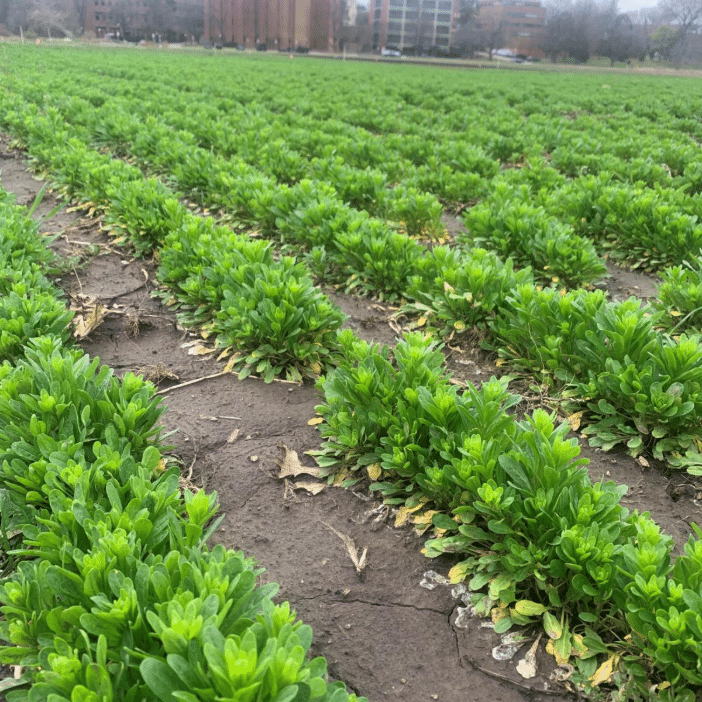
MFU Foundation sponsored the inaugural Forever Green Forum on May 29th, 2025 at the U of M campus in St. Paul. The event honored the late Don Wyse, who co-directed the Forever Green program and coined the punchy catchphrase “cover the damn soil!”. The Forever Green Initiative works on the commercialization, adoption, and scaling of over 15 continuous liver cover crops, and the event focused on just a few, including Kernza and winter camelina. Throughout the day, facilitators shared about the development of Forever Green crops as well as strategies and future projections for the adoption of those crops in the Midwest.
MFU Vice President Anne Schwagerl was featured on an afternoon panel titled From the Ground Up: Farmer Reflections at the forum. During the panel, farmers shared about how important it is to assess their financials when thinking about adopting Forever Green crops, and Anne shared that MDA’s Farm Business Management has been a helpful tool for her when thinking about what new crops and practices she is realistically able to adopt.
Other sessions talked about the challenges and future potential for Forever Green crops, notably Kernza. Kernza is touted for its health benefits and diversity as an ingredient in products ranging from pancake mix, beer, and pasta. Presenters shared that there are 75 growers of Kernza across fifteen states, covering over 3000 acres.
At the end of sessions, participants were polled to assess what they learned about challenges for the largescale adoption of Forever Green crops. Polls showed that the biggest challenges included seed availability for hazelnuts, seed processing for Kernza and winter hardy oilseeds, consumer willingness to pay higher prices for products, and technical assistance for farmers.
Attendees left the forum feeling hopeful and energized by the possibilities of Forever Green crops to build environmental resilience, create economic opportunities for farmers, and create a more diverse pool of crops that the Midwest grows for food, fiber and fuel.