
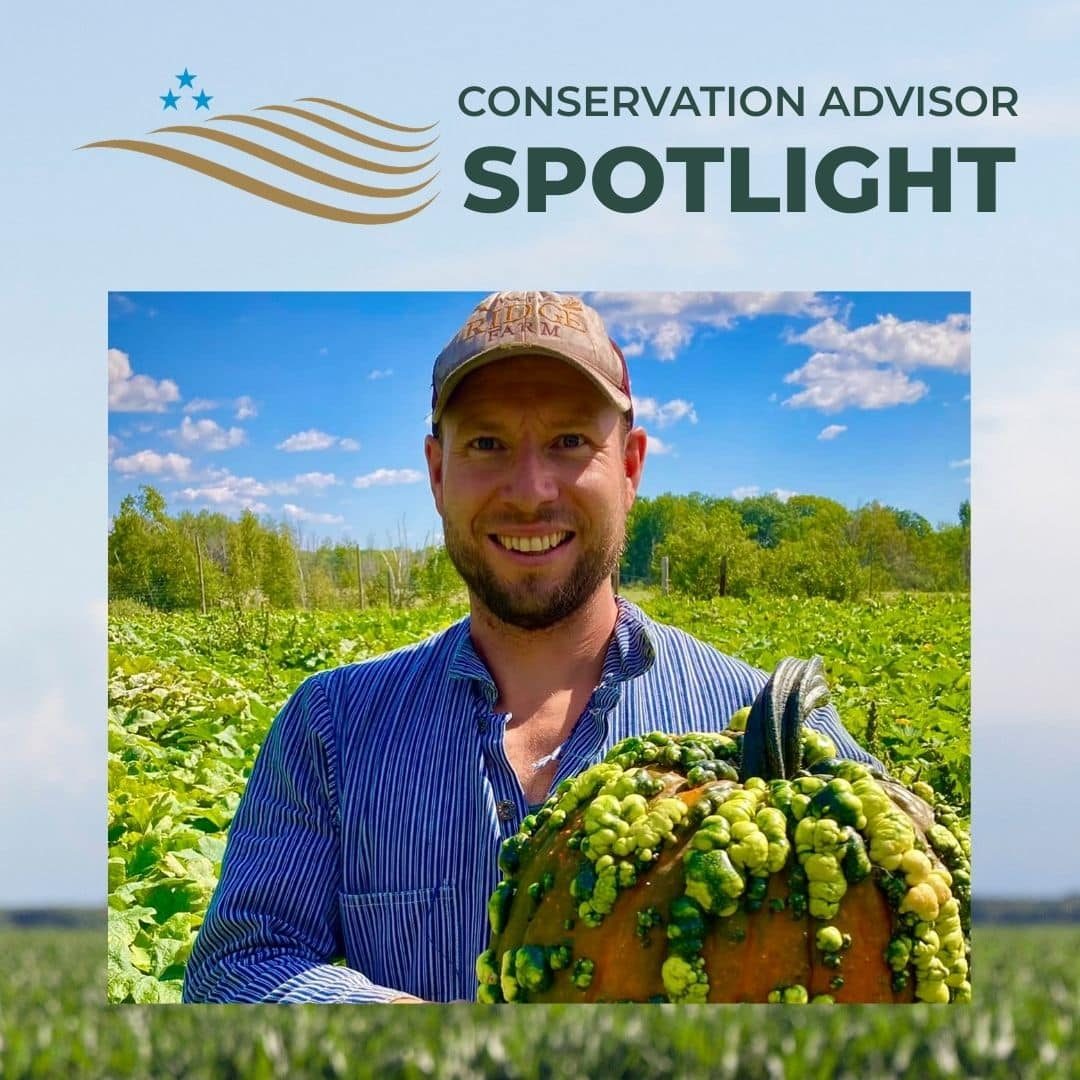
Erik Heimark: Farm Business Management Specialist at Renewing the Countryside
Most of us got into farming so we could farm, not so we could make a balance sheet and do financial projections. But if we want to farm for the long haul, you have to know your finances.
Erik Heimark
Erik Heimark is a Farm Business Management Specialist at Renewing the Countryside. He serves all Minnesota counties and parts of Wisconsin. This interview has been edited for length and clarity.
What is your role at Renewing the Countryside?
Erik: I’m a farm business management specialist, so I help farmers with their financial matters—whether that’s writing a grant or getting a loan. I primarily work with those farmers that are selling directly to the consumer, whether that’s a meat vendor or a produce farmer doing CSAs or farmers markets. I’m a produce farmer as well. I have about five acres under cultivation and have been doing that for 10 years now.
What counties are you working in?
Erik: All counties in Minnesota, and then I do have some clients in Wisconsin. I don’t have any in Iowa yet, but I can really work with anybody as long as you have good internet connection.
What are your areas of expertise?
Erik: Anything with Farm Service Agency (FSA) lending or lending in general. I’ve helped a number of clients get property farm ownership loans with FSA, and a slew of equipment loans. FSA has stricter requirements for their lending, so I think people get more value out of me than with the commercial lender. If you need a balance sheet or cash flow and you don’t know what that is, but you have some rudimentary records of your farm sales and expenses, I can help you. It’s really quite fun to work with clients that have built up to a point where they’re ready to buy.
I also help people with their daily record keeping if they’re not sure what to keep track of. I’ll help them build a chart of accounts that make sense for their business and their tax situation and then help do the maintenance logging. That helps farmers see how they did in a year and understand what their numbers mean. We can do a year-in-review of their last year and business plan writing, and I’m also good at writing grants. I’ve gotten probably a dozen of my clients grants.
What does a visit with you look like for a farmer?
Erik: When a client meets me the first time, I don’t need anything from them. I’m just trying to get to know them a little bit more. I’m taking a lot of notes, and our first conversation is just about goals and what they’re looking to do. Do you have a farm? Do you own or rent property?
That second visit, we’re probably going to start setting up a chart of accounts. A recordkeeping system that works for them. And I like to start with real simple spreadsheets. Then we might follow that up with creating a balance sheet for the year and a cash flow projection for the season.
At our third visit, I’m asking for records. What did you spend last month, what did you
make last month, what did you grow, and what did you sell? We’re putting all those records
into the spreadsheets or into the FINPACK software that I have.
If I have two balance sheets completed at the beginning and the end of the year I can do
financial review, which I really geek out about. You can see exactly how your business is profiting or what’s losing your business money. It’s a great tool for management. If they’ve signed up for my program because they need to get a loan, then we’re going to rush it a little bit more. I need an estimate of all of their assets and all of their liabilities. I need to know their production for the year and how much it sold for. We’ll get to building that balance sheet and a cash flow right away because that’s something a lender is going to need. A lot of the answers to these questions are tough. For example, if they’re selling produce, how many did they sell? I can’t necessarily answer that, but I’ve got some little cheat sheets that my clients can use to get pretty close, and most lenders have been very happy with those estimates. Then we do loan shopping and compare different loans at different institutions so they can see in black and white what they’re going to be paying over the life of the loan and what their monthly payment is going to be.
What are the benefits for a producer participating in your program?
Erik: The first is just general business acumen. Most farmers don’t know if they’re profitable or not. It is especially hard to know if you’re profitable when you’re selling steaks and hamburgers by the pound, or produce at farmers’ market by the individual count of the item. In my program you can get those questions answered. So that’s the best thing. The next best thing would be that accountability buddy. When we’re farming we’re so busy, myself included, and it’s easy to put off the financial hygiene of looking at what you spent and categorizing it. That might seem like the least important thing to do when you’ve got a whole field of onions that need to come in and you’ve got market in 24 hours, but it is good
to do because at the end of the year, if you don’t have that, you can’t really measure how you did.
Most of us got into farming so we could farm, not so we could make a balance sheet and do financial projections. But if we want to farm for the long haul, you have to know your finances. It’s just part of keeping in this game for a long time.
What advice do you have for producers who are just beginning their business or
financial management journey?
Erik: Write things down in a consistent matter. Open an excel spreadsheet, call it the farm expense account, and just write stuff down. Even if you don’t think it’s important, just write it in there. It doesn’t even have to be fancy. One of my clients does the best at having a little notebook she keeps in her purse. Perfect, I can use that, I just need a record. Or I recommend clients get a small bin to keep in their truck to throw receipts in so they’re in one spot. They can hand me the box and I will go through it and make a chart of accounts.
Can you tell us about a success story from a project you worked on with a farmer?
Erik: My client wanted to buy a piece of land that came up for sale next to his farm, so he went to his normal bank but wasn’t able to get a loan. He came to me and I put all the options on the table with FSA lending, and we found one that works. It was about a six-month process with FSA. A year later, we hosted a field day about how to work with FSA on his new land. So that was really nice.
Some of my Hmong clients have been hand planting and hand tilling for 10 years. They’re sick of it and they’re like, ‘Erik, can you help me get a loan for a tractor?’ So I helped them get a tractor, and they wondered, ‘why was I doing this for so long?’ I can save them so much work, so that’s been really, really positive for me. This business is a lot of hard work and there are ways to make it easier.
Interested in working with Erik to make a farm business management plan for your farm? Connect with him at: erik@rtcinfo.org 218-232-1303
Conservation advisors work one-on-one with farmers to assess resource concerns and find opportunities for stewardship improvements. These advisors can be found at organizations across the state, from Extension offices to Soil and Water Conservation Districts to wildlife-focused non-profits. MFU regularly features conservation advisors to share how their assistance can support your farm goals. Read more in this series here.