Multi-generation farm diversifies to adapt to changing agricultural environments
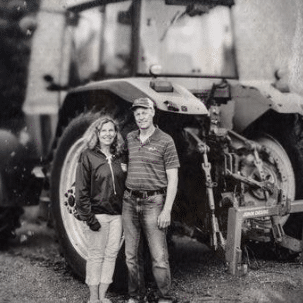
Melany Thomas grew up on a farmstead near Georgetown, Minn., and studied animal science.
Noreen Thomas grew up on an orchard and has a background in nutrition and chemistry. Noreen married into the farm 30-plus years ago, and with her husband, Lee, has grown grains, feed and beans. Noreen is an advocate for agricultural education and environmentally conscious farming.
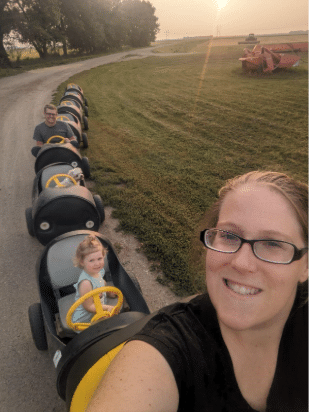
Melany started working on her in-law’s, Noreen and Lee, land in 2019 and had her own fields in 2020. Melany and husband Evan’s daughter, Cora, is the 6th generation to grow up on the farm.
What is the background of your farm? What do you produce?
Melany: In 2020 I had my first fields of about 230 acres of barley and wheat, and put in a cover crop of triticale, winter rye and wheat. In 2021, it was so wet and impossible to get into the field that we had to seed the cover crops by plane.
Now, I manage 800 acres that includes winter wheat, spring wheat, buckwheat, rye, oats, barley, soybeans, and alfalfa this year. I am trying to diversify and experiment but am also hesitant. There are a lot of costs to consider between land and machinery rent and upkeep.
Noreen: Melany has evolved our production of diversified wheat, and she now has about seven to nine rotations.
We became certified organic in 1997. The way Lee and I saw it was that we could either get big, get out, or find a niche. We saw becoming certified organic as an opportunity to get into niche markets domestically and abroad. We sold lots of soy and barley to Japan and Korea. Melany was operating under our organic certification but now has her own.
How has your farm structure changed in recent years and how are you planning for the future?
Melany: I am continuing to look at adding in more diversification and figuring out what kinds of methods are out there that can improve crop quality, cover crops and ways to spread the workload.
Noreen: We have planted cover crops like rye, but Melany has really stepped it up. By using multi-species cover crops she has got better tilth, and reduced fertilizer inputs. Melany also got the farm Minnesota Agricultural Water Quality Certified (MAWQCP). It’s all exciting to see and we are learning from her. Some of these practices are new to us and are not really seen in the [Red River] Valley.
Together we are exploring the value-added food market and looking at the hard frost seeding of red clover into wheat which is exciting.
How has your farm operation remained resilient?
Noreen: We are lucky to be along the Buffalo River. Longer rotations and being mindful of what we’re applying have been beneficial.
Melany is always taking soil samples. From the time we started planting more cover crops, we have seen the organic and carbon matter in the soil increase from around 3 to 4 percent soil organic matter (SOM), to a 7 to 8 percent SOM. Cover crops have also helped reduce weed pressure in crops.
During COVID, conventional fertilizer prices from top producing counties like Morocco and Russia skyrocketed – even fish fertilizer, which is organic compliant, can be very unstable. Recognizing the value of producing more inputs directly on the farm, we started composting, which Lee manages. It’s been a success- we have composted over 350,000 tons of material.
We work with Clay County to collect pumpkins for compost every season through a program called ‘Take Jack Back’. So far, we have composted a total of 540 tons of pumpkins, which are a great source of minerals like nitrogen for soil. We are really proud that our county started this initiative and hope that other counties continue to replicate it.
We also have over seven acres of fruit trees for chokecherries and juneberries which provide habitat for beneficial insects. Melany will be creating more pollinator habitat.
What do you think people are missing in the conversation around climate?
Melany: Climate change seems to be a topic at conferences and such, but I don’t know any farmers that sit around and talk about it. I think we talk about it in terms of the more extreme weather events we experience.
Noreen: People need to be aware of how non-stop busy farmers are and realize they have a bank to answer to at the end of the day. Farmers need to know how implementing more climate-smart agricultural practices will work for them and have access to relevant information to help them make decisions. Incentives for conservation practices enable farmers to experiment. It is time consuming to plan what and how you are going to plant.
If you could tell Congress to do one (or two) things that would help your family continue to farm in the next generation, what would it be?
Melany: There needs to be more competition – a Competition title in the Farm Bill would be great. Regarding markets, we need Right to Repair.
You hear stories of Mom-and-Pop shops, but I don’t have that experience. In my area, I deal with monopolies and it is often very difficult. Congress needs to step back and invest in each state’s agricultural communities. Issues like local meat processing and supporting small farms have received a lot of attention due to COVID, but there are other important aspects of infrastructure that are needed – like grain cleaning, processing, and packaging – to help build resilient communities. I notice a lot of family farmers that are less concerned with feeding the world and more concerned about feeding the people around them.
Noreen:Universities and institutions have extraordinary purchasing power which should go to local farmers. This will be our first year selling to five schools made possible by MN Department of Agriculture (MDA) Farm to School grants.
The importation of cheap and fraudulent organic labeled grains is a threat to the integrity of the organic label and hurts grain farmers like us.
MFU is very good at offering local food for conferences. At every farmer meeting, I always ask “where is the local food?” Even a $300-400 order is huge for many farmers.
From heavy rains to extreme drought and damaging winds, farmers are adapting and changing. The ‘Climate Resilience on the Farm’ series features Minnesota farmers who are using practices to make their farms more resilient as the climate changes. Read other articles in this series here.