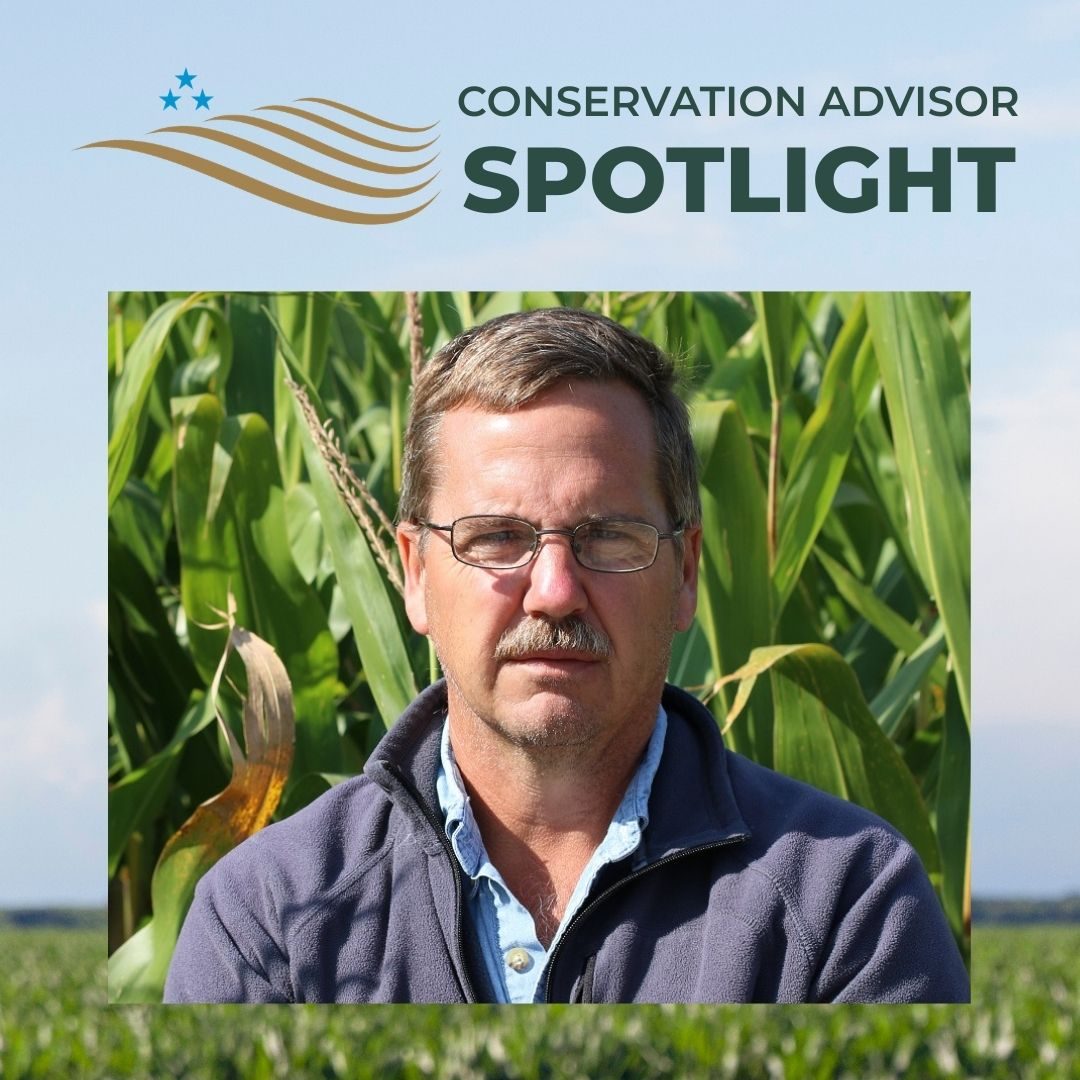
Dorian Gatchell: Agronomist and owner of Minnesota Agricultural Services
We absolutely have to adapt to what the climate is giving to us. Honestly, I think a lot of conservation practices are also good agronomic best management practices.
Dorian Gatchell
Dorian Gatchell is an agronomist and owner of Minesota Agricultural Services in Granite Falls. This interview has been edited for length and clarity.
What is your background?
Dorian: I have been in agriculture for my entire career, and I started my own business about 17 years ago. I really started focusing on conservation agronomy shortly after that, about 15 or 16 years ago. I grew up on a farm in Minnesota, and my son is sixth generation on the farm and my nephew is involved too.
What counties are you working in?
Dorian: Most of my work with producers happens in my area near Granite Falls, but I do have clients quite a ways away from me as well. I can work with anybody in the state, and I even get a little into South Dakota.
What conservation practices are you most commonly helping farmers with?
Dorian: Everybody’s got their own goals, and in my area adopting cover crops and reducing tillage is the focus for most people. I can help producers with cover crop adoption and reducing tillage whether it’s no-till or eliminating unnecessary tillage passes.
Can you share a success story of your experience working with a producer on cover crops or reduced tillage?
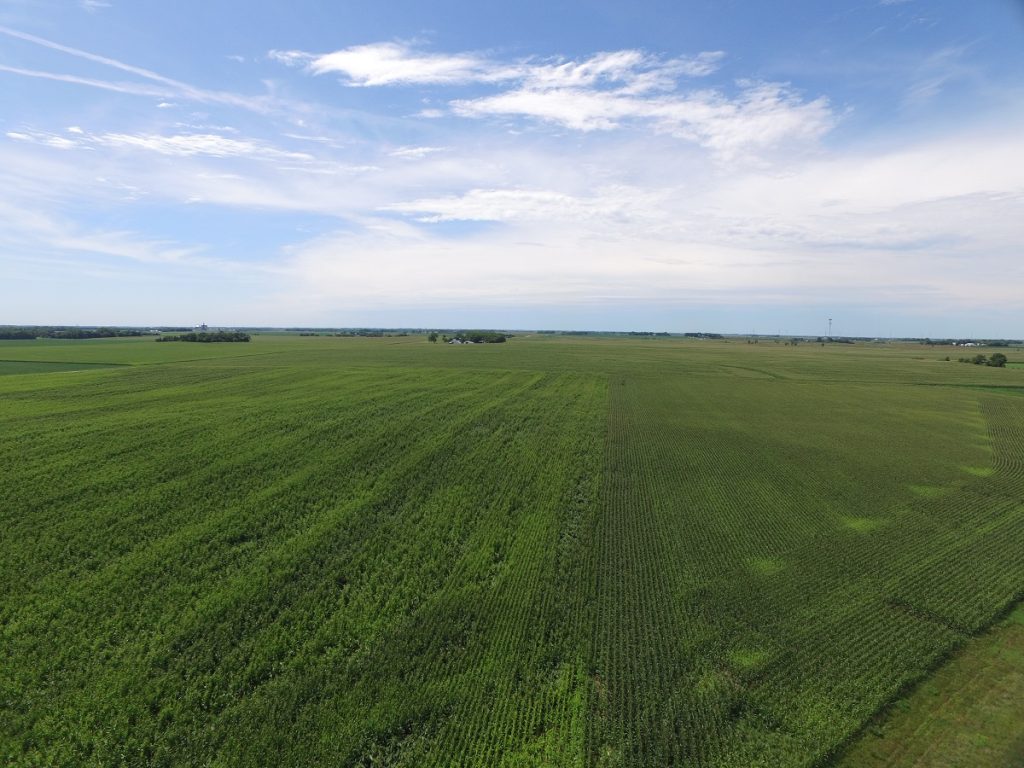
Dorian: My favorite success story is one I share in every presentation I do for growers. I had a grower that decided to do strip-till, and in that same year there was a major windstorm causing a lot of corn to blow over on farms in the area. I went out with my drone to look at the funky patterns on farms, and when I went to their farm I saw that their corn was still standing as if there was no windstorm at all. I have had many discussions about whether their neighbors’ corn fell because of rootworm, but what should be known is that the strip-tilled corn was actually conventional and not a GMO. So in just one year of implementing strip-till, their corn was able to withstand that storm compared to the other farms around them.
Do you think it’s common that a farmer sees benefits in the first year of implementing a conservation practice such as strip-till?
Dorian: I would argue you can get benefits right away from some of these practices, it just depends on what type of benefit you’re looking for. Most people look for measurable soil metric improvements like higher organic matter, and those take time. But during the first year of implementing conservation practices you could see benefits that are harder to measure like improved water infiltration or soil structure.
What are some challenges you’ve seen for farmers implementing conservation practices?
Dorian: For strip-till, the practice is a big capital expenditure because the equipment is expensive, so unless you have the acres to float the cost that gets prohibitive. To combat that, there are a handful of guys that have strip-till equipment that do custom work for other farmers, and there’s some producers that share equipment as well. Of course there’s grant programs that producers can apply to that help offset the cost of equipment, like MDA’s Soil Health Financial Assistance Grant program.
Another challenge for growers is having a holistic overview of their whole production. They’ll change one aspect of their management and that will mandate a change in another aspect. Weed control is the first that comes to mind if a producer starts implementing a practice like reduced tillage. Or with planting cover crops you could be creating an environment that’s more favorable for some pests to survive in because they need continuous plant cover, like the armyworm. Producers have to learn how to identify and then manage some of those new challenges when they start these practices.
What types of extreme weather are producers you work with experiencing? How have you seen conservation practices help producers be more resilient to those extreme weather events?
Dorian: The last handful of years we’ve seen a trend of wetter springs. It doesn’t matter what type of system you have, it stinks when we get all that water on the farm.
I’ve also seen periods of drought in late summer. However, it seems like conservation practices improve the water holding capacity of soil so that crops are more able to survive periods of drought. We also see less crop damage in these systems because there’s less sand and sediment blasting the crop from erosion during high winds. I see growers who implement reduced tillage whose equipment is better able to ride on top of moist soil without pulling mud off the field because of improved soil structure.
Do you feel like climate change impacts your farm advising practice?
Dorian: Yes, because we absolutely have to adapt to what the climate is giving to us. Honestly, I think a lot of conservation practices are also good agronomic best management practices. I lead with the best agronomic practices for the soil, land, and crop, and let conservation be a happy secondary effect.
What would you say to a farmer that is concerned about return on investment for conservation practices?
Dorian: I have those conversations all the time. I would tell them to start at the easiest point, you don’t have to adopt all conservation practices on the farm at once. Some pieces of ground are easier to reduce tillage on than others, so start on the ground that’s lighter and sandier. No-till soybeans is an easy way to start because you don’t have to change your equipment, but it is a paradigm shift in thinking.
What tools or resources do you recommend for farmers to help them implement conservation practices?
Dorian: The Midwest Cover Crop Council has a good cover crop selecting tool I recommend. Some of the best resources you can find by actually going and talking with other growers at conferences and meetings. The University does their annual Soil Management Sumit and that’s my favorite event, I like that better than any national conference. The Minnesota Soil Health Coalition has good meetings as well.
What have you learned about how to most effectively work with and support producers?
Dorian: Good question! I would say one thing I’ve learned is that there’s no universal recommendations, and that every farm and farm manager has different goals and abilities, so my recommendations have to be tailored for them. That’s my biggest take home.
What are you looking forward to in the 2026 growing season?
Dorian: I’m looking forward to evaluating what I’ve been doing these past few years on farms to learn and make adjustments as needed. I’m certainly looking forward to talking with growers about that.
Interested in working with Dorian to receive technical assistance for cover crops or reduced tillage? Connect with him at: dhgatchell@mnagservices.com or 320-321-3615
Conservation advisors work one-on-one with farmers to assess resource concerns and find opportunities for stewardship improvements. These advisors can be found at organizations across the state, from Extension offices to Soil and Water Conservation Districts to wildlife-focused non-profits. MFU regularly features conservation advisors to share how their assistance can support your farm goals. Read more in this series here.