Headwaters Beef Cooperative aims to connect producers, consumers in Pine River area
This is the first article in a series highlighting the projects of Cooperatives for Climate grant recipients and capturing the processes of cooperative development.
As climate change continues to impact agriculture across the state, there’s opportunity for cooperatives to meet the need for meaningful, farmer-centered solutions. Farmer-owned cooperatives reduce costs of production, maintain a reliable source of inputs, effectively market and process farm products, improve livelihoods and help strengthen rural communities.
Cooperatives for Climate is a Minnesota Farmers Union (MFU) grant program that funds farmer cooperatives in developing solutions for climate resilience. These grants support MFU members who have, or are in the process of, organizing themselves into cooperatives that respond to climate-related challenges and opportunities.
The grants provide support for technical assistance and business development services. This support includes a wide range of services, including feasibility study, business plans, market assessments, establishing governance documents, and carbon and greenhouse gas inventory or assessment.
Headwaters Beef Cooperative, based in Pine River, is a part of the first cohort of Cooperatives for Climate grant recipients awarded in the summer of 2023.
Headwaters Beef Cooperative (HBC) aims to aggregate and process cull beef into branded ground beef products that would add value and stabilize cull cow prices. The cooperative’s goal is to bring conservation to the marketplace and a healthy affordable protein to consumers, while protecting water quality, improving wildlife habitat and addressing climate change adaptation and mitigation. Technical service projects include a market sector analysis of on-farm standard of production, leadership development and cooperative incorporation.
Technical service consultants include Kevin Edberg of Co-op Development Services (CDS), True North Strategy and Julie Anderholm with Anderholm Consulting.
HBC’s focus has been on the development of a market assessment analysis and financial strategy based on climate-smart protocols. In February 2024, a market assessment on local ground beef was completed (prepared by True North Strategy). The study was a broad assessment of interest in, and demand for, local ground beef and pre-formed burger patties within the chains of lakes in Cass and Crow Wing County.
“Of the many qualifying features available to consumers of ground beef (organic, grassfed, humanely raised, etc.), “local” appears to be most important to consumers in Minnesota.” – True North Strategy market assessment
Since 2013, Jim Chamberlin, Outreach Conservation Specialist with Happy Dancing Turtle (HDT), and others have been working to build relationships with producers and businesses in the Cass and Crow Wing County areas. Supporting conservation in the agricultural community has been a focus for HDT, helping lead the development of HBC.
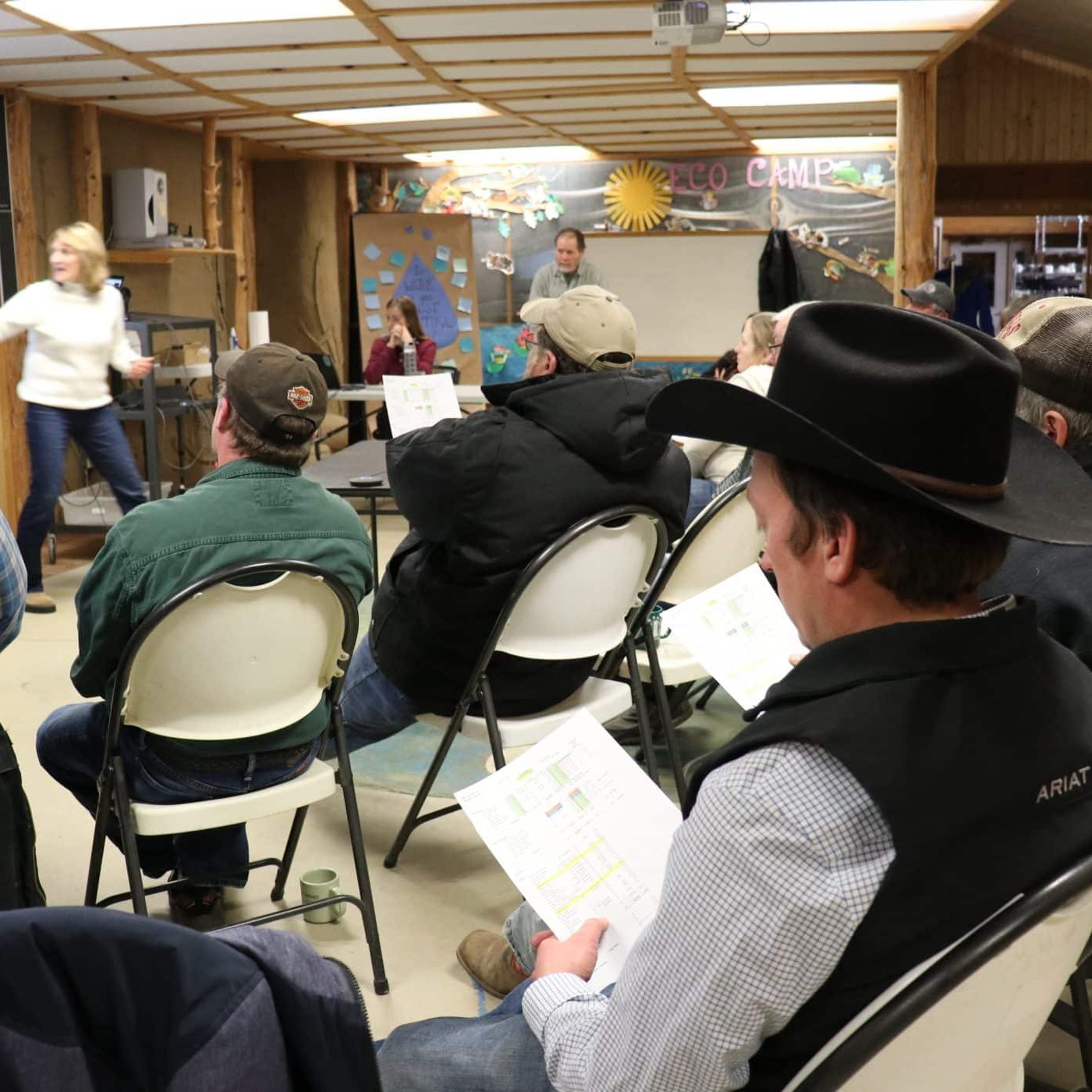
HBC has held a few producer meetings, attracting around 20 farmers and ranchers at each. These meetings have also garnered significant attention from the press. Jim has been interviewed by the Red River Farm Network, AgWeek, and newspapers about the development of this co-op and its implications. One of the successes so far that Jim noted is that this work has started a conversation in the community.
“Locally, I think we’ve brought farmers together around this idea and drawn interest in it. We’re starting a dialogue.” -Jim Chamberlin
Wisconsin Grassfed Beef Cooperative (WGBC) has served as a great inspiration, resource, and example of a strong and successful cooperative, with over 200 farm member-owners that service local wholesale and direct-to-consumer markets nationwide. HBC consulted with WGBC’s Laura Paine, agriculture educator and producer who led the development of WGBC launched in 2009.
HBC’s next steps include identifying leadership roles (board members), developing co-op mission and vision statements, and cooperative incorporation. HBC has been working with Kevin Edberg from CDS on development pathways. Jim and others are optimistic that completing these steps will position HBC to leverage upcoming grant opportunities.
The co-op will continue to convene producers, their input and engagement imperative for decision making and business planning. A meeting will be held to present information found in the study and options for different climate-smart protocols that will determine their market. Once producers decide, HBC will work with technical service providers to draft production protocols, conduct a feasibility study, and develop a business plan.
Questions with Jim Chamberlin. These responses have been shortened for length and clarity.
What have the challenges been thus far?
Jim: Farmers are independent people that are hard to bring together, they don’t have a lot of time to sit in meetings.
The markets. The whole meat industry is so tight, so competitive and complicated.
It’s hard to have climate discussions with farmers. When I bring it up, I do it in conjunction with clean water. I’ve been trying to encourage producers that through good adaptive grazing and well managed pastures they’re helping to protect water quality and sequester carbon.
That’s really where I think this organization, and I personally, want to see this go – to keep it very local and change our community, which there is a lot of support for. I’ve had producers walk up to me after meetings and express their skepticism. One rancher came up to me and said this is good work that you’re doing but it’s not going to make that much of a difference. It’s such a big ship to change, you can’t expect too much. I said, I’m not trying to change the world, I’m trying to change our community. I think that really hit home with him.
What will success look like for the cooperative?
Jim: Short term, I hope we can have product on the shelf within the next year or so. Long term, success will be a robust local beef market where we can connect consumers and producers locally. With our proximity to lakes and all the work we’ve done, we can hopefully get more political support to get producers to stay in our area and grow food while protecting our resources.