Little Falls farmer: ‘It is our responsibility to take care of the resources we have’
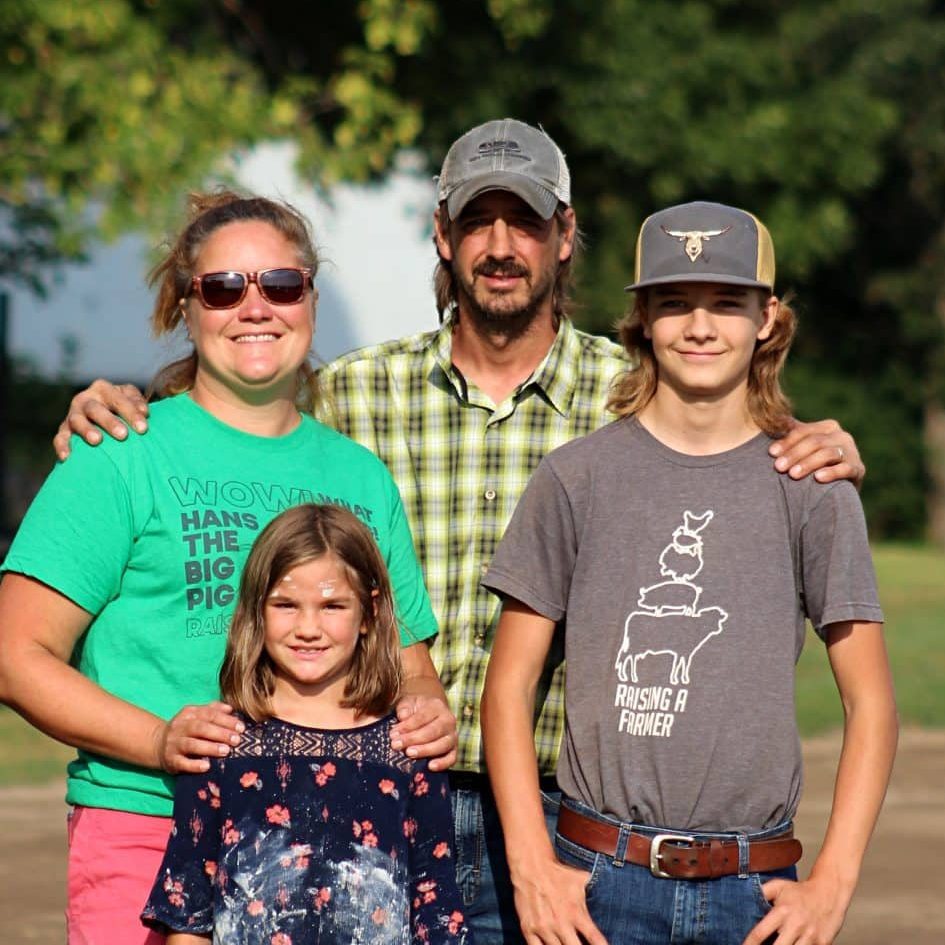
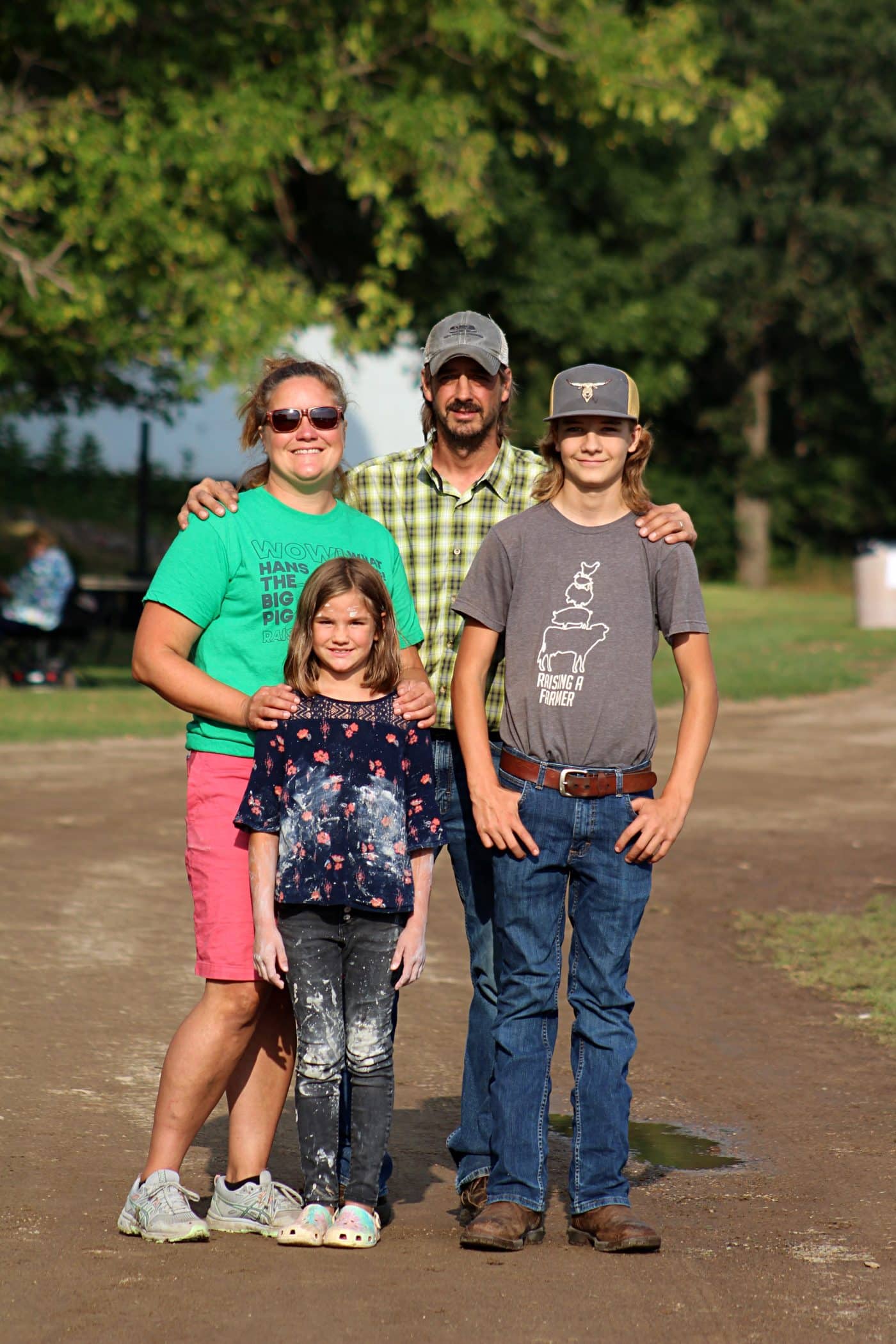
Brenda and Nate Rudolph purchased his family’s farm in 2011. By 2019, the couple knew they needed to shift away from milking cows to keep farming.
They talked with Chef Tomas at the A.T. Black and White restaurant in Little Falls and began developing relationships with others in their community through a local food hub, Sprout, and the Little Falls Farmers Market.
They transitioned from dairy farming to direct marketing and now sell pork, beef, lamb and chicken direct to consumers. They supply outdoor-raised heritage breed pork to the A.T. Black and White restaurant and have built a loyal customer base for their meat
Brenda and Nate, along with their children, Everett and Vivian, also custom raise dairy steers and grow corn, rye, oats and alfalfa on the farm, which has been in Nate’s family for 130 years. Brenda keeps her community involved on the farm through her blog, Raising a Farmer. Raising a Farmer has also grown into a non-profit organization that strives to connect rural and urban communities through food, art, farming and community.
This interview has been edited for length and clarity.
How has your farm structure changed in recent years and how are you planning for the future?
Brenda: We are beginning to talk about the future now and we know we don’t want to guilt our children into taking over the farm. We want our farm to be in a position where the kids could continue farming if they want to. Our two kids already have specific roles on the farm, but we also want them to have off-farm experience which will be valuable if they do come back.
Nate: Our farm has shifted and changed drastically since dairy farming. The farm has always been a dairy farm. Dairy farming was part of our identity. That experience has taught us to be okay with change if our kids want to farm differently than us. We want it to be sustainable for them.
Brenda: In reference to our identity, this year I have finally felt that we can consider ourselves a direct-market farm. Our kids have a strong voice in the operation. We are a democracy. We shifted to what is sustainable and what fits our farm.
Has climate change informed your plans for the future of your farm?
Nate: We need to do what we can to conserve the land. We need to take care of what we have because there isn’t any new land being created. We treat each field differently based on its conditions, the needs of the animals and the needs of the farm. We give our pigs space and avoid overcrowding. It is our responsibility to take care of the resources we have.
Are you facing challenges in relation to climate change management? Drought?
Nate: Weather patterns are very different now compared to when I was a kid. As a kid we would cut the first cutting of hay around Memorial Day, and it seemed like the whole state would get rain. That rain doesn’t happen anymore. We plant drought tolerant corn for which the genetics have greatly improved. Where there are washout places in fields, we have planted them to grass ways. We try to keep corn stubble on the fields and minimize tillage in the sandy fields or plant cover crops to minimize erosion.
Brenda: The weather is more volatile. The average is made of extremes.
What barriers do you see to the adoption of conservation practices?
Nate: We would like to convert our pond that has been overrun by cattails back to a pond again. A hundred years ago, it was a swimming hole and now we can’t even kayak through most of it. We haven’t been able to find any programs that will help us in that habitat rehabilitation.
How has your farm operation remained resilient?
Brenda: Our resilience was dependent on a mindset shift. We had to be willing to make a drastic change from milking cows to being direct market farmers in order to continue farming. Our mindset had to be how can we provide the best product to our customers. It is a very personal transaction when someone buys a cut of our meat. We get to learn about people, and they get to learn about us. Our ability to pivot when something is not working even in the middle of the season is what keeps us resilient. We are determined to stick to our mission as a family farm and discuss opportunities with each other.
Nate: Resilience requires asking questions and being able to think outside of the box. We can’t limit ourselves to “this is the way it’s always been done.”
What do you think people are missing in the conversation around climate?
Brenda: Everyone’s sustainability looks different. What’s required for the sustainability of our family of four’s farm is different than a larger farm with multiple partners. You need to focus on your own farm. If a multi-generational farm has a generation that doesn’t want to farm, that’s okay. They can’t be guilted into it. That’s not sustainable. Yet there is pressure on the older generation that they don’t want to be the “end” of the family farm. Sustainability means if your children don’t want to farm can you pivot and mentor someone else who does? At the same time, we are humbled by the fact that we are a generational farm, knowing how many different generations of kids walked down the driveway to the school bus through the years.
Nate: Regarding climate change, everyone must do their part. The world can’t stop turning. Farmers are a driving force as the caretakers of the land, but we are all a part of this.
If you could tell Congress to do one (or two) things that would help you continue to farm in the next generation, what would it be?
Brenda: We need to relook at what is required to be a beginning farmer. I was looking at services as a beginning female farmer but couldn’t access them because I am partners on the farm with my husband who isn’t a beginning farmer.
From heavy rains to extreme drought and damaging winds, farmers are adapting and changing. The ‘Climate Resilience on the Farm’ series features Minnesota farmers who are using practices to make their farms more resilient as the climate changes. Read other articles in this series here.