
Growing own livestock feed and direct marketing meat help Smith family remain resilient
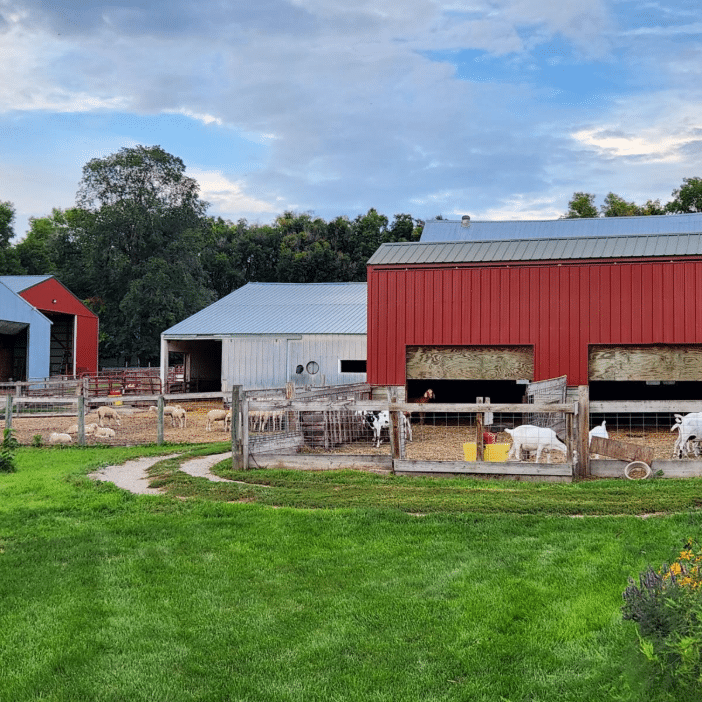
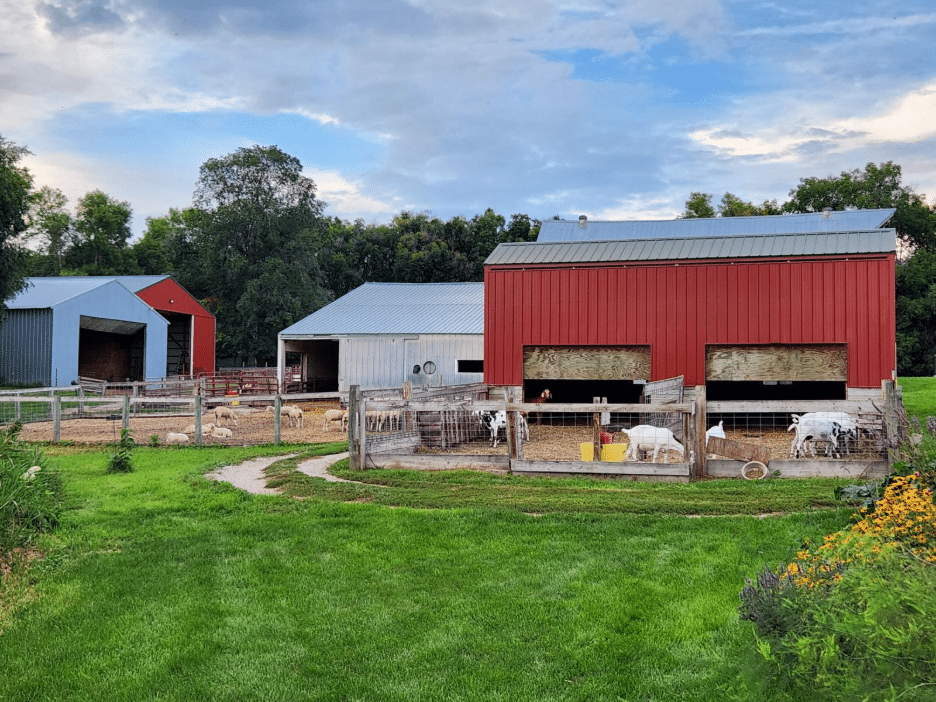
Bennett Smith helps his parents raise sheep and goats on their land in Stevens County. They also grow several hundred acres of corn, soybeans, alfalfa and wheat. Smith has an off-farm job but assists with meat delivery and livestock chores. The family direct markets some of their meat to customers in the Twin Cities and Morris areas.
This interview has been edited for length and clarity.
What is the history of conservation practices on your family’s farm?
Bennett: Both of my grandpas always focused on providing habitat for waterfowl and pheasants and made sure there was space for them on the land. My dad is very conservation-minded as well and carried that on by making sure we had shelter belts planted, which are important windbreaks and also provide habitat. He has planted some less productive acres with pasture and trees and has also used conservation programs like the Conservation Reserve Program to establish habitat. We also have restored some prairie in spots that were rocky or less productive cropland, and they make a nice little habitat for waterfowl.
Are you facing management challenges due to climate change?
Bennett: One thing that has really become a problem in the last couple of years is the early onset of long stretches of 100-degree days. We lamb in early May, which is when it works best for us. Normally the weather is very mild, and sometimes we’d even get snow, so we usually aren’t worried about animals overheating. But baby lambs don’t regulate their body temperature as well as adult livestock, so they’re prone to overheating or getting too cold. The heat is not only hard for them to manage but it also cuts back on their growth rate and the milk production of the mother. It’s created more work for us because we have to haul hay racks out to the pasture to create shade structures that protect them from the heat. I’ve been trying to get some trees growing in an area where we don’t have shade to serve as a permanent shade structure.
In addition, the recent extreme drought and rain conditions have impacted pest reproduction. Pests like leaf hoppers in alfalfa or soybean aphids are impacted by these changing weather patterns and they require more intensive pest management. Extreme moisture this year has made them prolific, and in other years when we have drought, they’re able to easily take advantage of drought-weakened plants.
Have you made any changes on your farm recently to become more resilient to climate change?
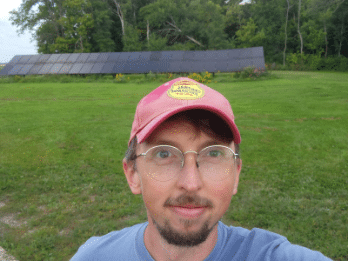
Bennett: In 2021 we worked with a purchasing cooperative facilitated by Solar United Neighbors to install a ground mount solar installation. This reduced our electric bill and climate impact. We have a couple things that use more power than average, and our house is in the country, so it had a significant impact on our energy cost and amount of energy we consume. We learned numerous things about our energy consumption in the process and worked extensively with our electric cooperative during the interconnection process.
What barriers do you see to the adoption of conservation practices?
Bennett: I think the barriers are the time, materials, and effort that people have to invest in conservation practices. There are some practices that require less effort from individual farmers, but other ones require us to make a big financial investment or change the pattern of how we do things. Farmers working on tight margins, in particular, need to be assured that there will be a financial benefit to their operations for the time and effort it takes to implement new practices, even if they might be inclined to make changes just for the sake of the environmental benefits alone.
There is a growing body of research from public universities that shows that farm operations that adopt climate friendly practices and focus on sustainability actually are more resilient in difficult economic times and can be more profitable. So, we need to keep talking about how implementing new technology and practices are justified by the money that is at stake that farmers could be leaving behind. There are also some important changes that farmers can make that will improve their climate impacts and don’t require a giant investment or huge changes to practices. Start with the simple things.
How has your farming operation remained resilient?
Bennett: One way we’ve remained resilient is by direct marketing and finding markets that feel less pressure from global and domestic policy changes. An important way we do this is by producing all the food for our livestock on our farm. It’s impossible to get away from all external market factors, but we try to soften the blow.
What do you think is missing in the conversation around climate and agriculture?
Bennett: I think we need good role models who are modeling climate-smart practices to discuss the urgency of the situation and how each of us has a big role to play. We need giant systems to change, but we also need people to feel confident to try new and different practices. It takes a ton of bravery to be a farmer, but I think farmers need to confidently try things that are different from their neighbors.
I find especially with people that are a little bit older that they fall victim to peer pressure and not wanting to do something different from all their neighbors. For example, it took a lot of effort to convince my dad that solar power works and is a worthy investment. You have to be persistent, it might take a lot of explaining or convincing. For the average farmer, if you can explain in dollars and cents why something is a good idea, by the fifth or sixth time it will start to get through.
What opportunities for advancing climate-smart agriculture through markets and policy have been on your radar?
Bennett: In my day job, one thing I’ve been working on is sustainable aviation fuels and making sure we’re doing everything we can to create new markets for crops we’re already growing, and to incentivize climate-smart farming practices. I’m also working on creating markets for new crops for a diverse agriculture economy that’s not only focused on one or two crops.
If you could tell congress one or two things to help your family continue farming what would it be?
Bennett: I would tell congress to pass policies that incentivize strong markets for a diverse array of crops, livestock and farming styles with the goal of keeping more farmers on the land and in the countryside, so that people can afford to live good lives doing just agriculture.
From heavy rains to extreme drought and damaging winds, farmers are adapting and changing. The ‘Climate Resilience on the Farm’ series features Minnesota farmers who are using practices to make their farms more resilient as the climate changes. Read other articles in this series here.