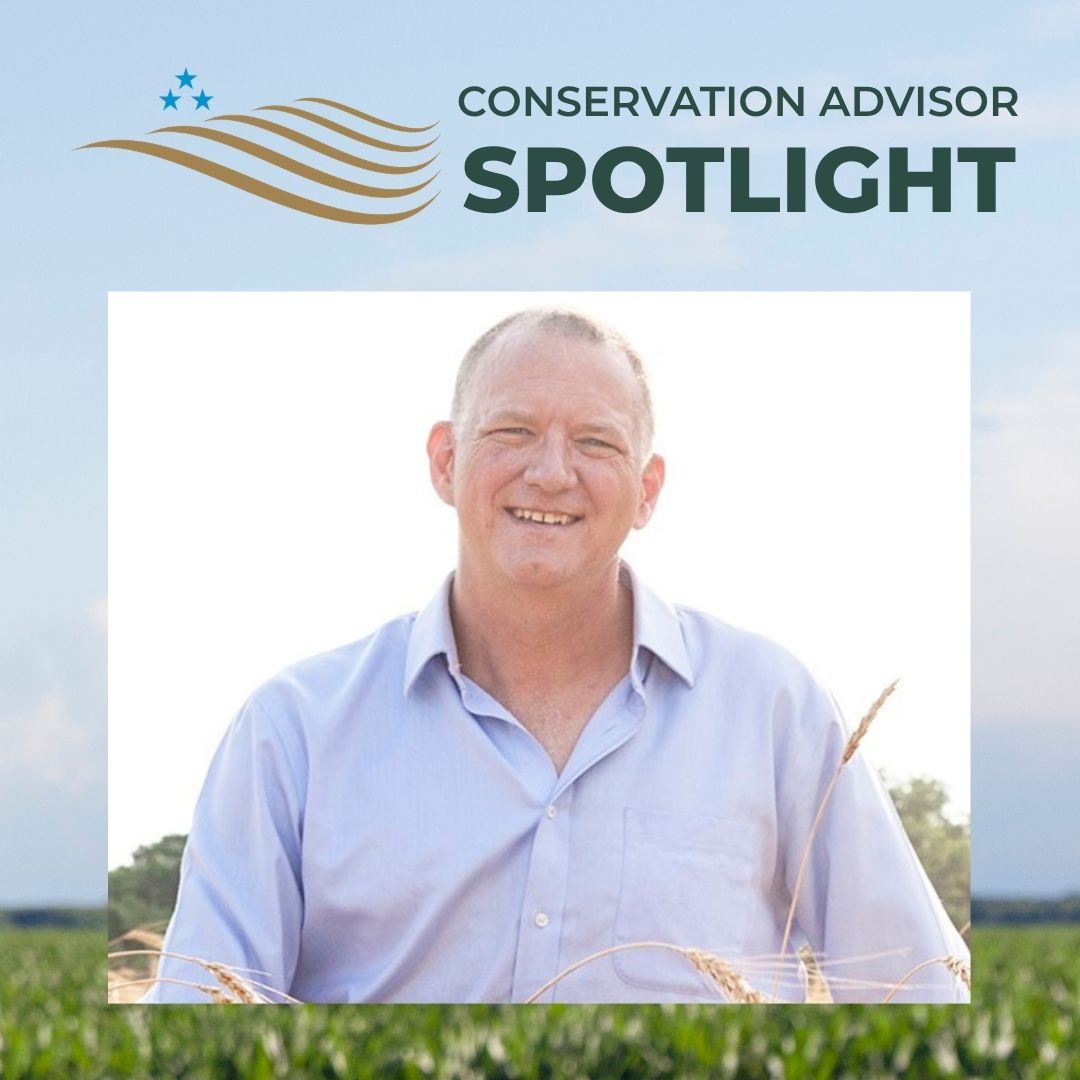
Ben Penner: Associate Agronomist at Forever Green Initiative
The hallmark of all Forever Green crops is that they provide continuous living cover on the soil which protects against erosion and allows organic matter, sediment, and nutrients to stay in place. All Forever Green crops also sequester carbon in their root systems so there’s potential to use them as a carbon sink.
Ben Penner
Ben Penner is an Associate Agronomist for Forever Green Initiative. He is based in Southern Minnesota and works with producers statewide to provide technical assistance to grow Forever Green crops. This interview has been edited for length and clarity.
What is your background?
Ben: I grew up on a farm in south central Kansas, and I lived about thirty minutes south of the Land Institute, the organization that originally developed Kernza®. I visited the Land Institute in 2004 and saw Kernza growing firsthand, and my neighbor in Kansas became the first farmer to grow it outside of the Land Institutes fields. Today, I farm in southern Minnesota where I grow, market, and sell small grains including winter wheat and spring wheat, as well as hybrid rye and soybeans. I try to focus on the food crops, and have been selling those for the last ten years to bakeries, schools, and directly to people.
In May this year I joined Forever Green as an Associate Agronomist, but I have been working alongside them as a collaborator since 2019. I was introduced to Forever Green through Kernza. Back in 2017 I attended a grain gathering convened by Renewing the Countryside and other organizations and was selected as a panelist. The gathering included a group of people interested in improving our landscape by growing environmentally friendly crops, and Kernza was in development at that point through Forever Green. Through several connections with people in that space, I was tapped to be on the board for the Perennial Promise Growers Cooperative, which markets and sells Kernza. At the same time in fall 2019 I started growing it on my own farm. Since then, I’ve been involved in the market development of Kernza, and have also spent time advocating for Forever Green crops as a way to protect water quality by speaking in front of the Minnesota house and senate ag committees, as well as at the capital in Washington DC a number of times.
It’s important to know that I’m a Mennonite, and my family history is tied to a variety of heritage wheat called turkey red winter wheat. In 1874 my ancestors immigrated from Ukraine and brought red turkey winter wheat with them to the United States, and my extended family grew it in central Kansas until the 1960s. It gained popularity among farmers over time and moved North on the landscape into the Dakotas and Minnesota to give us the mill city we have now. I still grow turkey red winter wheat in Minnesota, and for a while I was actually the only one that grew it in the region. It’s a heritage wheat that’s taller than modern wheat that has some good milling and baking qualities. All this to say I was familiar with the development of turkey red winter wheat on the ground and how it spread throughout the midwest region, so I had an intuitive knowledge that this could happen again with Kernza.
Can you share more about what Kernza® is, and the environmental benefits it provides?
Ben: Kernza is a perennial grain that is planted once every three years in a rotation. It has a deep root system of about 6 to 10 feet, and provides many soil health benefits because it keeps the soil covered throughout the winter. Because of that year-round cover of the soil, Kernza mitigates erosion, and the deep roots help to pick up nutrients such as nitrate and phosphorus and improve water infiltration to reduce runoff. I like to call it the gold standard for soil health, and I’d say it’s been Forever Green’s flagship crop.
What does your role at Forever Green entail?
Ben: I’m an Associate Agronomist at Forever Green Initiative, so I work one-on-one with farmers to grow the whole portfolio of Forever Green crops on their land. Currently I have been focusing on Kernza, as well as Winter Camelina because we are working on a scaling project to get one million acres of Winter Camelina on the landscape. I have grown both Kernza and Winter Camelina myself, so I’m familiar with how those crops interact with the soil in southern Minnesota and across the state.
My services are open to any interested grower who wants to grow Forever Green crops, and I’d be more than happy to walk them through the process, discuss the ins and outs of growing, and provide technical assistance and support for enrolling in programs like our EECO program for financial assistance. I am doing site visits with farmers to monitor the crops as they progress throughout the year, and people can also find me presenting at field days. At Forever Green we have another agronomist, Matt Leavitt, who also gives technical support to farmers growing our crops, so there’s two of us available to help growers.
What other crops is Forever Green is developing and promoting?
Ben: Forever Green promotes continuous living cover crops. The hallmark of all Forever Green crops is that they provide continuous living cover on the soil, which protects the soil particularly in the winter against erosion, and allows organic matter, sediment, and nutrients to stay in place. All Forever Green crops, Kernza in particular, also sequester carbon in their root systems so there’s potential to use them as a carbon sink.
I’d say for the past several years Forever Green’s flagship crop has been Kernza. We’re also currently working more to develop Winter Camelina alongside supply chain partners such as Cargill and the Greater MSP SAF Hub Coalition, and directly with growers. We are piloting this crop on the landscape and learning how to integrate it into the current rotation with corn and soy, and are working to provide tips, tools and ideas for how to modify equipment to scale Winter Camelina and meet the growing market demand of the oilseed market.
Another crop Forever Green is developing right now is hybrid winter rye, which I’ve grown myself as well. Crops on the horizon at Forever Green include perennial rye and wheat, as we’re hoping to take what we’ve learned about Kernza and adapt that to these crops. Finally, through our Go First Farm Initiative we are establishing tree crops including hazelnuts and elderberries on farms to meet the market demand for perennial agriculture.
What markets exist for Forever Green crops?
Ben: The market for all Forever Green crops is growing but they are in different stages of development. The market for Winter Camelina is large since the demand for sustainable aviation fuel (SAF) is growing, and will continue to grow over the next fifty years. The Kernza market has ebbed and flowed, but at the moment the market demand is outstripping supply for Kernza so we need more growers to meet the demand. Consumers are looking for healthy products and grains they can believe in to improve the soil and environment, which is an important thing to note. I always discuss markets with growers independently, because getting Forever Green crops to market does take extra steps, but it’s definitely possible to do and I’m happy to help.
What type of farms can incorporate Forever Green crops into their crop rotation?
Ben: Any type of farm can incorporate Forever Green crops. We have opportunities for grain growers to integrate the crops into their rotation, whether it be hybrid winter rye, Kernza, or barley. Smaller acreages can take advantage of Forever Green crops by planting hazelnuts or elderberries. We’re open to working with any farmer that’s willing to learn more and incorporate more environmentally friendly crops on their farm, and we’ll help them manage the rotation so It’s more profitable and adds to the bottom line.
In recent years, have you seen Forever Green crops improve farm resiliency to extreme weather events?
Ben: Yes. Around December 2024 and January 2025 had very little snow cover and there was several extreme wind events that caused blowing soil on farms that I noticed. I remember driving through an area with row crop farms in Minnesota and Iowa and seeing lots of snirt, or dirty snow in the ditches. In contrast, when I came home to my Kernza field there was no dirt to be seen anywhere since my soil was covered and held in place by the crop. It was a stark reminder for how important it is to keep the soil covered all year round.
What resources do you recommend to farmers who want to grow Forever Green crops such as Kernza and Winter Camelina?
Ben: The key resource for continuous living cover crops is the Grower’s Guide for each crop. We currently have guides for Kernza and Winter Camelina that can be accessed online. After talking to me or our other agronomist Matt Leavitt, that’s the next place to go if you’re interested in growing Forever Green crops and learning about the growing process.
Additionally, the website Kernza.org has significant resources for growing Kernza, including reports on the market and supply chain.
What are you looking forward to during the rest of the 2026 growing season?
Ben: Right now we’re wrapping up Kernza harvest and are getting that crop into storage. Looking ahead, I’m excited to help farmers with the upcoming planting season for Forever Green crops. Winter Camelina, Kernza, and hybrid winter rye are all planted between September to October 15, so I’ll be working with growers to get those crops in the ground and provide technical assistance in the field including calibrating equipment and determining timing for planting, seeding depth, and rate.
How can people stay in touch with the work of Forever Green?
Ben: We have a newsletter people can subscribe to which can be found on the Forever Green website. People can read that newsletter to learn about our field days with partner organizations to see our crops growing firsthand.
Interested in working with Ben to grow Forever Green crops on your farm? Connect with him at: bepenner@umn.edu or 507-995-7756
Conservation advisors work one-on-one with farmers to assess resource concerns and find opportunities for stewardship improvements. These advisors can be found at organizations across the state, from Extension offices to Soil and Water Conservation Districts to wildlife-focused non-profits. MFU regularly features conservation advisors to share how their assistance can support your farm goals. Read more in this series here.