Beekeeping today is like walking into a casino for a poker game; you have no idea what hand you’ll be dealt
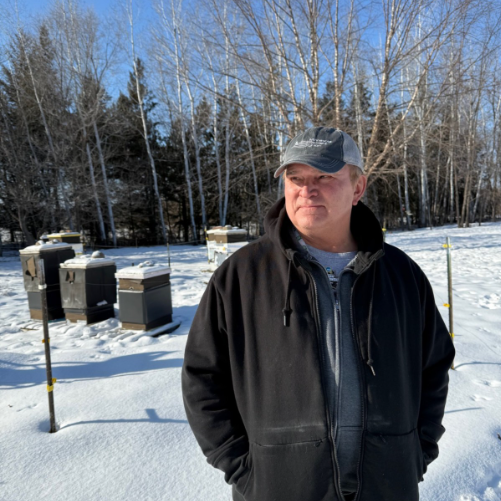
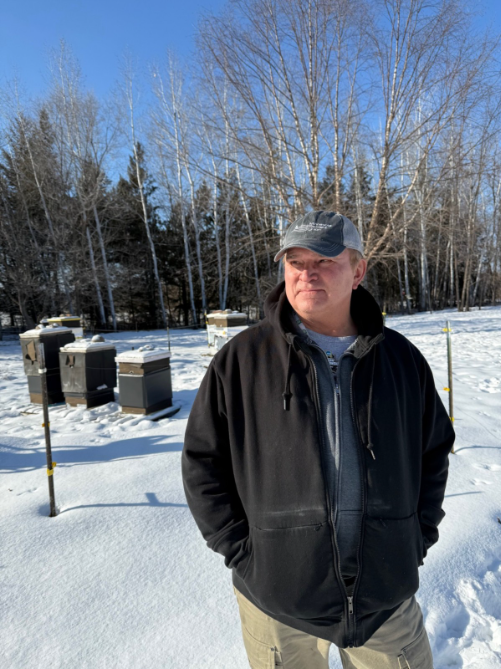
Mike and Cathy Mackiewicz own Bone Lake Meadows Apiary in Scandia. Mike manages up to 50 beehives to make local honey, and Cathy uses the beeswax to make candles and a line of body care products. They market their products through an online store and at local farmers markets and gift shops in the St. Croix River Valley, as well as Summer Kitchen Cooperative’s online store and farmstand. Mike teaches classes about beekeeping to school-aged students and helps students enter their honey into competitions at the Minnesota State Fair.
This conversation has been edited for length and clarity.
How long have you been beekeeping?
Mike: I got into the beekeeping kind of unbeknownst to me about 25 years ago when my kids gave me a beehive with live bees as a father’s day gift. They knew that where I grew up in northwest Wisconsin there were beekeepers and that I was drawn towards the magic of beekeeping. I never had the opportunity to keep bees until we moved to our rural property in Scandia, Minnesota. From day one I was hooked, one hive turned into three, and three turned into six, and then before I knew it there were fifty hives. I’ve been beekeeping since the year 2000 so this will be my 26th year coming up.
How do you decide where to put your beehives?
Mike: Because I have up to fifty beehives, the most convenient management would be to put them all on one piece of land and let the bees fight to survive on limited resources. But instead I split them up onto different family farms in my area. The first step of setting up a hive is finding a sheltered area on the landscape where they won’t be hit by wind and heavy rain. When I work with local farms and orchards that are in need of pollinators on their properties, we’ll first walk their land to see if it’s a good piece of property, I assess if there’s enough space and food for my bees, and walking the landscape helps me decide how many hives it could sustain. I also want to know if the landowner’s practices are aligned with mine and that they are pesticide free, because I wouldn’t put my bees on a property if I know there’s risk of chemical spray. Over the years I’ve established relationships with family farms in my area and I know that what they’re doing is in line with what I want for my bees.
Has extreme weather in the St. Croix River valley affected your beekeeping operation in recent years?
Mike: Every year is a little different. Years ago, you could almost predict how much honey each parcel of land would produce, but now every year it’s like walking into a casino for a poker game and you don’t know what hand you’ll be dealt.
In 2025 we experienced severe thunderstorms with high winds that knocked over hives and trees. It used to be that all you had to do was put a brick on top of the hive to keep the cover on, but now we have to have stakes in the ground and invest in rachet straps. We had three thunderstorms over 74 miles per hour last year, and I had neighbors with commercial hives lose about 50 hives from getting knocked over by the wind.
The rainfall from these storms was also extreme. If you look at the yearly average inches of rain for my area the number looks pretty good, but we are experiencing all that rain in four or five episodes, and there’s extended periods with no rain and it’s super dry. In a perfect world we like a quarter inch of rain a week, but lately we have supercell thunderstorms coming through with two to five inches of rain. The excess moisture throws off the flowering process of plants so they think they don’t need to flower and start to focus on roots instead. Heavy rainfall can also knock the nectar out of plants, which is the bees’ source of food. Last year the storms came during the short window for summer honey collection in June, July, and the first part of August. Those interruptions can really impact honey yields.
The second extreme weather event from 2025 was smoke from the Canadian fires. That had an impact on the bees because the smell of smoke put them on high alert, and a nervous bee is a defensive bee. When there’s poor air quality bees don’t want to leave their hive. There were periods of time that the hives shut down for a week with bees not wanting to go far because it affects their respiratory system. Unfortunately, this occurred during peak pollination and foraging time for the bees. I know a lot of beekeepers that mentioned their honey had a cloudy, off taste and nobody knows if it was caused by the fires and soot in the air, but it was hard to get the pristine crystal clear honey that Minnesota is known for this past year.
Over the past ten years I’m also seeing that our falls have become unseasonably warm and the first frost comes later than usual. The first frost serves as nature’s stop sign signaling to wildlife that winter is coming, and without that signal bees get confused. Lately when the first frost doesn’t happen until November, bees try to keep foraging for food that isn’t available anymore. When bees fly around to forage in the fall they burn calories and have to feed off the existing honey in their hive. Then what can happen is that bees end up using their winter resources too fast and they’re dead by January. To remedy this, I’ve been leaving 100 or more pounds of honey in the hive for the bees during the winter when I normally would only leave 60 pounds or so. It’s important to me that the bees can survive the winter.
You mentioned that honey quality may have been affected by poor air quality last year. Did the extreme thunderstorms have an effect on the quality of honey too?
Mike: Excess precipitation can impact honey. If the plants that bees feed on get too wet, the honey you get is really wet too. The moisture content of honey sold to consumers must be under 18.6 percent because the water will convert to alcohol at a higher percentage. There is a certain timeframe after collecting honey that you can draw the moisture out with heaters, sort of like what corn farmers do to draw moisture out of their crop. When we get all this rain, honey moisture content can get to 25 percent or higher, which is hard to remedy. Case in point, at the 2025 Minnesota State Fair some of my student’s honey lost points because the moisture content was too high, and that makes up a large percentage of their overall score.
What management practices help your bees stay resilient to climate change?
Mike: To me sustainable beekeeping is about keeping home raised bees and getting them through the winter. Insects have genetic lines just like any other animal, and bees that know the ecology in the area pass those genetics to their offspring which makes it easier for the next generation to find what they need to survive. In contrast, when you bring bees from out of state to Minnesota, they have to figure out unfamiliar pollen and nectar sources that they’re not used to. When we get loose regulations allowing for bees to move to our state from different regions of the country, those bees can bring in pests that shouldn’t be up here in Minnesota, like the hive beetle, for example. Bees are just like animals in that they can be affected by pests and diseases they come in contact with.
Because of those challenges with bees from out of state, I do a lot to keep my existing lines of bees alive so I can use them to make more hives. I’m all for keeping it local and raising bees that know our seasons. I work with local beekeepers for survival stock and I’m doing whatever it takes to keep hardy stock alive through the winter. I’ve traveled to Scandinavian countries to learn about their beekeeping practices, and learning from beekeepers closer to the arctic circle informs my practices here in Minnesota.
Besides raising Minnesota-born bees, what helps you stay resilient as a beekeeper?
Mike: I find agreement with neighbors that we all want healthy food regardless of how you vote, and there’s relief when I see that I can work together with neighbors on the same mission of producing Minnesota grown, free range products. This happens through one-on-one relationships, working markets together, being together at community events, and being involved in food justice networks. It’s important how you treat people. People show up to buy my honey because they know it’s good stuff based on these values. And standing behind your product this way resonates with a lot of consumers.
If you could tell lawmakers one or two things to help your beekeeping practice, what would it be?
Mike: I’m a supporter of the University of Minnesota Lawns to Legumes Program and their work with beekeepers to create seed mixes so that people can grow native pollinator plants on their land. I love when farmers grow native pollinator plants in ditches and on the strips between their crops, and when farmers use buckwheat because that’s such a great way to get away from chemicals by using natural nitrogen enhancement strategies. You get a really dark molasses type of specialty honey from buckwheat. So I’d ask for more grants and resources for farmers that want to do more rotations instead of hitting the same field with corn and beans.
From heavy rains to extreme drought and damaging winds, farmers are adapting and changing. The ‘Climate Resilience on the Farm’ series features Minnesota farmers who are using practices to make their farms more resilient as the climate changes. Read other articles in this series here.