Alan Kraus: Soil Health Specialist at Rice and Steele SWCD
Working with Soil and Water Conservation Districts provides producers with a localized set of skills, and it’s just a phone call away.
Alan Kraus
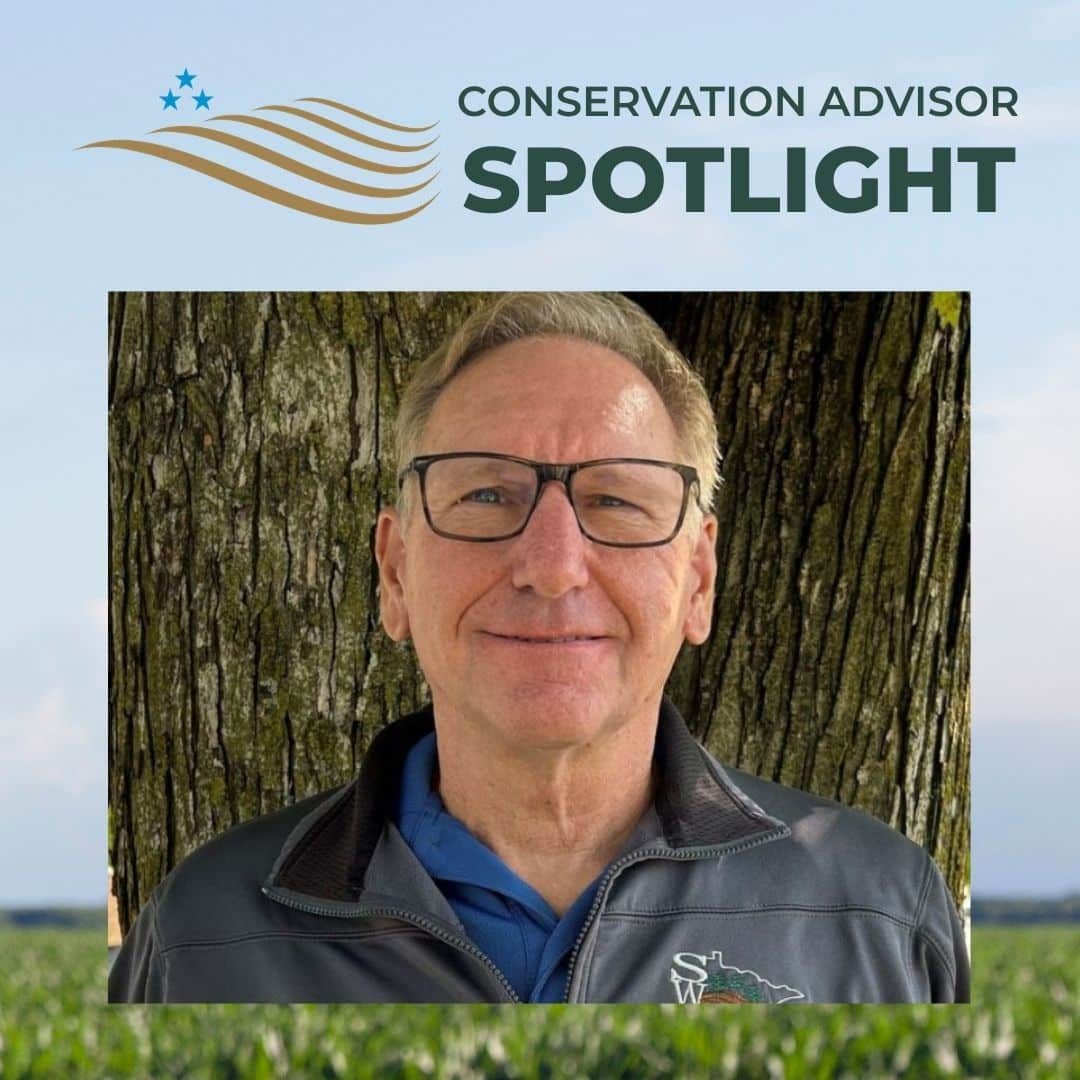
Alan Kraus is a Soil Health Specialist at Rice SWCD and Steele SWCD. He is located in Rice and Steele counties. This interview has been edited for length and clarity.
What is your background?
Alan: After dairy farming in central Wisconsin for 25 years, my wife and I sold the dairy and wanted to be closer to our grandkids in Minnesota. I applied for a job with Clean River Partners and worked with them for seven and a half years. In 2024 I started with Rice and Steele Soil and Water Conservation Districts and have enjoyed working with farmers since then. I have a strong passion for keeping the soil in place and helping farmers farm. It’s an urgent work that needs to be done, and we need more conservation practices on the landscape. I have dedicated myself to working on that.
What are your areas of expertise?
Alan: I would say reduced tillage, cover crops, erosion control, and designing and facilitating educational events around soil health.
What does a visit with you look like for a farmer?
Alan: Yesterday I stopped at a farm and the farmer was in his shop setting up a reduced tillage rig that he’ll use to plant cover crops. We discussed what he’s planning to put down and what to expect of this new machine, things like the seeding rate. Basically, I provided information about how harvest has been going and what to expect with the cover crop. It was a pretty easy flowing and relaxed conversation about the work they’re trying to do on their farm.
How can a farmer plan ahead to get the most out of a visit with you?
Alan: If they’re going to come into the office and talk, then they’ve probably already given thought to the issues they’re trying to address. In some cases they have a lot of experience, so we might be discussing a particular program to take advantage of, or we could talk about changing out a mix of cover crops, or they might want to talk about an event that we have planned and getting information out about that.
Other times they might come in and talk about signing a contract for something like cover crops or no-till and strip-till on their farm. If that’s the case, they should bring in field maps and an idea for how long they want to have the contract. A lot of our contracts are three years. At the end of the year after the cover crop is planted or the practice is done, they need to bring in information so we know exactly what they did. We need things like the invoice for the seed, the seed tag, and their planting date and method, like if they did broadcasting without incorporation or drilling or something to that effect. We need all of
that information so they can set up the contract and get paid. That’s pretty standard with NRCS and SWCD contracts.
What are the benefits for a producer working with Rice or Steele SWCD?
Alan: The benefit is that it’s very local assistance, it’s not extended out beyond the county. For Rice and Steele, our staff have a tremendous amount of experience and good skill sets around technical support for soil health and other work like windbreak design, grassed waterways, and structural practices. We have local information about wetland management and regulations that producers can access immediately. So working with Soil and Water Conservation Districts provides producers with a localized set of skills, and it’s just a phone call away. I personally have 25 years of experience, and my background is in farm business management and farm financials, so I’ve done a bit of teaching.
What programs or conservation opportunities have been most successful in your area?
Alan: We have a program that started in 2018 in the Dundas area that was originally a three year program, but has continued for low level funding for cover crop seed every year since. We refer to it as the Rice Creek project in the Dundas area. That funding will continue through 2027, so it will be a full ten years of growing seasons where farmers have support for cover crops. That’s the sort of program that can provide a long-term benefit, and it comes with outreach, on-farm visits, and annual meetings for farmers to have
opportunities to share their experiences and results. We’ve tied that support with data collection of crop yields, nitrogen inputs, and water quality data from drainage tiles. We share that information with growers who implement cover crops and those who don’t. Our Rice Creek project is a full, more robust program with lots of information that’s very local and shared with growers. It’s been running for a lot of years and we have a lot of data. Producers can just call Rice SWCD and we share any information.
What advice do you have for farmers who are just getting started on their soil
health journey?
Alan: The really important key early on is to network with other farmers that are implementing soil health practices. If a producer thinks they want to try it and are on the fence, they should talk to the farmers that are making it work, not the people who haven’t started because that will just be an echo chamber. They should also reach out to organizations and Soil and Water Conservation Districts and find information on the internet. But the biggest help is talking to other farmers who have implemented soil health
practices, so don’t be afraid to do that.
Interested in working with Alan to improve your soil health? Connect with him at: alan.kraus@riceswcd.org or 507-332-5408
Conservation advisors work one-on-one with farmers to assess resource concerns and find opportunities for stewardship improvements. These advisors can be found at organizations across the state, from Extension offices to Soil and Water Conservation Districts to wildlife-focused non-profits. MFU regularly features conservation advisors to share how their assistance can support your farm goals. Read more in this series here.