Olmsted County farmer promotes sustainability through his job and on-farm practices
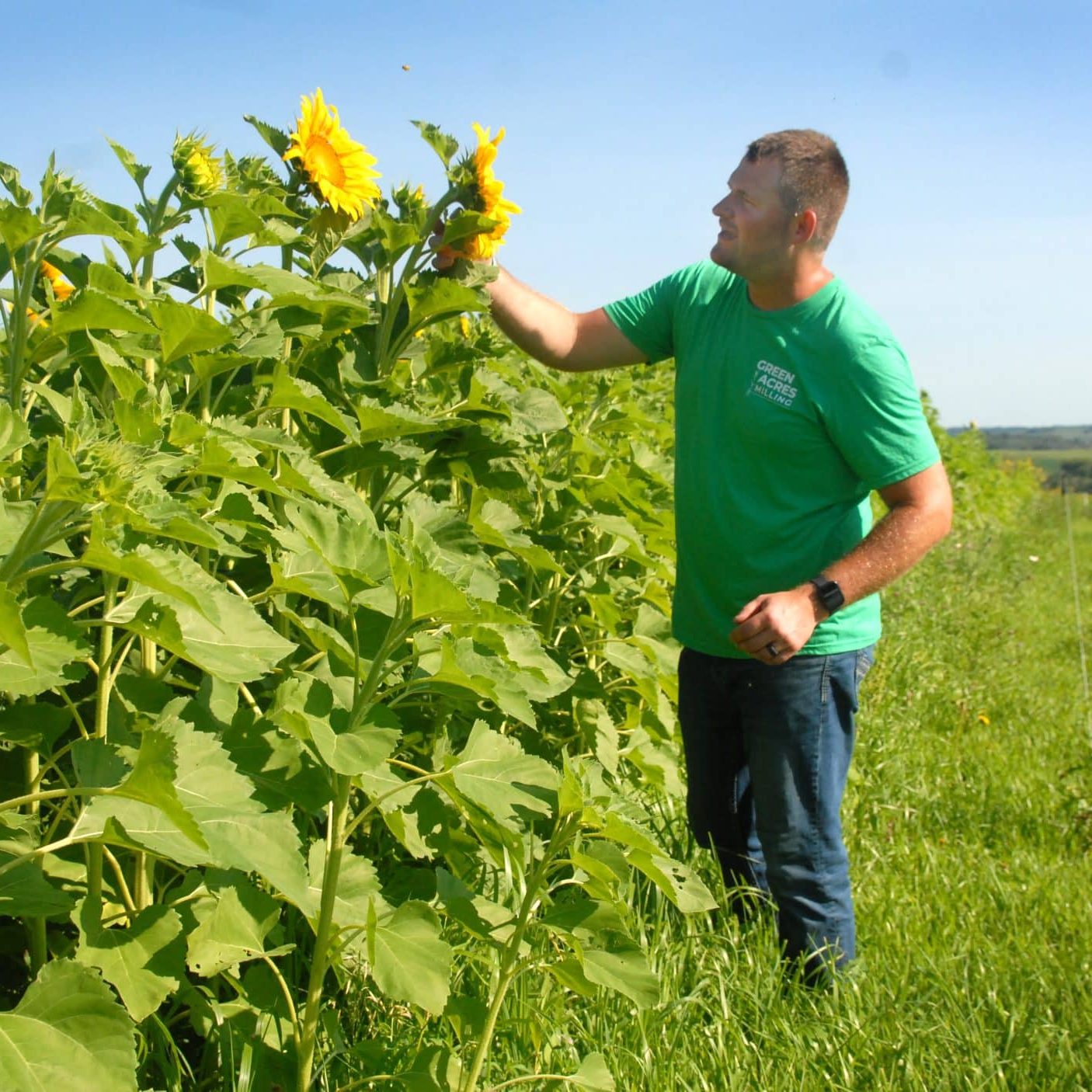
Matt Kruger is a farmer and account manager for Land O’Lakes. Matt’s wife Maggie works at Mayo Clinic as a nurse in integrated health and healing. Together they raise cattle and grow corn, oats, and sunflowers on their farm in Olmsted County.
This interview has been edited for length and clarity.
What is the history of your family farm?
Matt: I just bought my farm in 2020, starting with an 80-acre piece in Pine Island. I come from a dairy farm in Wabasha. I raise 50 cow-calf pairs, 60 acres of corn on the home farm, 45 acres of food grade oats, and rent some pasture. Additionally, I got married last fall in a newly built shed on our property. We wanted to start our marriage at the place where we would build our life together. My wife, originally from Chicago, works at Mayo Clinic as a nurse in integrated health and healing. She contributes bees and a garden to the farm. Off the farm, I work for Land O’Lakes full time traveling 50 percent of the time as an account manager for Minnesota, Wisconsin, northern Illinois and Iowa. I educate and promote sustainability with cooperatives and ag retailers, helping them build their own sustainability message to farmers. I bring them opportunities as well, like carbon markets.
How has your farm structure changed in recent years and how are you planning for the future?
Matt: A group from the Soil and Water Conservation District of Olmsted County asked if I wanted to grow food-grade oats. It went well last year, and I am growing my second crop this year. We have a group of 20 farmers in the area growing oats and working together to sell them. I no-till the oats into corn stock residue and harvest them in early August. This allows plenty of time for planting an early cover crop with plans of grazing the beef herd on it in the fall. The next spring, I will no-till plant corn or soybeans into the winter-killed cover crops. I use a diverse mix of cover crops with sorghum sudangrass to get the most growth possible for grazing the cattle. I would be interested in planting green eventually, but my equipment is not set up yet. No-till and cover crops are practices that I promote and talk about every day for work. I need to prove it to myself as well that I can make them work.
Has climate change informed your plans for the future of your farm?
Matt: I installed drain tile a year ago because the farm gets really wet. Now with the drought, I want to pump any water leaving the tile lines back onto the fields so as not to lose any nutrients. In the future, I expect more droughts and a lot of volatility in the market. I need to manage risk by keeping expenses bare bones. I also switched to reduced tillage and cover crops to reduce my labor hours and diesel use. Another reason I value sustainability practices is their increased time efficiency.
Are you facing challenges in relation to climate change management?
Matt: I was at a meeting a year and half ago in Alden, Minn., where they had a tornado in the month of December. Farmers don’t like to hear the word climate change, but things are changing. I will have to sell some cows due to the drought. We have half as much hay as we should have going into the winter. We have been able to graze cows so far, but we are at that point now where we need to sell some cows.
What barriers do you see to the adoption of conservation practices?
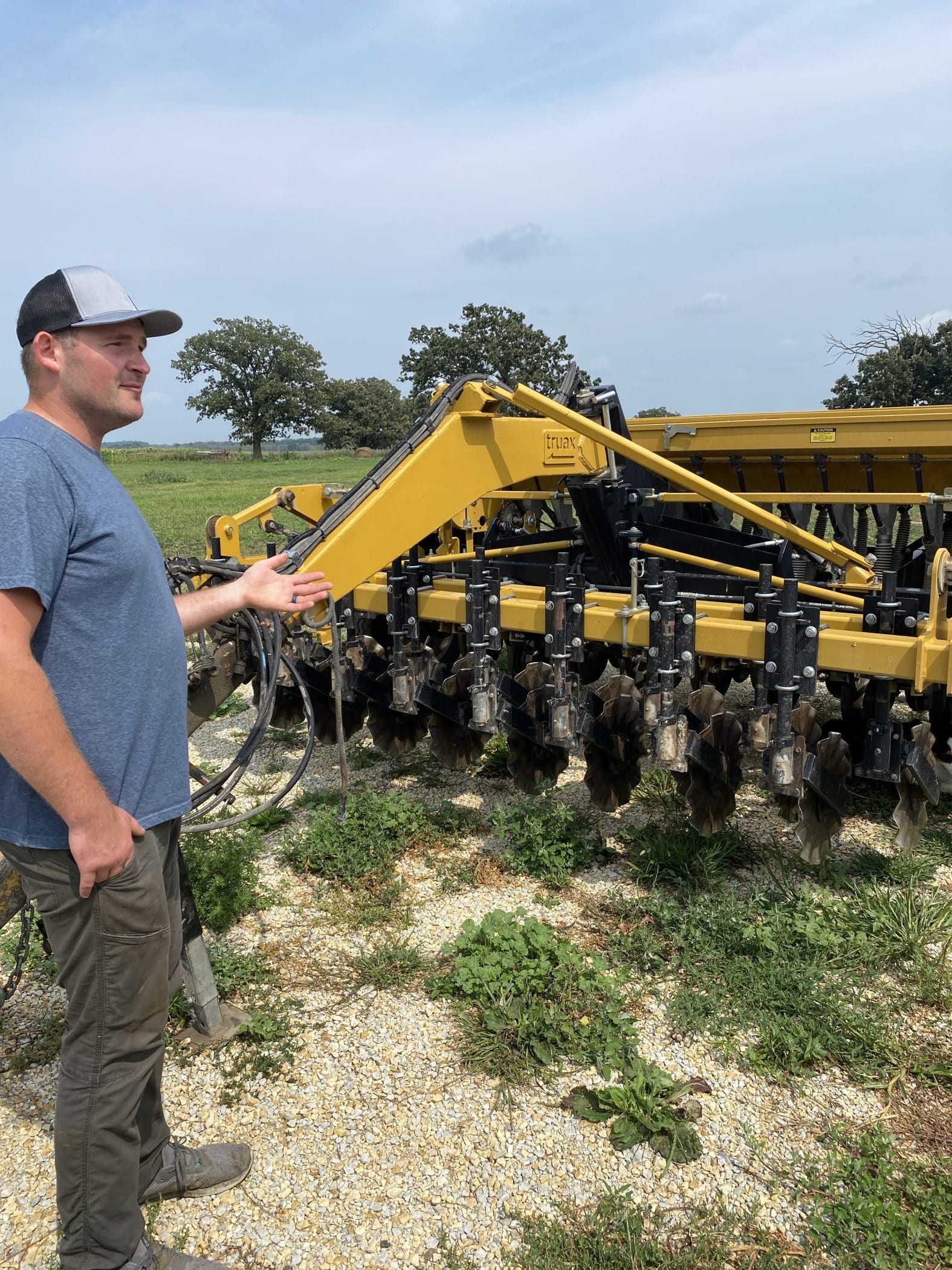
Matt: Equipment costs and updates are the biggest barrier. At a recent meeting I attended, a grower got up on stage and asked, “if I’ve done it this way for 30 years, I know my yield and I have insurance, why would I take on additional risk and change my practices now?” We need crop insurance, but it is also holding us back from making sustainability changes. I am excited because I think there are new incentives coming down the line, like carbon credits. With carbon credits a sustainable farm can offer $10 more per acre and possibly outbid their neighbor for land. I think there might be premiums coming as well for carbon intensity score, but farmers that don’t want to change might miss the boat.
How has your farm operation remained resilient?
Matt: I haven’t been farming my land long enough to tell you that my soil organic matter has increased yet. I don’t have actual statistics, but I can tell you I don’t have soil erosion from rain or wind. You lose so much money due to erosion. The day will come when farmers care about this.
What do you think people are missing in the conversation around climate?
Matt: In relation to carbon markets, people get hung up on the fact that large food companies are buying carbon credits so that they can keep emitting. However, these companies are in this space because they can’t reduce emissions any further. Farmers get hung up on who is incentivizing you, but we should be focusing on the agronomic and economic reasons for sustainability practices. The environmental reasons should complement the agronomic and economic ones.
If you could tell Congress to do one (or two) things that would help you continue to farm in the next generation, what would it be?
Matt: When MFU invited political candidates to an event, I asked them what are you guys going to change? I don’t like how a state trooper must close down a road because there is so much wind erosion and dust in the air that we have to slow down traffic. If farmers don’t wake up, we will need a stick instead of carrots. I am against regulation. We need to think outside of the box like a tax incentive for carbon intensity or reducing soil erosion or water pollution. We will need to think about things differently. We are so accustomed to having black fields in spring and fall that we are going to have heart burn at first when making changes. Things must make economic sense. It will take a lot of education. Every state has a nutrient reduction by 2035. What happens if we don’t meet these goals? Education is key. If we don’t start making changes someone else will decide for us. The MDA soil health grant needs to be continued to help farmers get closer to some of their sustainability objectives. It is the first year that John Deere has stopped making moldboard plows, and they have started making strip till bars. Even they see the writing on the wall. I joined MFU so I can learn more about how to be an advocate for agriculture in the political space. I would love to hand down my farm to future generations. I want to be at the table and part of the conversation.
From heavy rains to extreme drought and damaging winds, farmers are adapting and changing. The ‘Climate Resilience on the Farm’ series features Minnesota farmers who are using practices to make their farms more resilient as the climate changes. Read other articles in this series here.